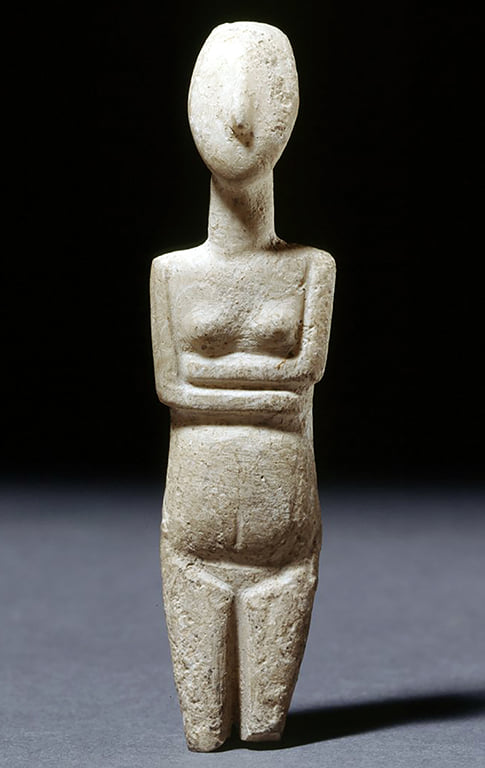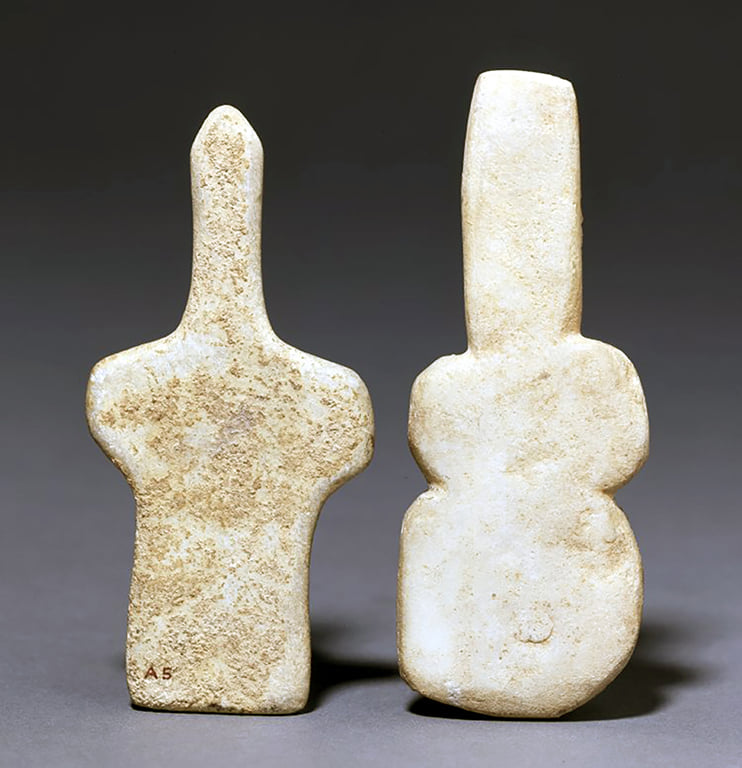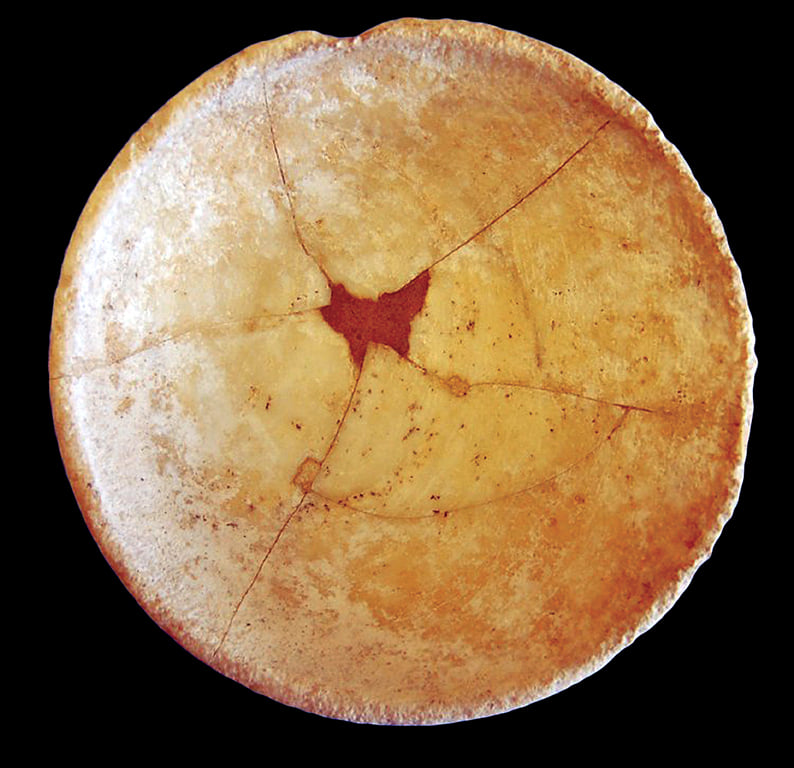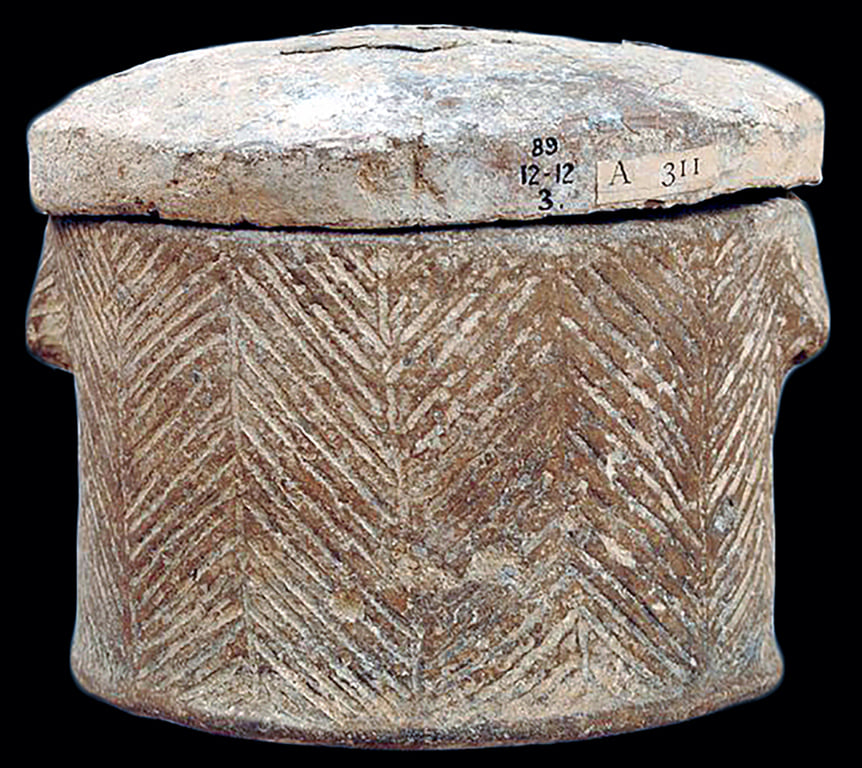


Our knowledge of the Early Bronze Age on Antiparos, as on most of the Cycladic islands, comes from explorations, legal and otherwise, mainly made in cemeteries from this period.
When explaining the reasons for choosing Antiparos for his research in the 1880s, the British traveller Theodore Bent wrote then about the island thus:
I chose Antiparos as the best place for prehistoric research for many reasons. Firstly, the island is barely mentioned in historical times. Secondly, there are no remains of historical times on the island. Thirdly, because I learned that it was covered by extensive cemeteries, which suggests that it once had a large population…
Bent visited four prehistoric cemeteries on the island and, he observed, the locals pointed out others to him. During his stay on Antiparos, he opened a total of 40 graves in two cemeteries, which he calls ‘western’ and ‘eastern’, without giving more information about their location.
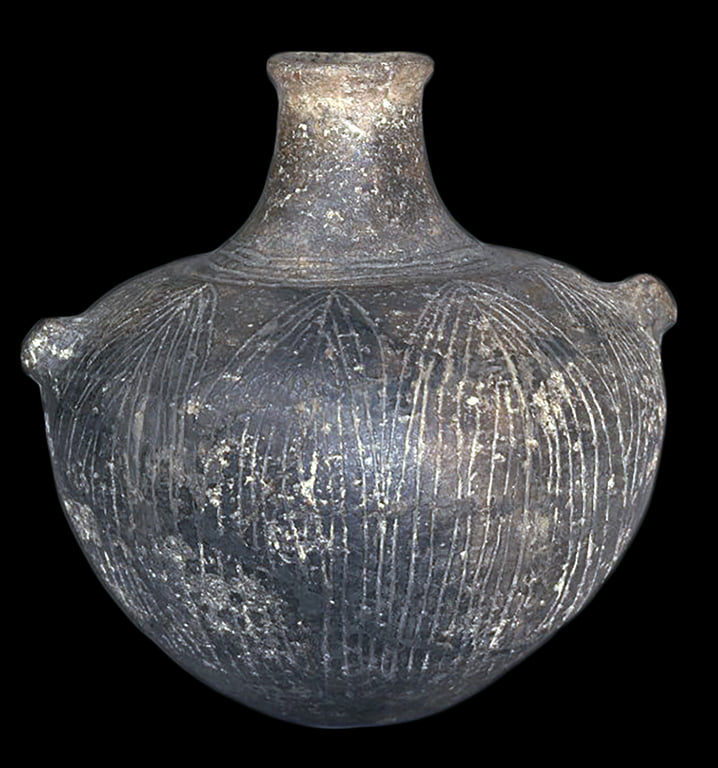
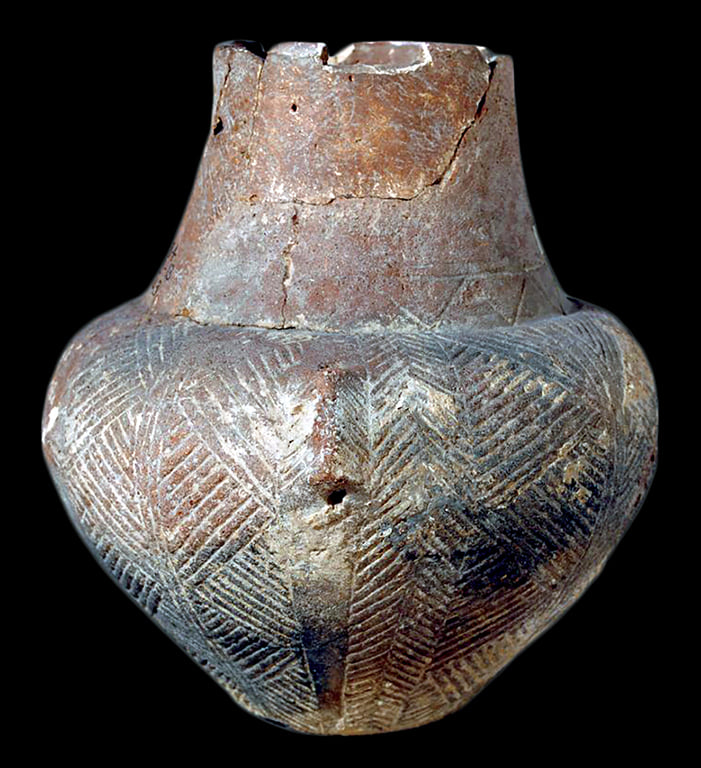
In the western cemetery (probably in the area of Agios Georgios), which he describes as poor, he found mainly clay vessels of the Early Cycladic I period (3200-2800 BC).
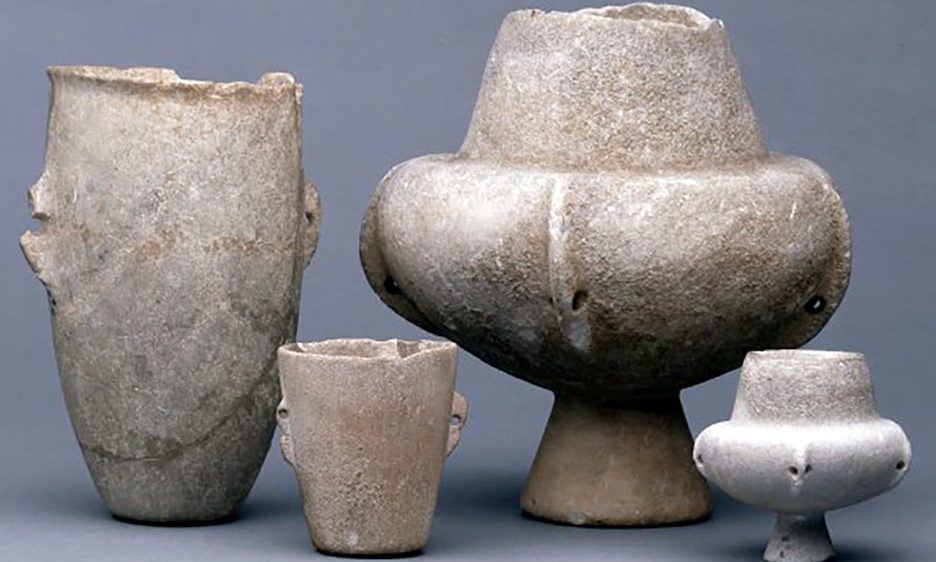
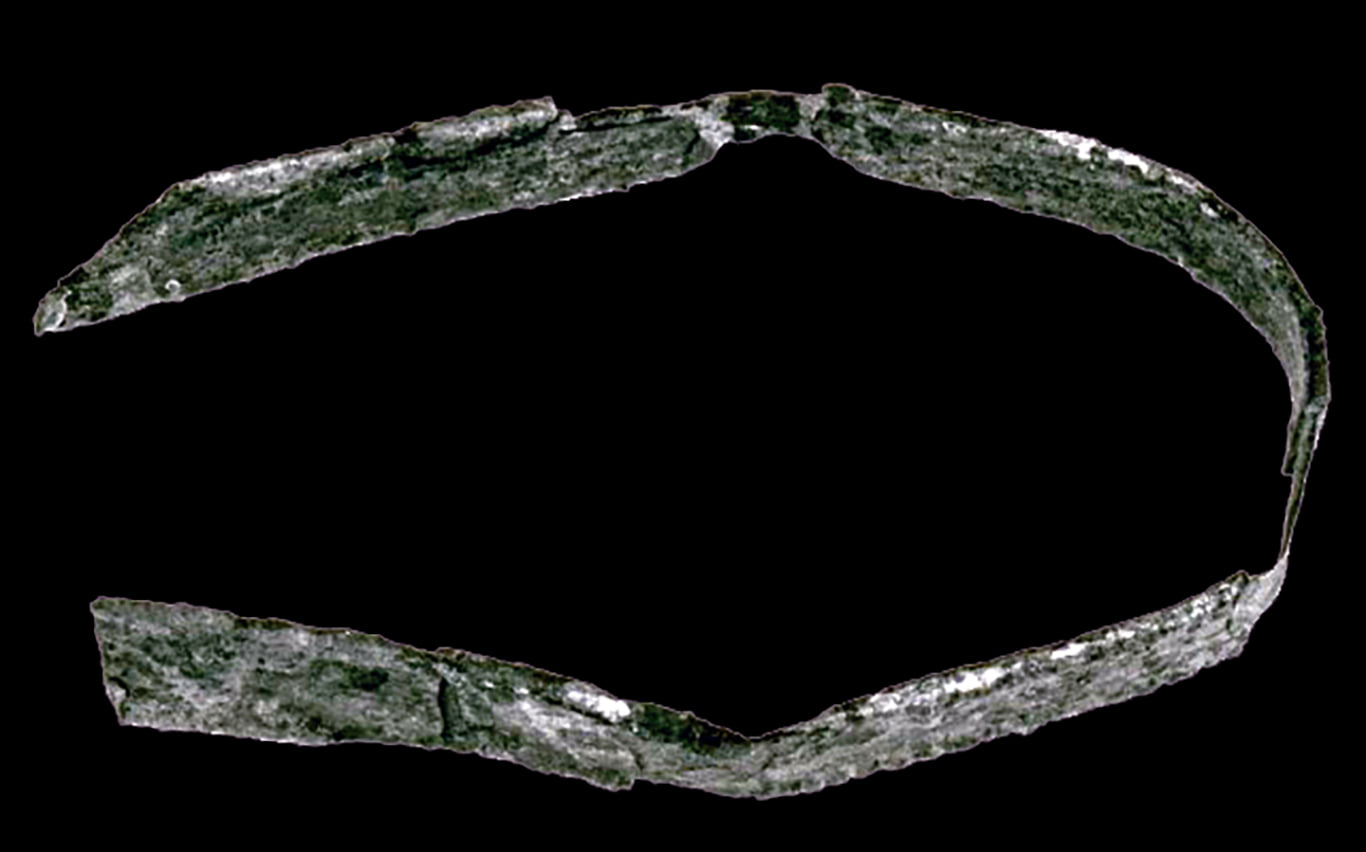
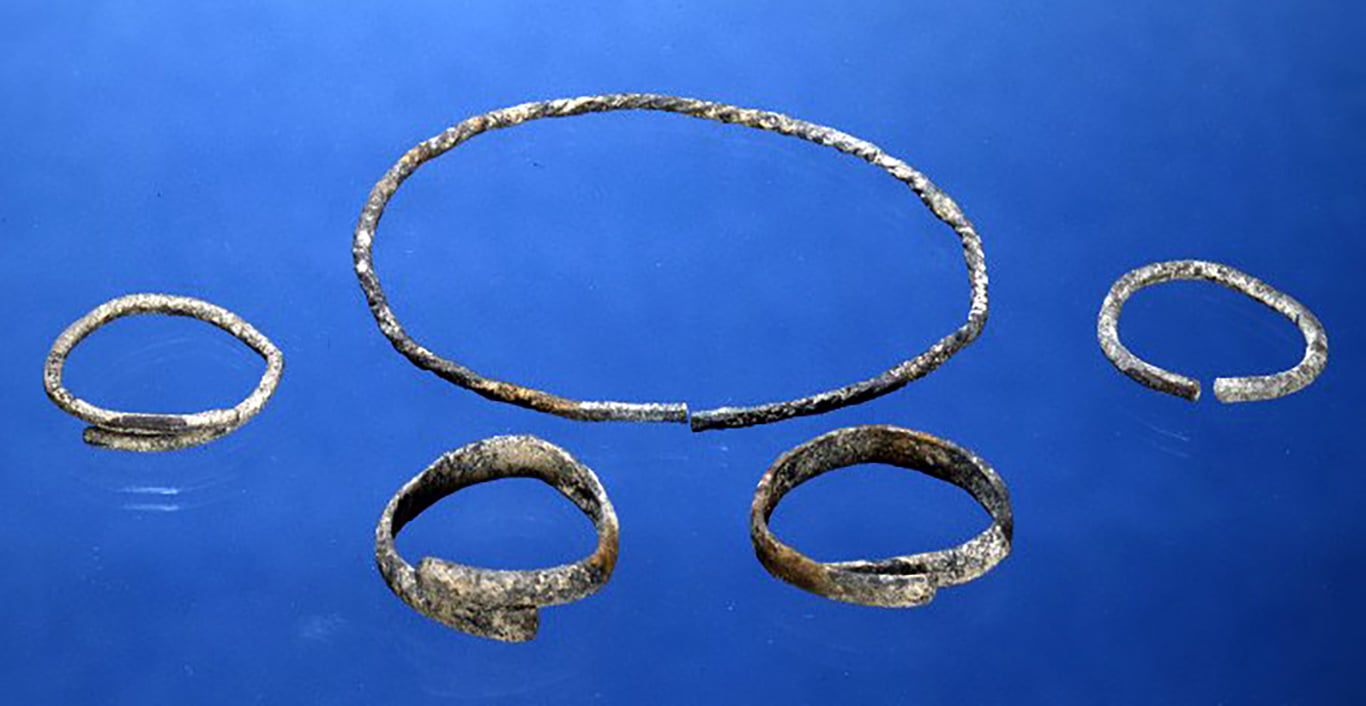
In the eastern cemetery, which he describes as rich, he found clay and marble vessels and figurines, as well as metal jewellery of the Early Cycladic II period (2800-2200 BC). The finds from his research are today in the British Museum.
In contrast to research that did not have the approval of the competent authorities, the efforts of the Greek State and in particular of the Archaeological Service to save what was possible of the antiquities of the islands, contributed to significantly enriching our knowledge of the burial customs, needs and concerns of the early Cycladic peoples.
On the activity of the Archaeological Service on the island, one member of the organization wrote:
I spent more than two months in Paros, Antiparos and Despotiko, excavating for most of the time graves of the same (Cycladic) period… In Paros, Antiparos and Despotiko… the most common to encounter are the more or less extensive cemeteries, while the individual graves are, as far as I have been able to ascertain, rarer. … In Antiparos there are four major cemeteries known to me, and they are located in the southern half of the island in the places called Apantima, Soros, Petalidi and Krasades. All however were excavated clandestinely, some by Th. Bent and his friends the Swan brothers, the others by a Frenchman.
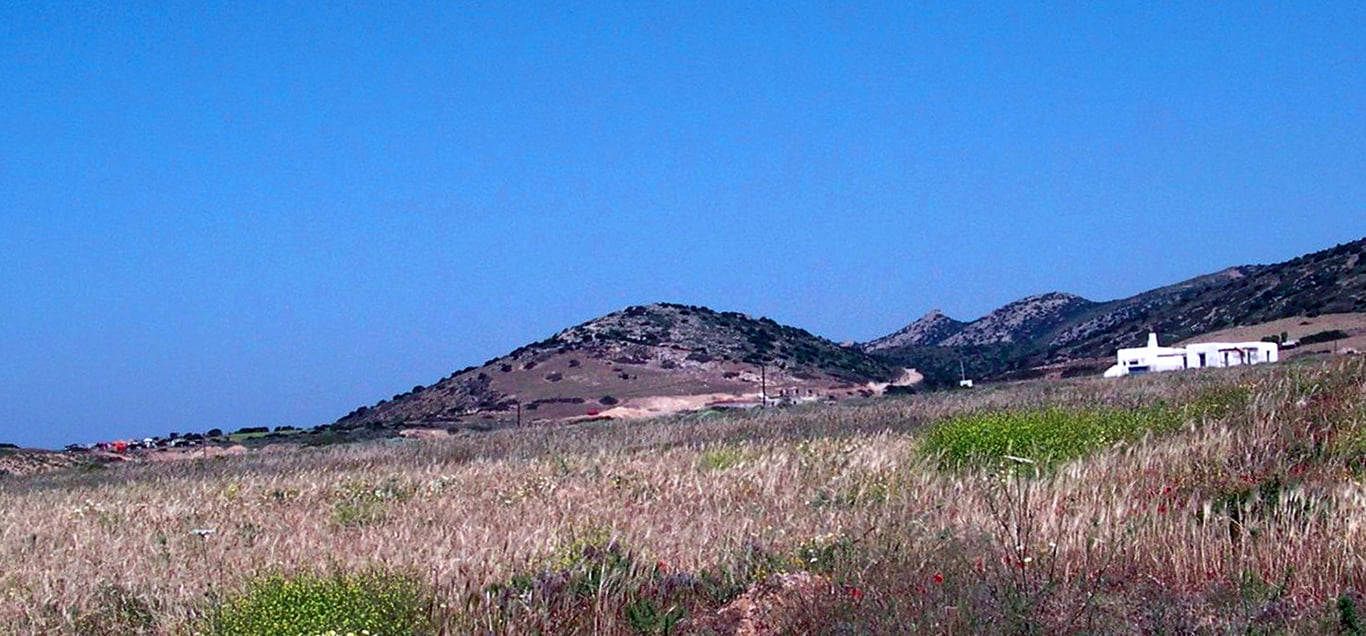
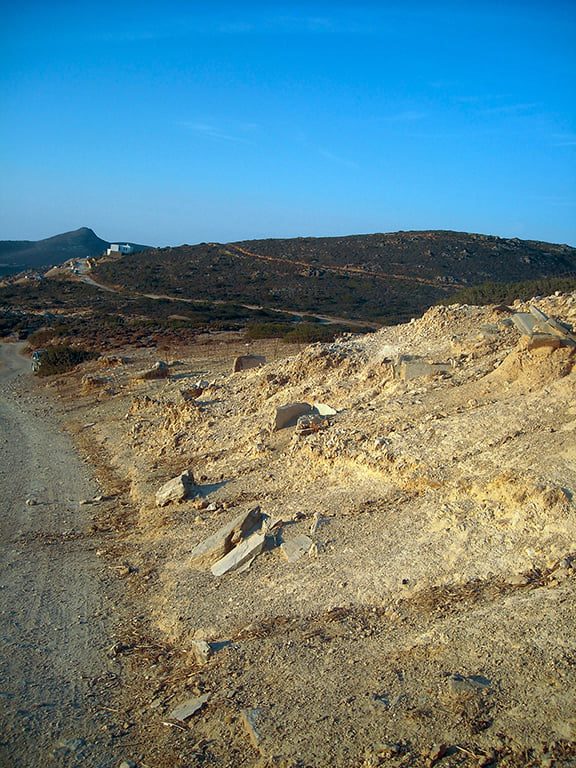
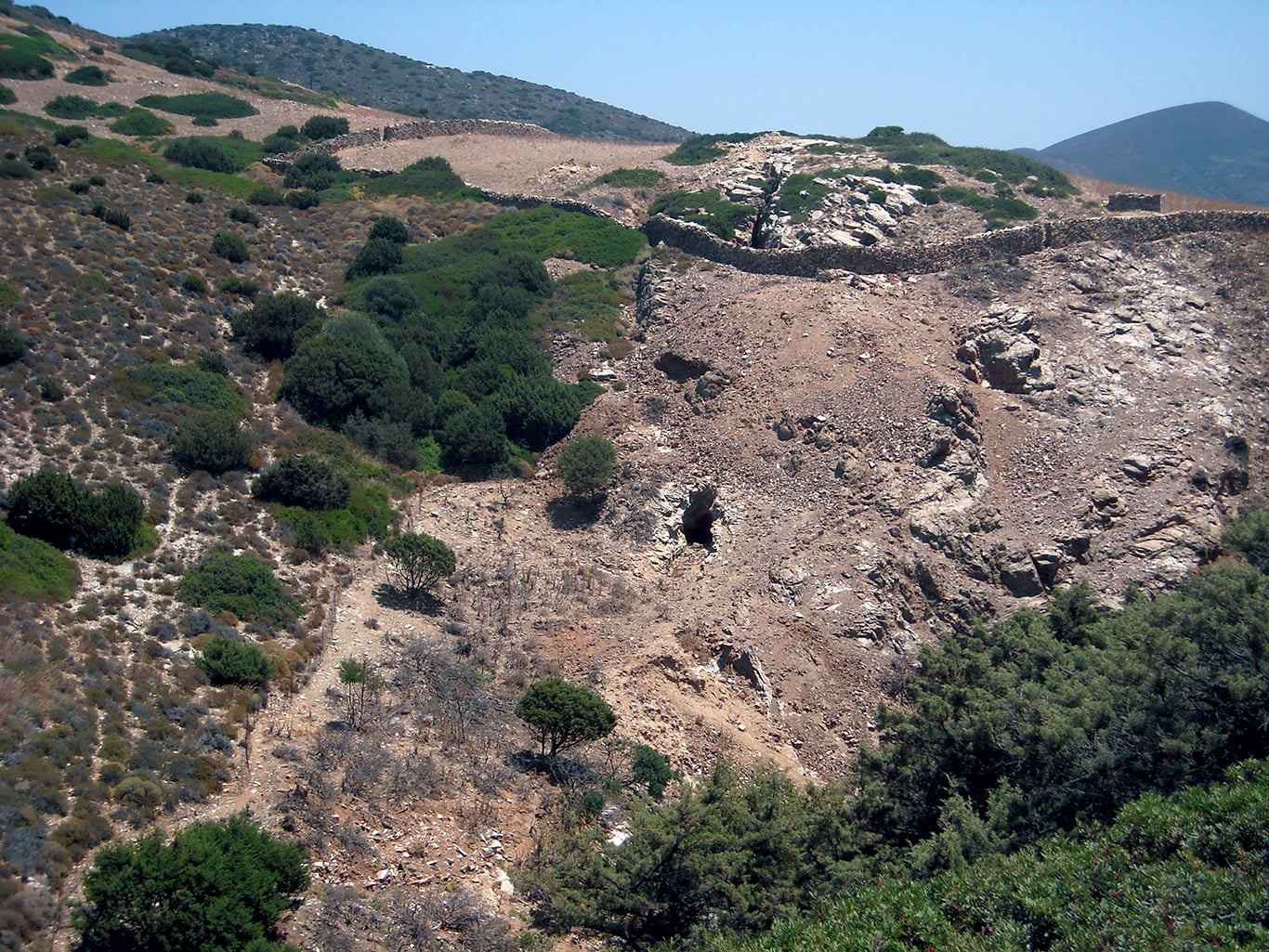
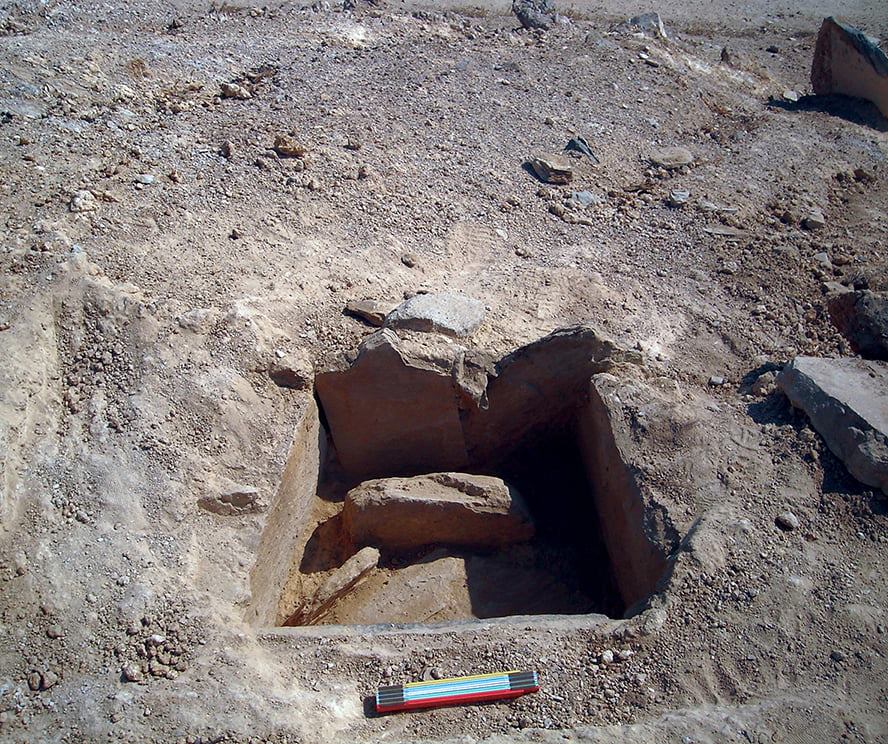
The only systematically investigated cemetery on Antiparos is the Early Cycladic one at Krasades, where Chr. Tsountas carried out an excavation in the 1890s. Krasades or Mnemoria is located in southwestern Antiparos, on the slopes of the Protochanas hill, near the area of Agios Georgios and a short distance from mineral-bearing zones. The settlement has not been located, although recent surface finds testify to it being close to the cemetery.
As Christos Tsountas states in his publication of his excavations, the location of four Early Cycladic cemeteries on the island was known – at Apantima, Soros, Petalidi and Krasades – but all of them had been clandestinely excavated. The Greek archaeologist excavated only the Krasades cemetery:
because this one, located near a mine and the workers’ dwellings, was not able to becould not be plundered by antiquities dealers, while the other three are located in places that are either completely uninhabited today or only very sparsely so.
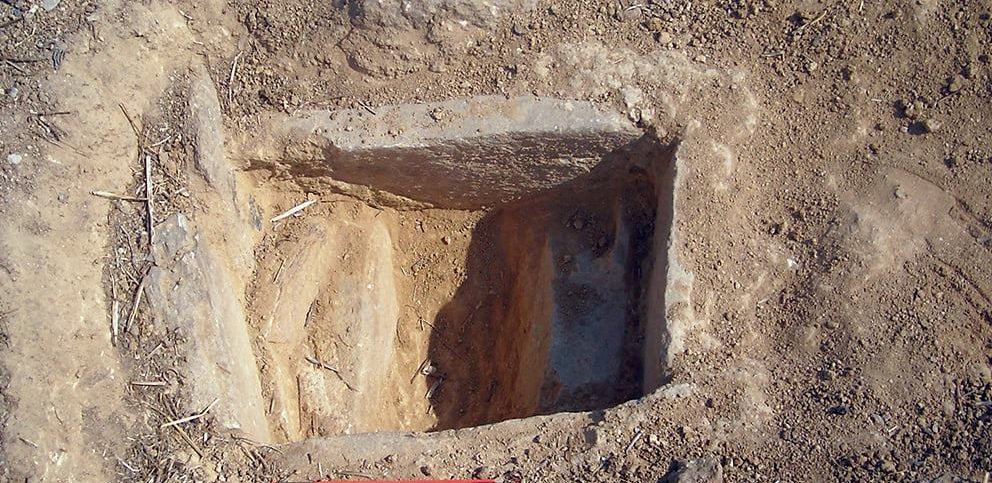
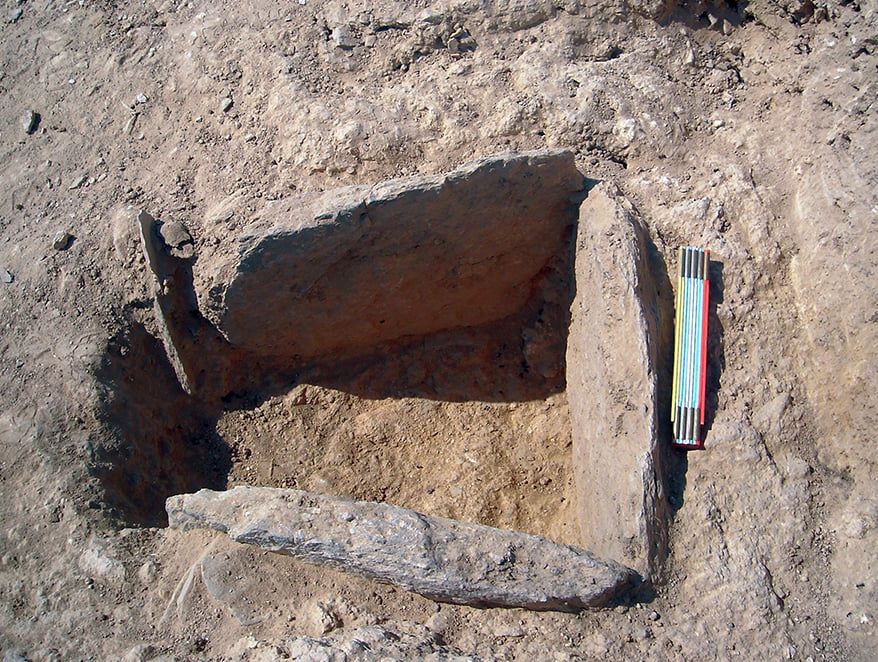
The Krasades cemetery, which is relatively extensive, consisted of at least 50 graves. The rocky outcrops observed at the site of the cemetery served to protect the graves from being washed away by rainwater, but they probably also separated the cemetery into groups of graves, indicating social or other forms of stratification.
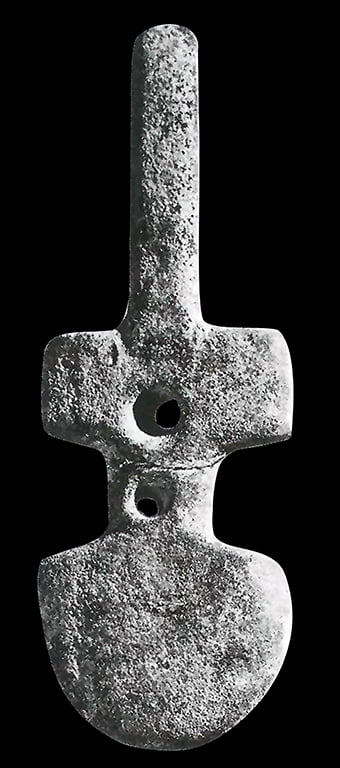
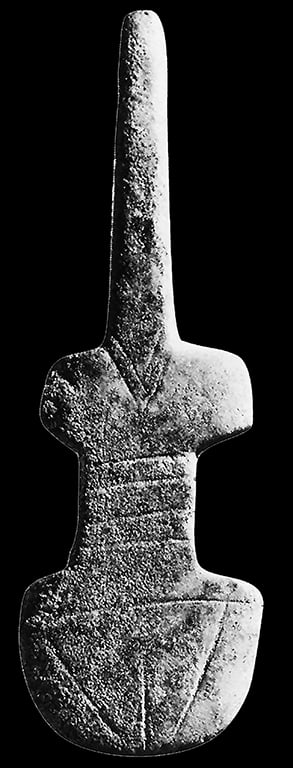
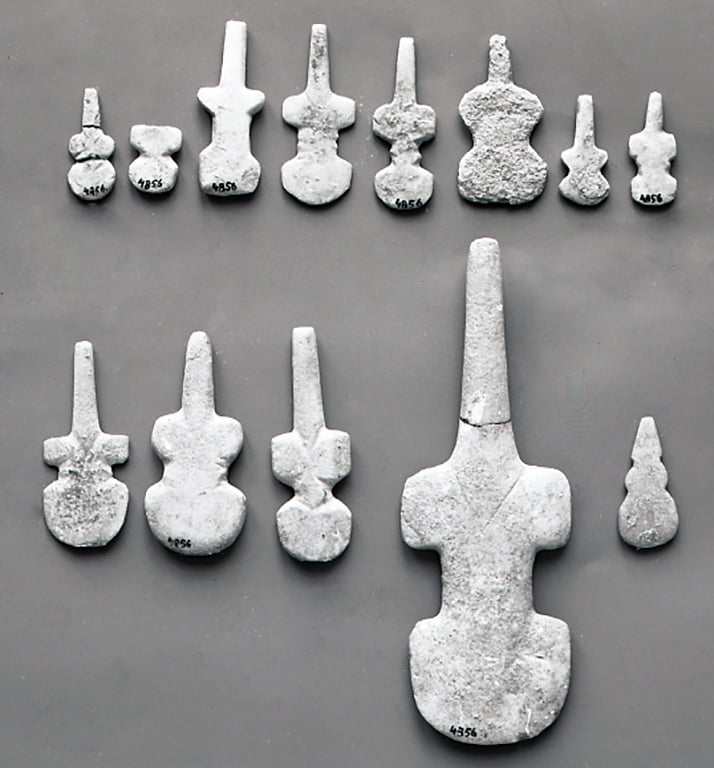
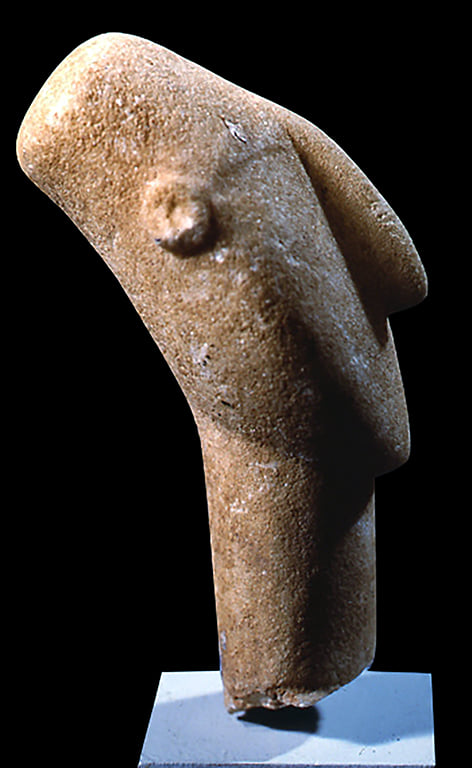
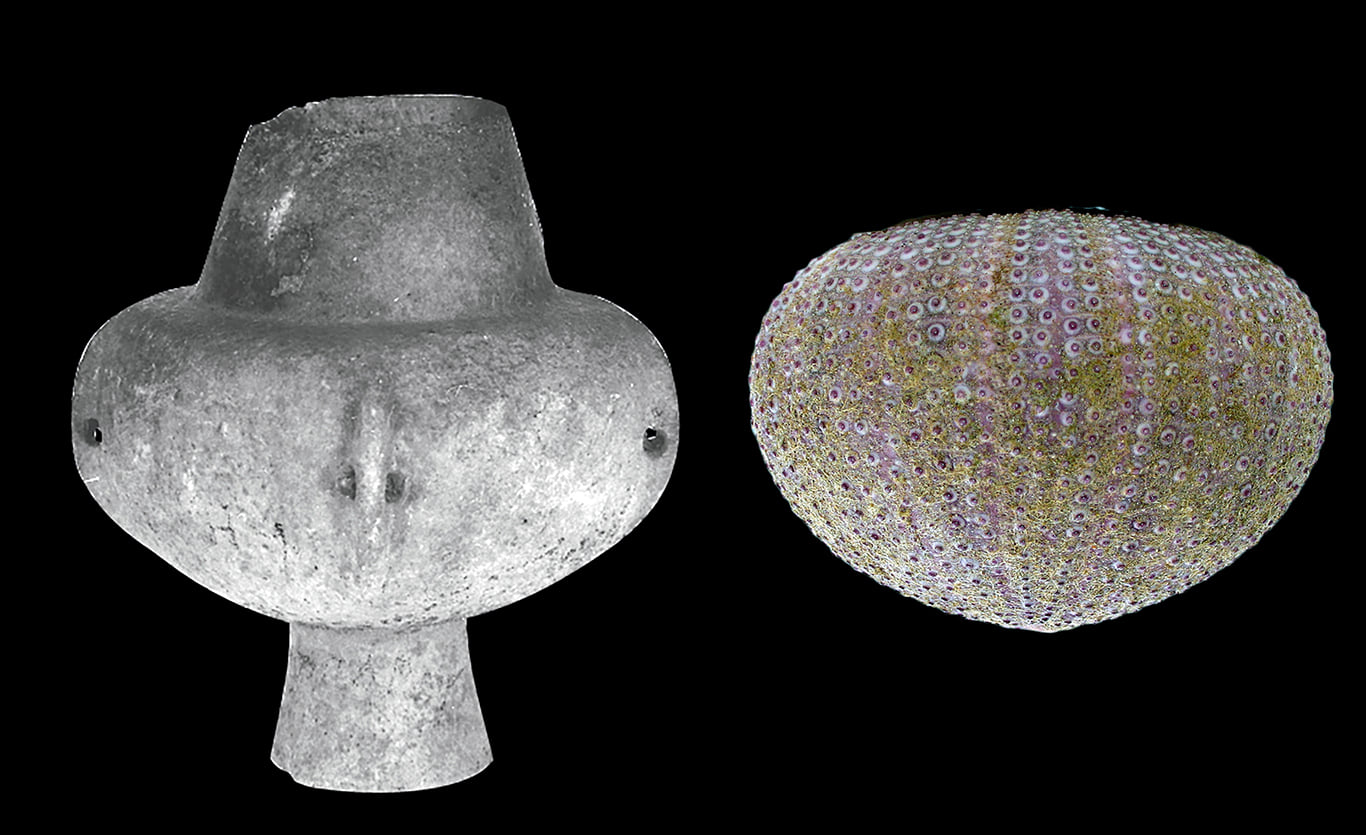
The excavations of Tsountas at Krasades brought to light marble figurines, marble and clay vessels, necklaces, stone beads, etc., which date mainly to the Early Cycladic I period (c. 3200-2800 BC).