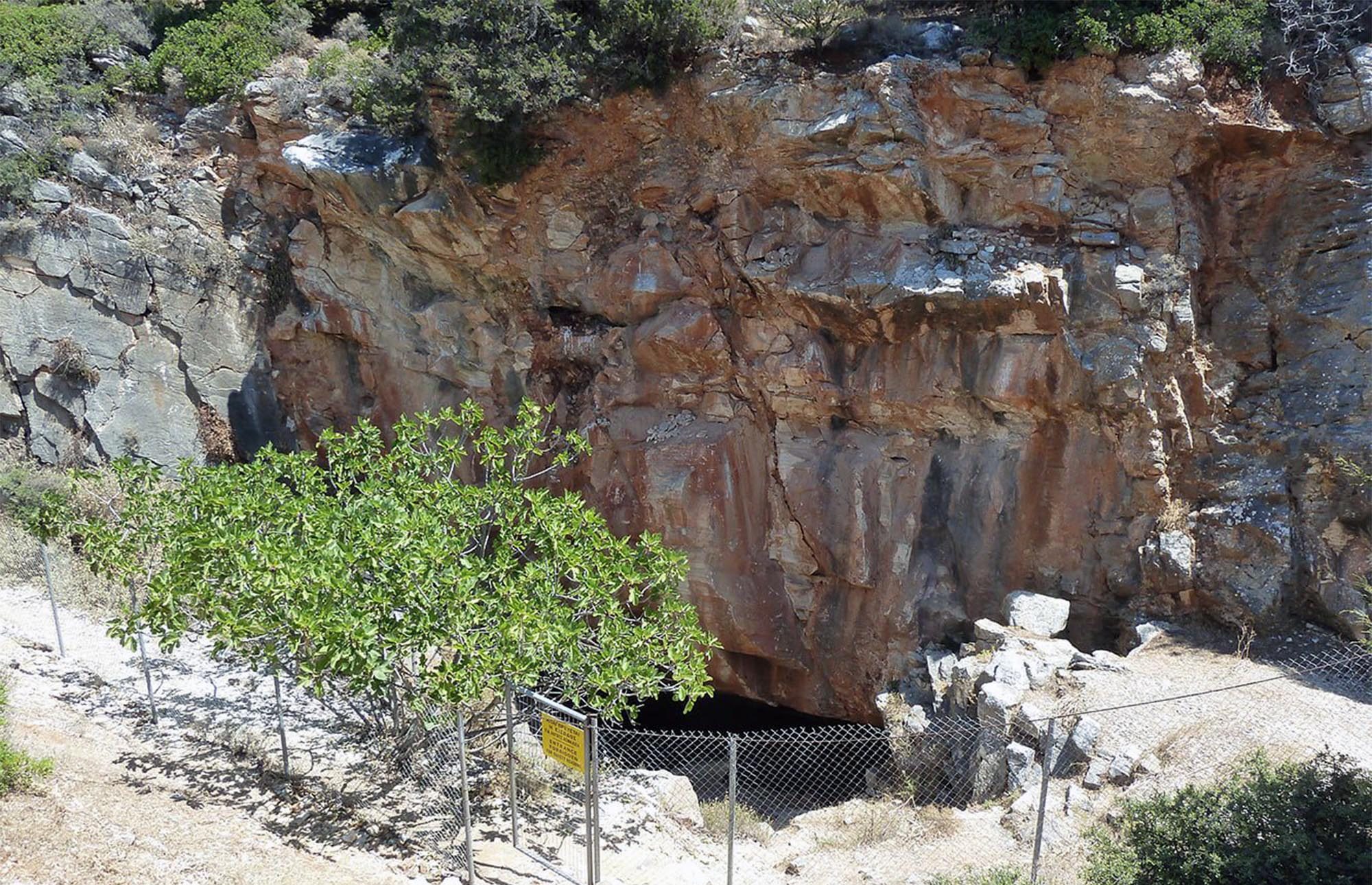


The ancient quarries are located in the Marpissa mountain range of Paros on the banks of the Skarpathiotis ravine. It was the site from which the precious mineral, marble, was being quarried since prehistoric times for the island’s use. From this material the Cycladic figurines and famous works of art of antiquity were created, such as the Child of Critias, the Treasure of the Siphnians, the Victory of Paeonios, the Hermes of Praxiteles, the Aphrodite of Melos, amongst others, as well as all the sculptural creations found in the Paros Museum. The so-called ‘lychnitis’ stone is famous: the white marble got its name either because it was mined from underground galleries with the light of a lamp (lychnos), or because it is of such an unparalleled purity that the light of the lamp can pass through it. Quarrying activity has continued in modern times. Incontrovertible witnesses to this last are the existing industrial buildings, part of the listed historical site (Government Gazette 97/AAP/2018).
The underground quarry galleries are described by travellers of the 17th and 18th centuries and up to seven in number were recorded. Today, two are known and preserved, those of the Nymphs and those of Pan, as the mineralogist Andreas Kordellas has named them. Additionally, to the west in the wider area at the locations of ‘Lakkoi’, ‘Spilies’ and ‘Thapsana’ there are open-pit quarry sites.
The Quarry of the Nymphs
The most well-known example, the Nymphs’ Quarry, took its name from the inscribed votive relief carved on the left side of the southern portico: a dedication by Adamas from Thrace to the Nymphs, a work of the 4th century BC (fig. 5) (fig. 6-7). The underground portico is 190 m long and 50-120 m wide, with a height of up to 4 m. As one moves further in, a steep slope develops. In the southern part of the quarry, the rock is shaped into a pilaster to support the overlying mass as much as possible. The current condition of the quarry owes its formation to the Belgian company active in the 19th century.
The Quarry of Pan
The Quarry of Pan is similar in its formation. On its walls are inscribed the names of its visitors who went down it to explore. Typical examples are the names of Choiseul Guffier 1176, Fauvel 1789, Joseph Brooke 1818, etc.
The economic and artistic importance of marble
From very early on, the extraction of marble as an activity generating wealth brought in great returns that enabled Paros to acquire economic power and fame. In addition, it was logical that the art of sculpture should also develop. It is no surprise that epigraphic testimonies state that during Roman times, even from the time of Augustus, marble quarrying was the property of the Roman emperor.
The Parian sculptors
Famous sculptors of antiquity included Parians, such as Aristion, Agoracritus (collaborator of Phidias on the Parthenon), Skopas, etc. The Parian artists worked scattered throughout the islands and mainland, leaving a strong artistic mark behind.
Legal status
The area of the ancient quarries and the wider surroundings have been declared an archaeological site since 1974 and was given new boundaries in 2000 (Government Gazette 105/B/1974 and Government Gazette 105/B/2000). An order for forced expropriation and purchase had already been sent by the Cyclades Regional Authority in a bid to protect and promote the underground quarry galleries and the wider surrounding area.