

This is a project designed and implemented by the Ephorate of Antiquities of the Cyclades in the Ministry of Culture with funding from the Regional Operational Programme of the South Aegean Region. The operation is part of the Operational Program ‘South Aegean 2021-2027’, with a total budget of €4,325,714.22 underwritten by the European Regional Development Fund.
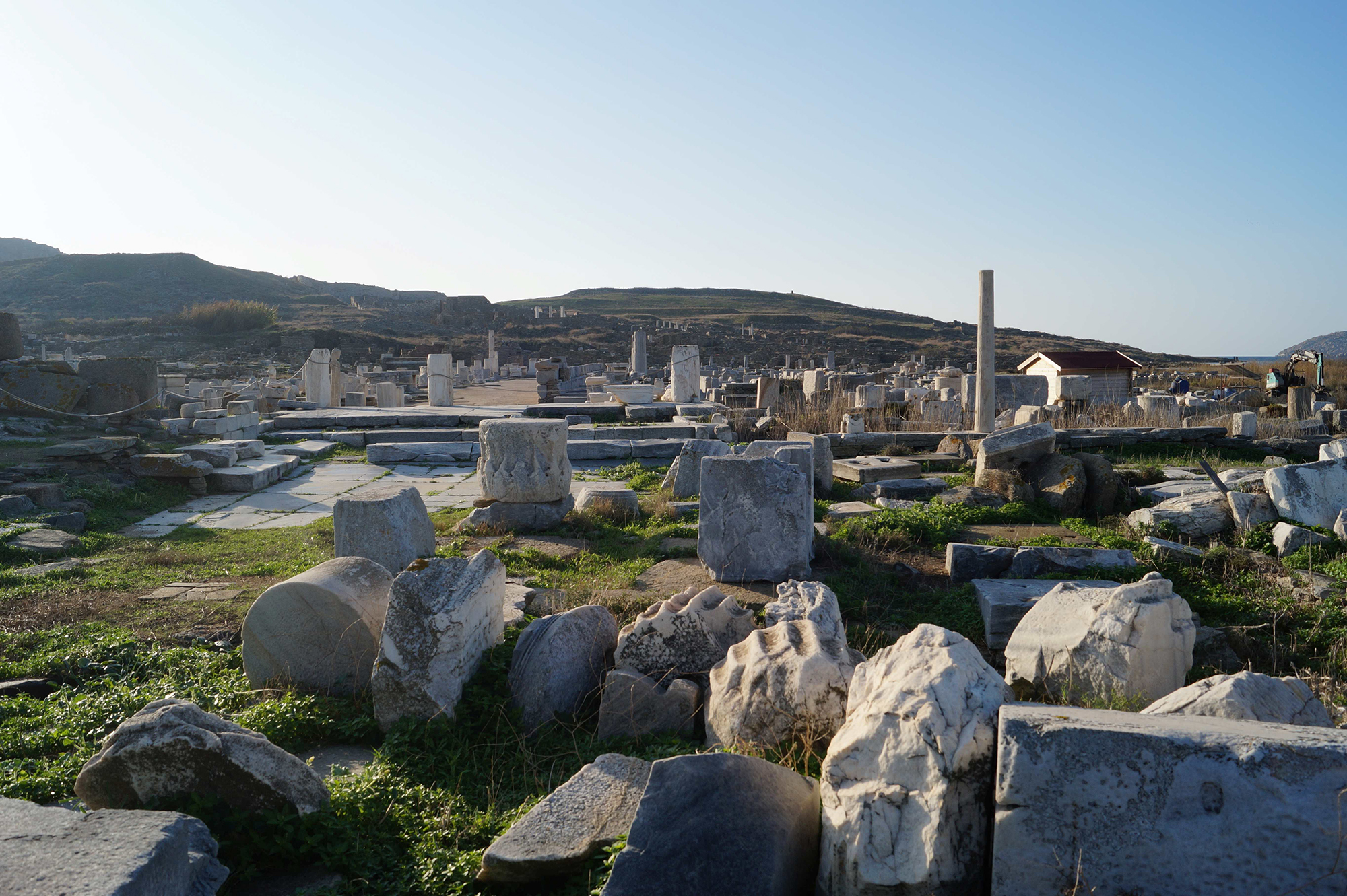
With traces of habitation dating back to the 3rd millennium BC, Delos was the most significant island of the Cyclades, especially from the Classical to the Roman period. Today, it is one of the leading, as well as the largest, visitable archaeological sites in Greece, where each visitor has the opportunity to experience a multitude of monuments and ancient districts.
Due to the importance of the island in the cultural heritage of the Cyclades, the main objective of the project is to protect, preserve and further highlight the antiquities on the island of Delos, in order to qualitatively and quantitatively enhance the visitor’s experience there.
The scope of the works involves:
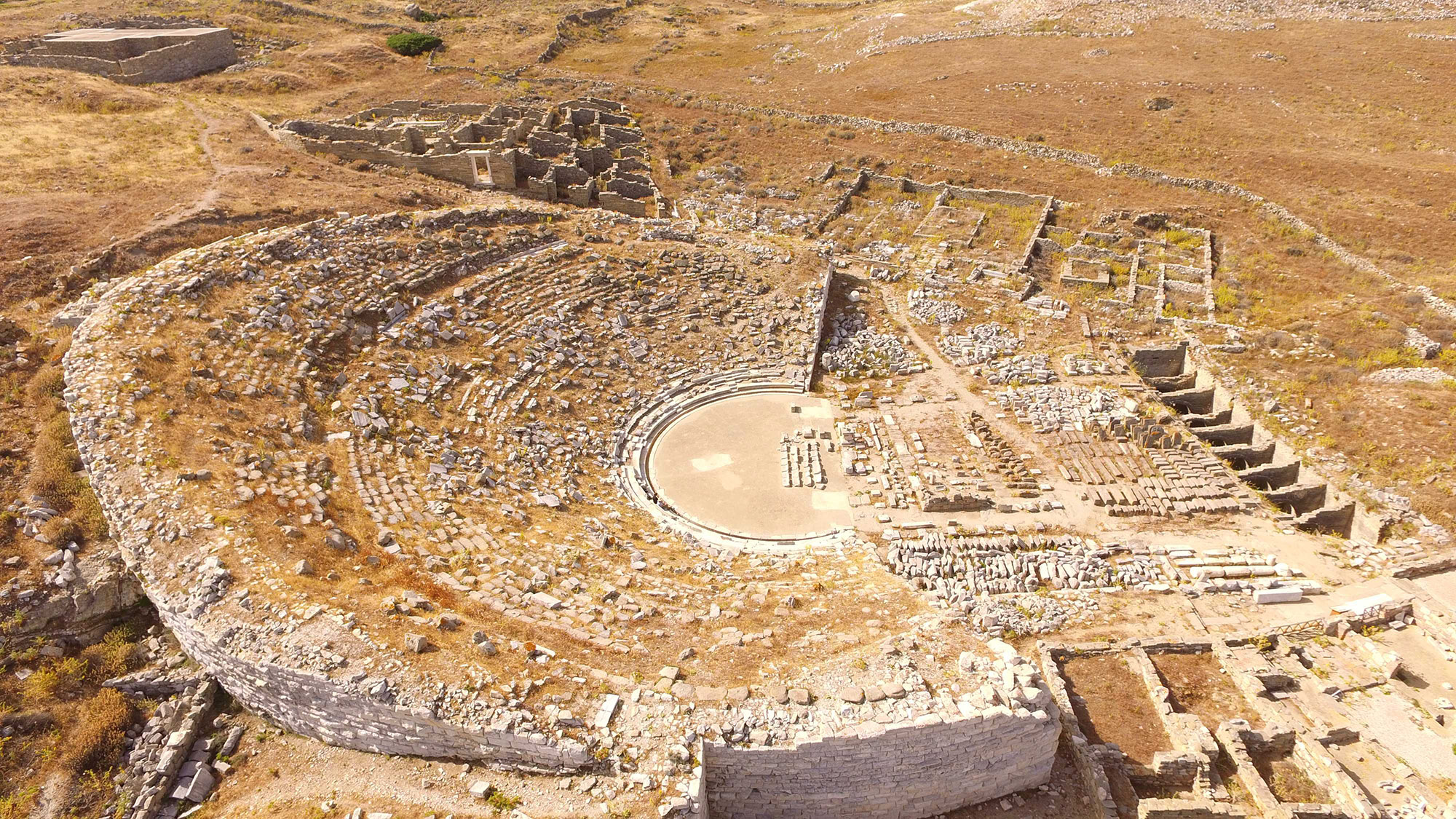
- a) The restoration and promotion of selected monuments/areas of the archaeological site (Temple of Apollo, the Granitis Palaestra, House of Diadoumenos, the Sanctuary) and the development of visitor routes to the Sanctuary and to the districts of the Theatre and the Lake.
- b) The upgrading of the museum/exhibition spaces with repair work on the shell of the archaeological museum building, equipment/renovation of auxiliary spaces and upgrading of the exhibition therein.
These interventions will ensure the country’s continuous compliance with the requirements regarding the fulfilment of the criteria for inclusion in the UNESCO World Heritage List. The protection and promotion of the emblematic archaeological complex of Delos is consistent with international obligations for the balanced and sustainable management of important sites and monuments of natural and cultural heritage.
Upon completion of the Project, the visitor will have an improved understanding of the antiquities and history of Delos through the restoration, rehabilitation, conservation and promotion of key monuments of the area, as well as through the upgrading of the archaeological museum.
Among the aspects expected to benefit are the educational dimension of interaction with the monuments and the scholarly documentation of the monuments that will be restored and promoted. Consequently, both visitors and experts from the scientific community will reap positive outcomes from this project.