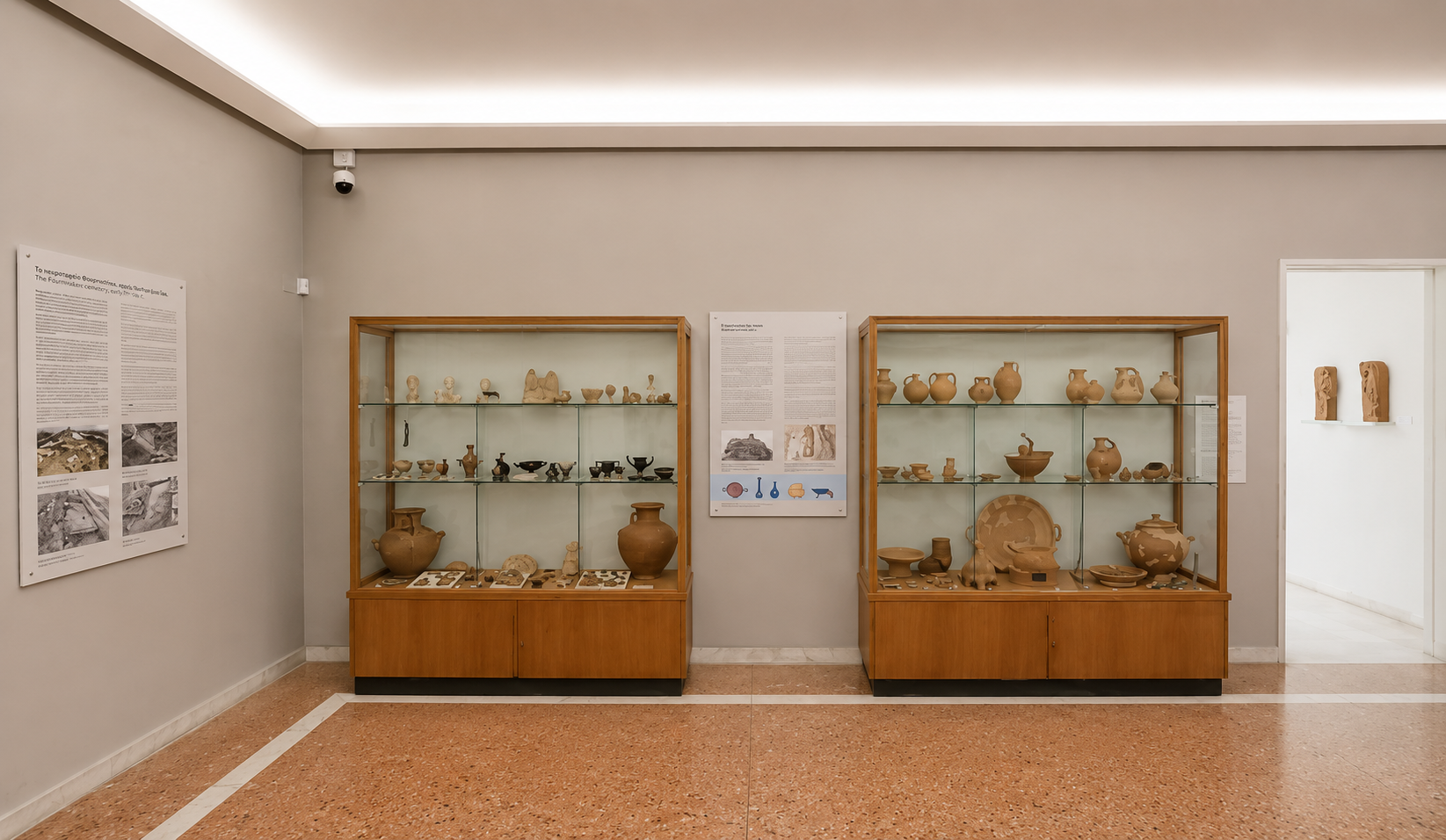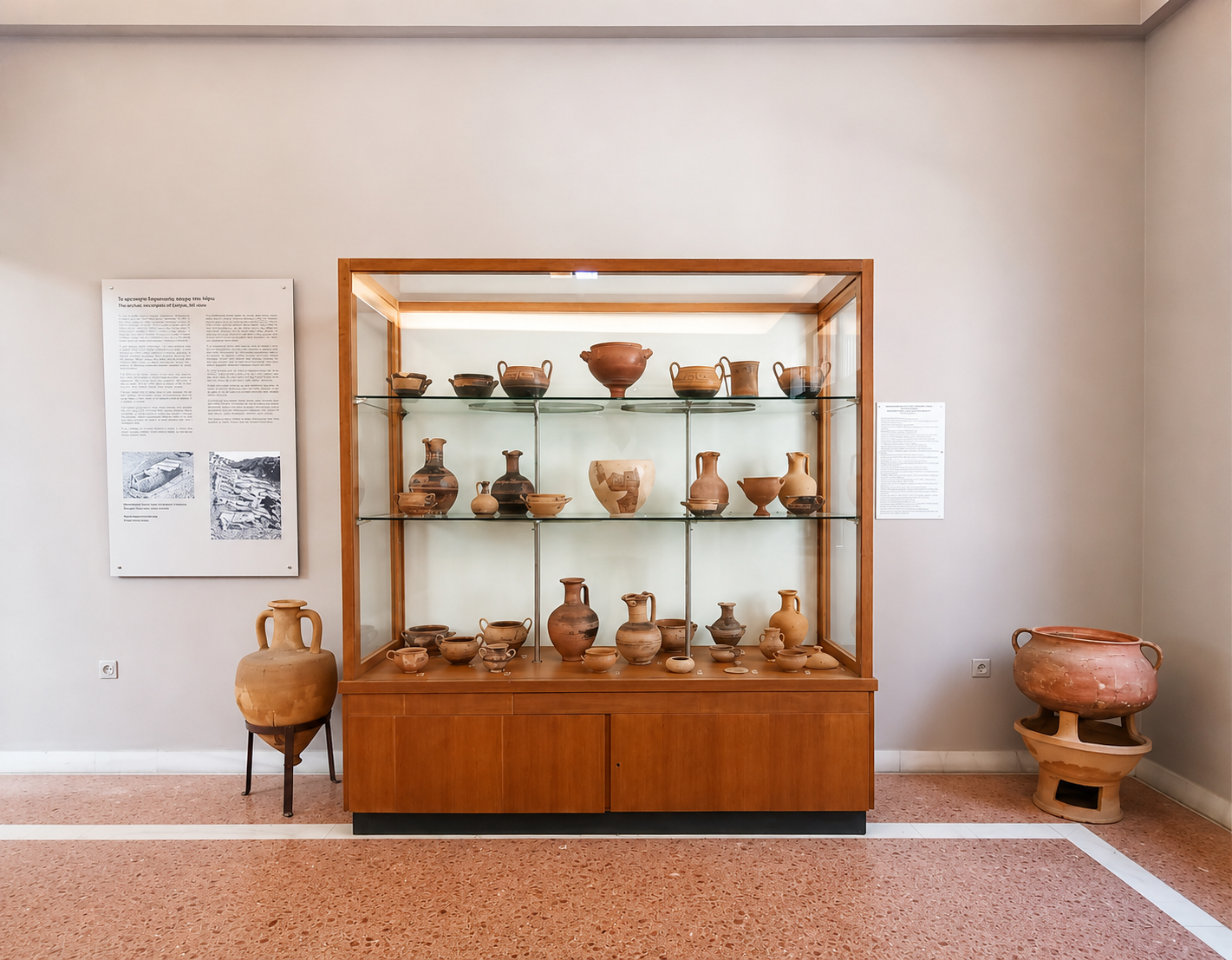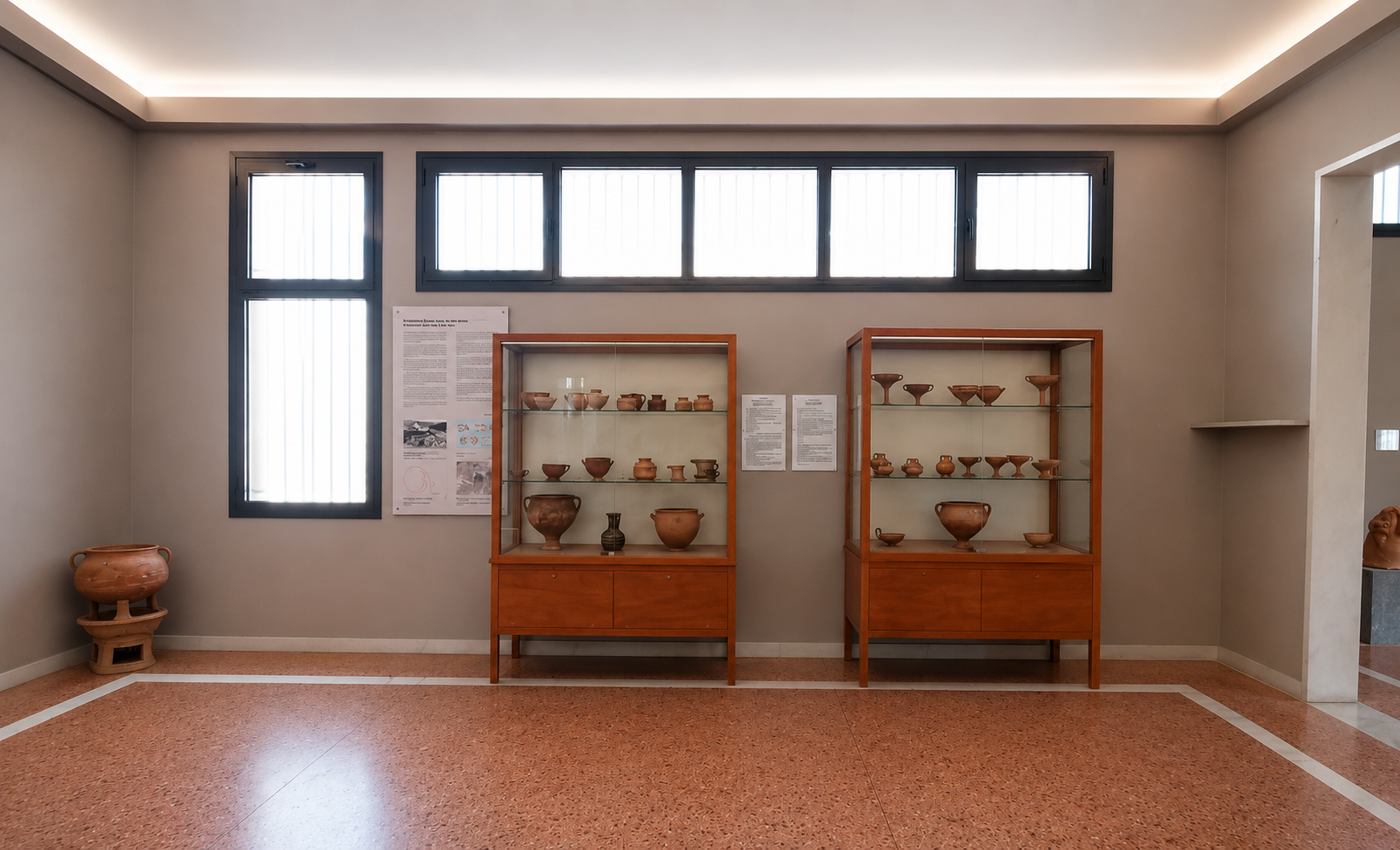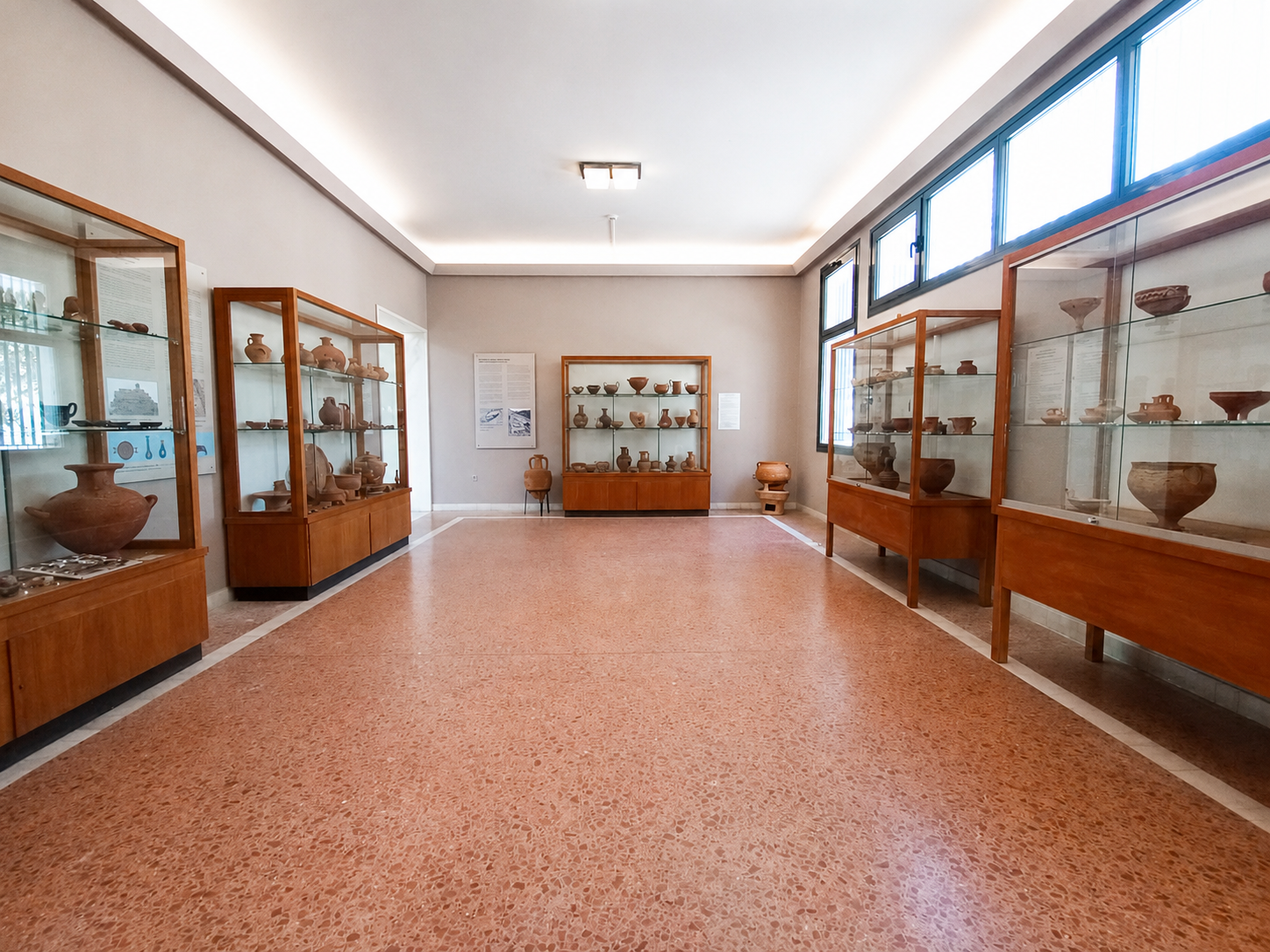


The permanent exhibition of the Archaeological Museum of Tenos has been renewed with the rearrangement of Room 2, which includes display cases with finds from important archaeological sites of the island, such as Xombourgo, Vardalakos, the ancient city of Tenos, Kionia, Agia Thekla, Ktikados, Kampos and Kardiani.
Clay and glass vessels, jewellery, metal objects, clay and marble figurines and other items illuminate aspects of daily life, burial customs and worship on Tenos during antiquity. They invite visitors to embark on a new journey into the island’s history.
As part of the rearrangement work, the finds from the undamaged Mycenaean tholos tomb of Agia Thekla (13th-12th centuries BC) are included in the Museum’s permanent exhibition for the first time: this is one of only three Mycenaean tholos tombs known to date in the Cyclades,. In its form and construction method, the tomb of Agia Thekla follows the well-known models of tholos tombs of mainland Greece. Circular in plan, it was covered with a dome and had an entrance-passage leading to the entrance. The tomb was used for multiple burials of members of a local ruling family, as indicated by the wealth and variety of offerings accompanying the dead.
The tour of the island’s historical journey continues with selected ceramic finds from the Geometric period (10th–8th centuries BC). During this period, Tenos was taken over by Ionians and developed relations with two other important Ionian centres of the time, Athens and Euboea. Grave finds from the Geometric period testify to significant habitation on the island: known from Xombourgo, Ktikado, Kampos and Kardiani.
The exhibition concludes with finds (vessels, jewellery, figurines, etc.) from Xombourgo and the ancient city of Tenos, which cover a long period of time, from the 7th century BC up to the 1st/2nd centuries AD.
Archaeological research at the foot of the steep rocky hill of Xombourgo, with the medieval castle at the top, brought to light significant archaeological remains, such as fortifications, sanctuaries, public buildings and an extensive cemetery. These finds reveal that Xombourgo was the most important residential and ‘political’ centre of Tenos for many centuries, from the 10th to approximately the middle of the 4th century BC, when it was abandoned.
The ancient city of Tenos was founded around the middle of the 4th century BC, with the movement of the main residential centre from Xombourgo to the area of today’s Chora. It continued to be inhabited at least until the 4th century AD. Archaeological finds, as well as historical and epigraphic evidence, provide us with valuable information about the ancient capital of the island, Asty, which had fortifications, an aqueduct, sanctuaries, public buildings and extensive cemeteries.