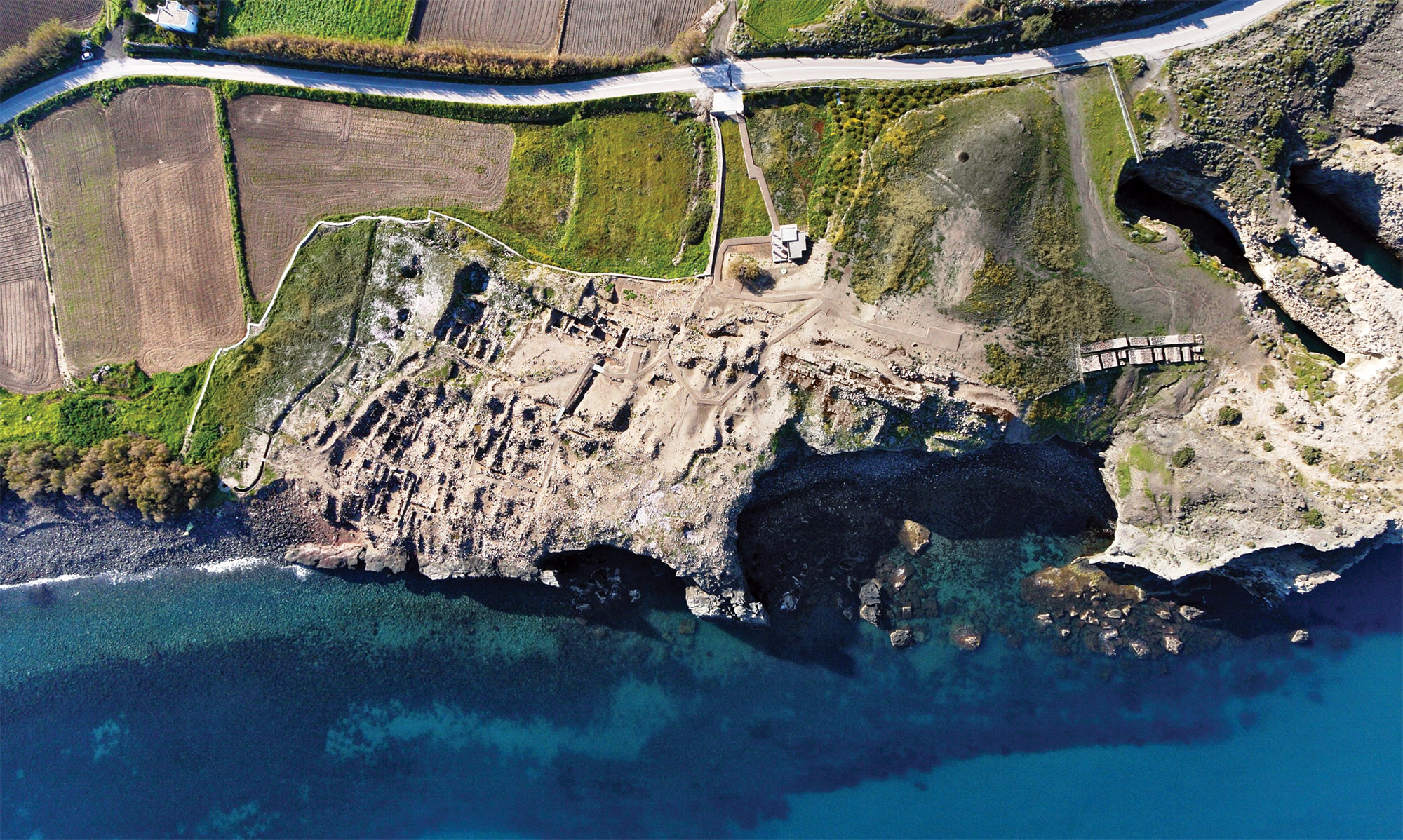


Phylakopi is one of the most important settlements in the prehistoric Aegean, with a continuous habitation throughout the Bronze Age (3rd and 2nd millennia BC). The small hill on which it is built was once a headland with a large bay to its east forming a sheltered cove to the south. Today, the bay has been filled by alluvium and erosion has washed some of the headland and ancient remains into the sea.
The earliest evidence of habitation in Phylakopi is a small settlement of the Early Cycladic period (3rd millennium BC), which until the end of hat time gradually expanded (Phylakopi I). Continuously developing during the Middle Bronze Age (first half of the 2nd millennium BC – Phylakopi II), it is perhaps the only settlement left on the island towards the end of the period, with an estimated area of over 2.5 acres. Its general destruction is attributed to an earthquake.
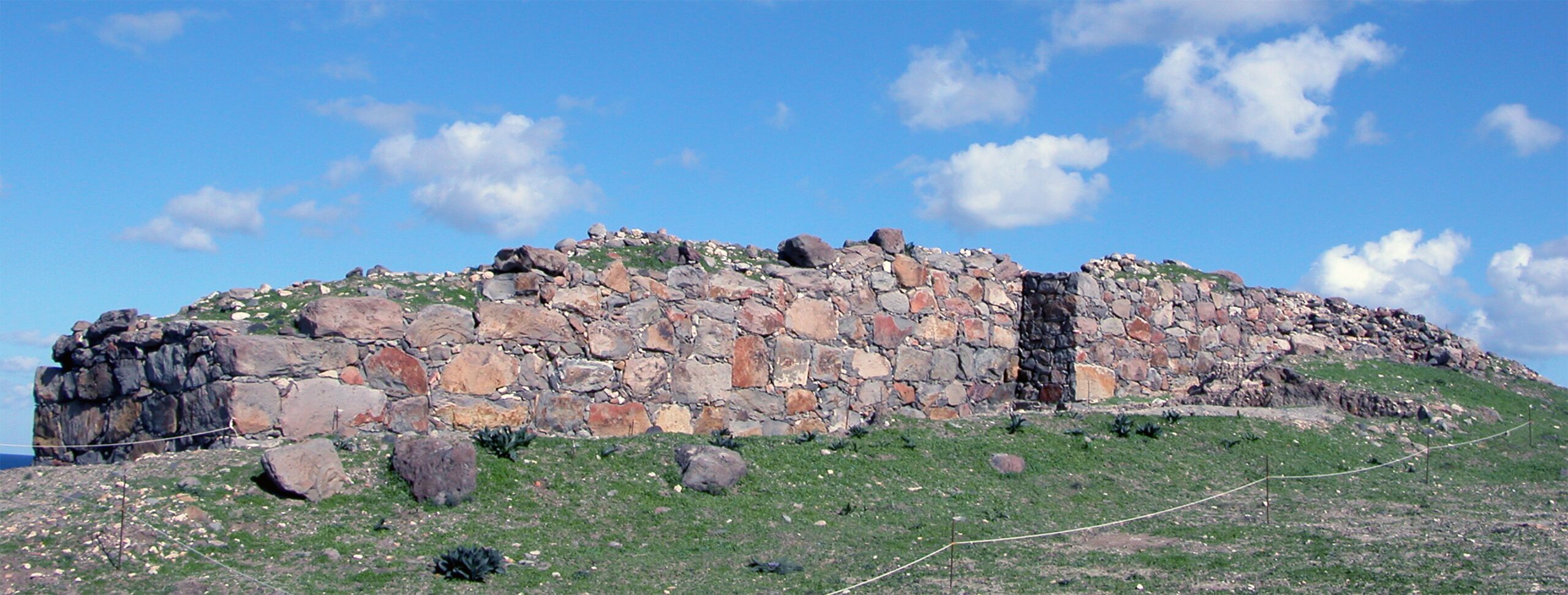
At the beginning of the Late Bronze Age (around the middle of the 2nd millennium BC) a strong wall of polygonal masonry (whose line broken into segments by insets) was built at the neck of the cape. The settlement was also rebuilt (Phylakopi III) with structures decorated with frescoes of exceptional artistic merit. It developed into an important commercial port between Crete and mainland Greece, influenced by its contacts with the two worlds, with the Minoan prevailing initially. Part of a clay tablet with Linear A writing, found in a megaron-shaped building probably of an administrative nature, indicates an organization run on Minoan lines. Part of the settlement was destroyed by fire during the time of the gradual expansion of the Mycenaeans in the Aegean.
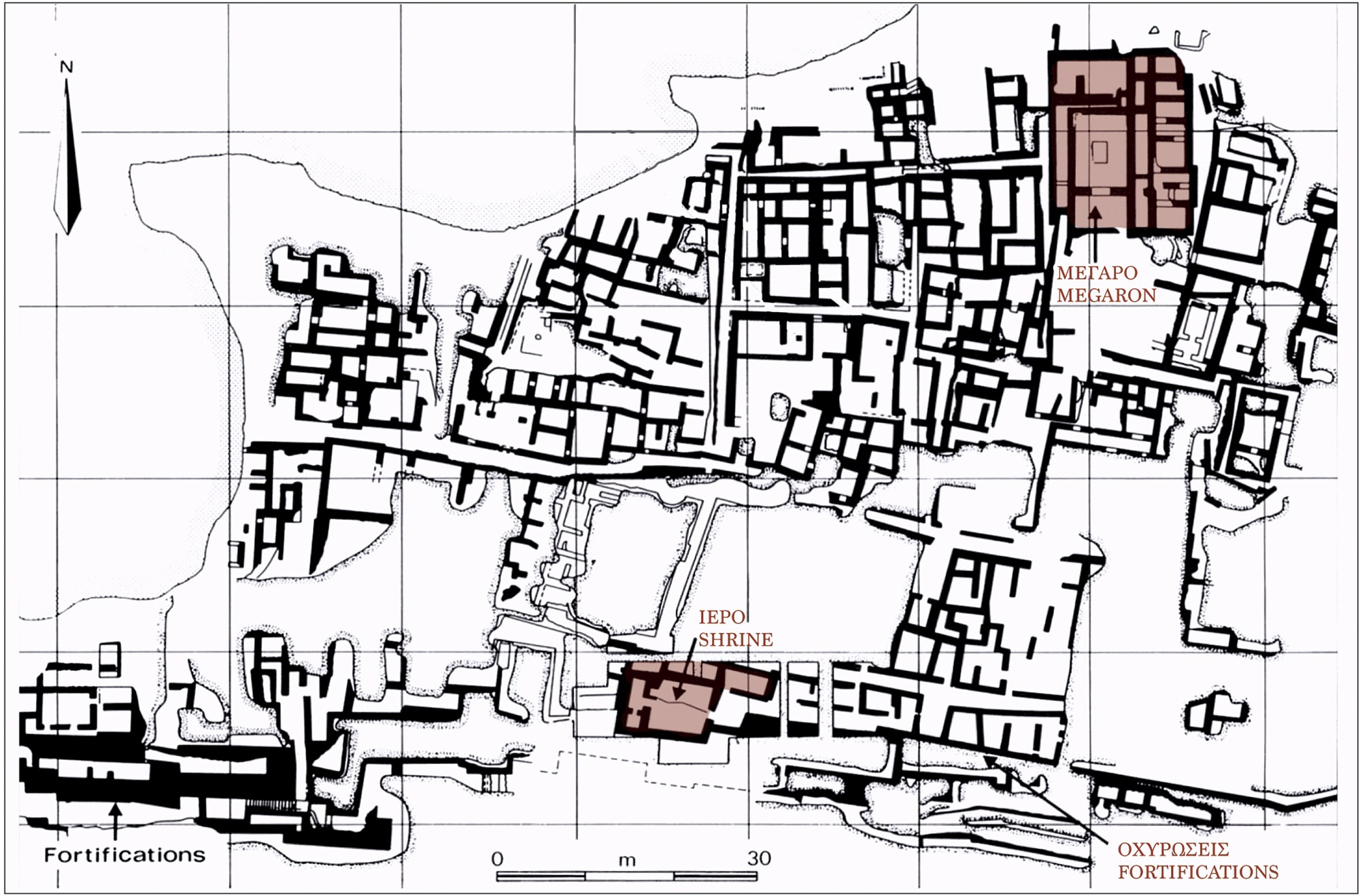
Last in the line of successive settlements is that coinciding with the period of Mycenaean supremacy in the Cyclades (LH III – Phylakopi IV), a settlement with fill ‘urban’ characteristics, wide external contacts and an important position in the Aegean. It is probably the central settlement on the island, with an area estimated at 7 acres and a population of at least 900 people. It has a strong fortification, which was reinforced, reconstructed and expanded at the beginning of the 13th century BC; rectangular stone-built houses were organized as a rule into insulae, served by a network of roads oriented to the points of the compass and supplied with a drainage system. Benchmark structures of the settlement are two buildings added during the reconstruction of its eastern part: the megaron and the sanctuary.
The megaron, unique in the Cyclades to now, was built at the beginning of the 14th century BC (LH III A period). Its architectural structure (a central sector with a porch giving onto a large hall possibly with a central hearth, flanked by corridors, and with wings with auxiliary spaces) recalls the Megara of the Greek Mycenaean palaces. Its presence is interpreted as a result of cultural influence or as evidence of the settlement of Mycenaeans from mainland Greece.
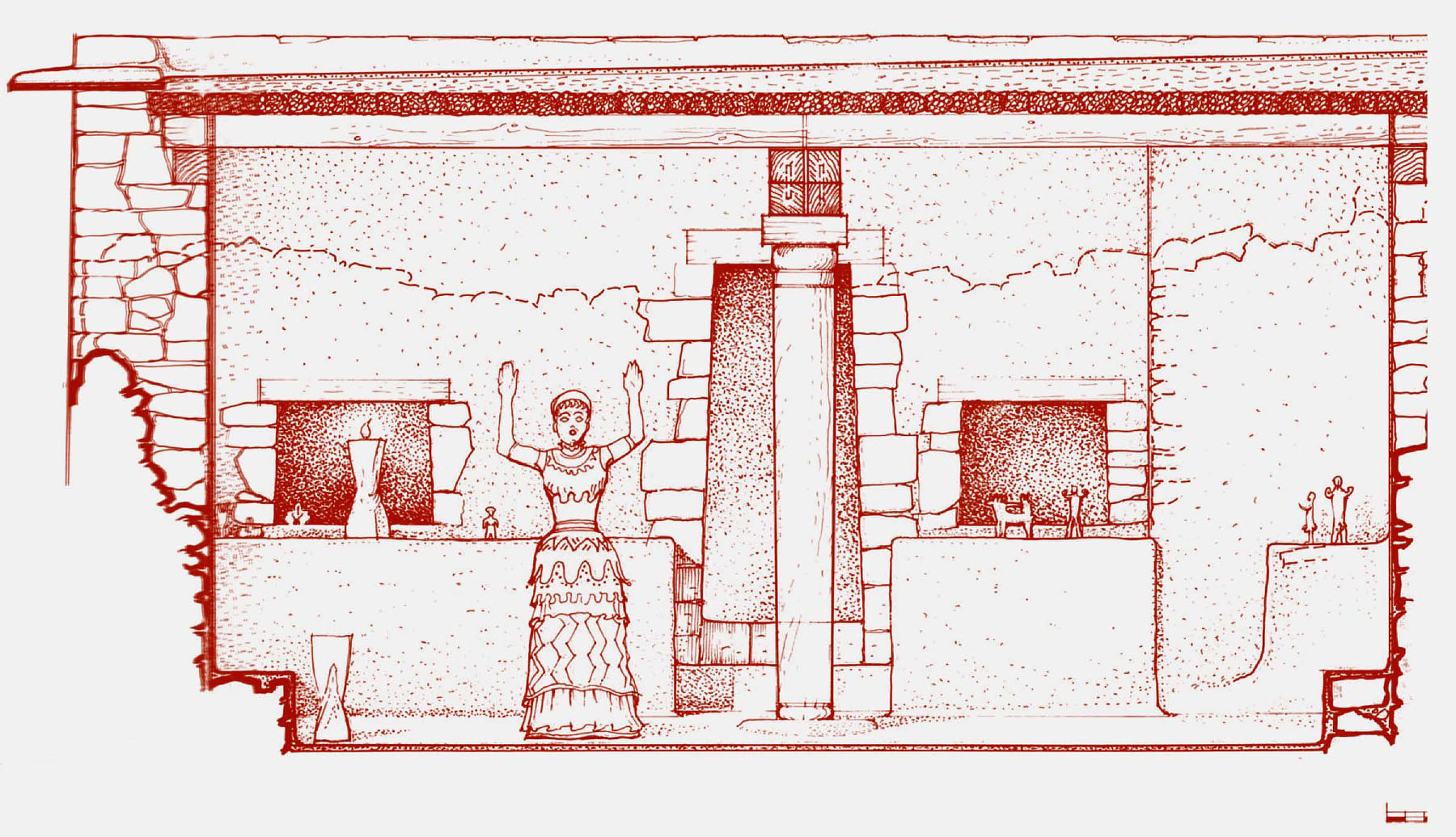
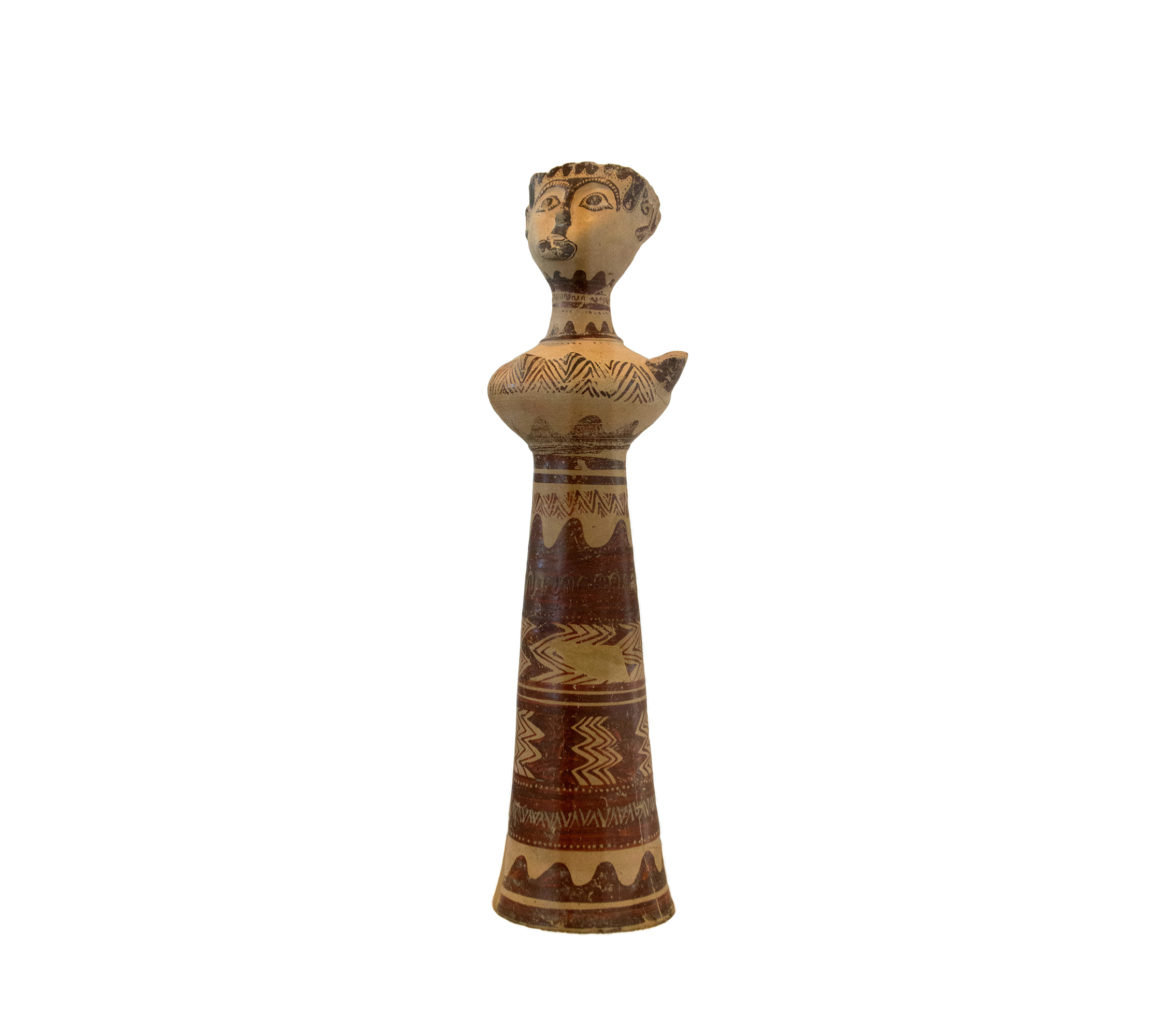
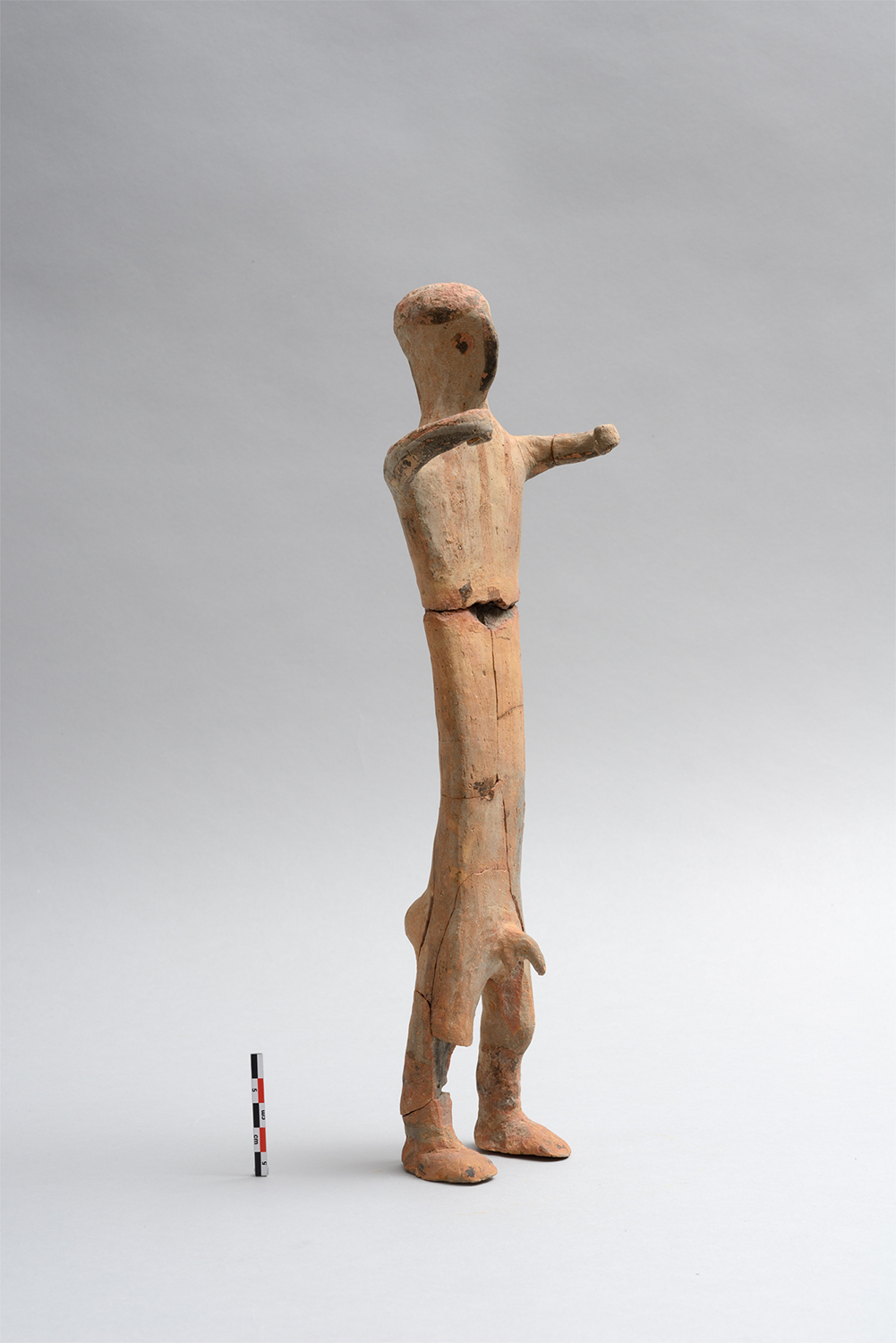
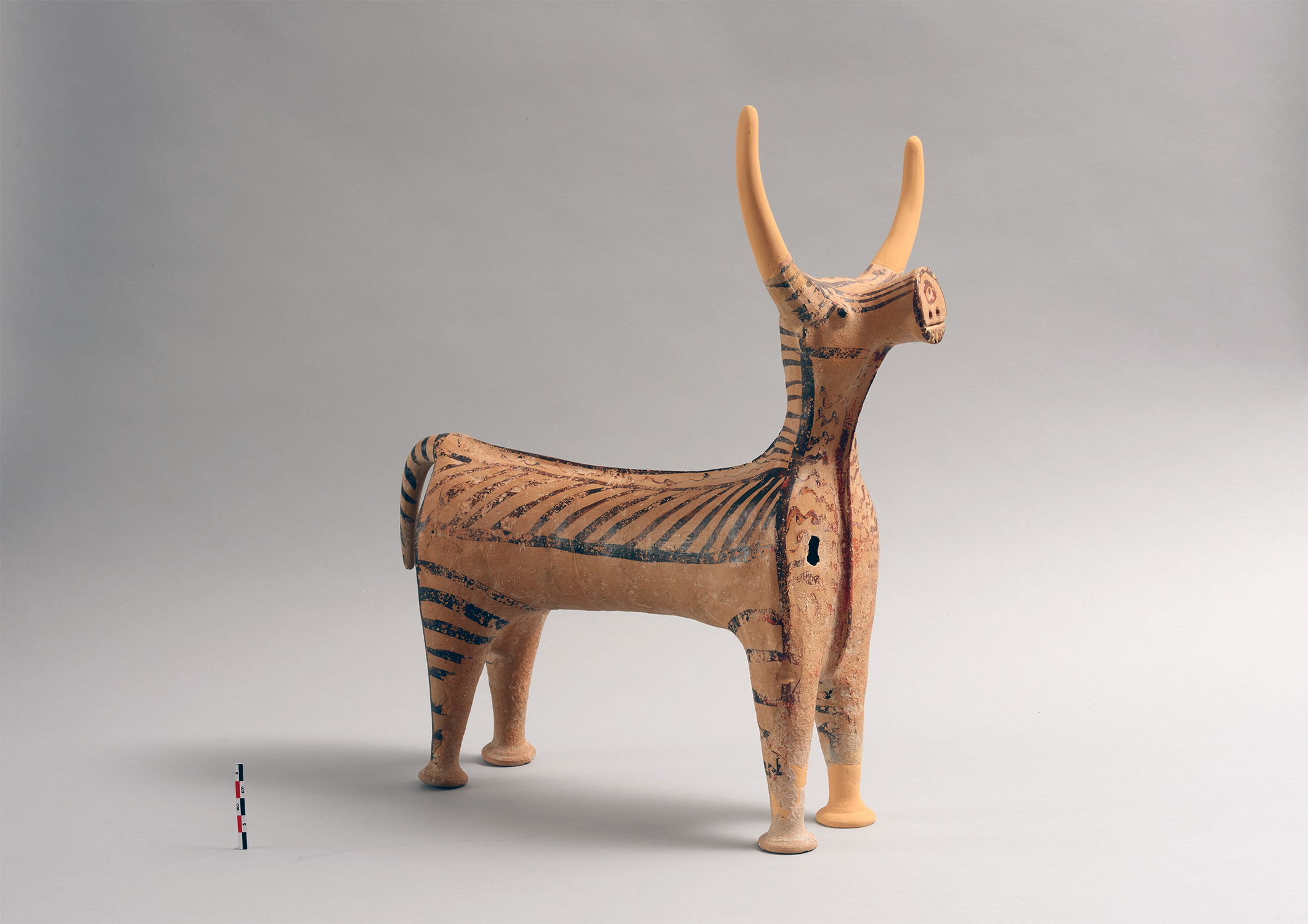
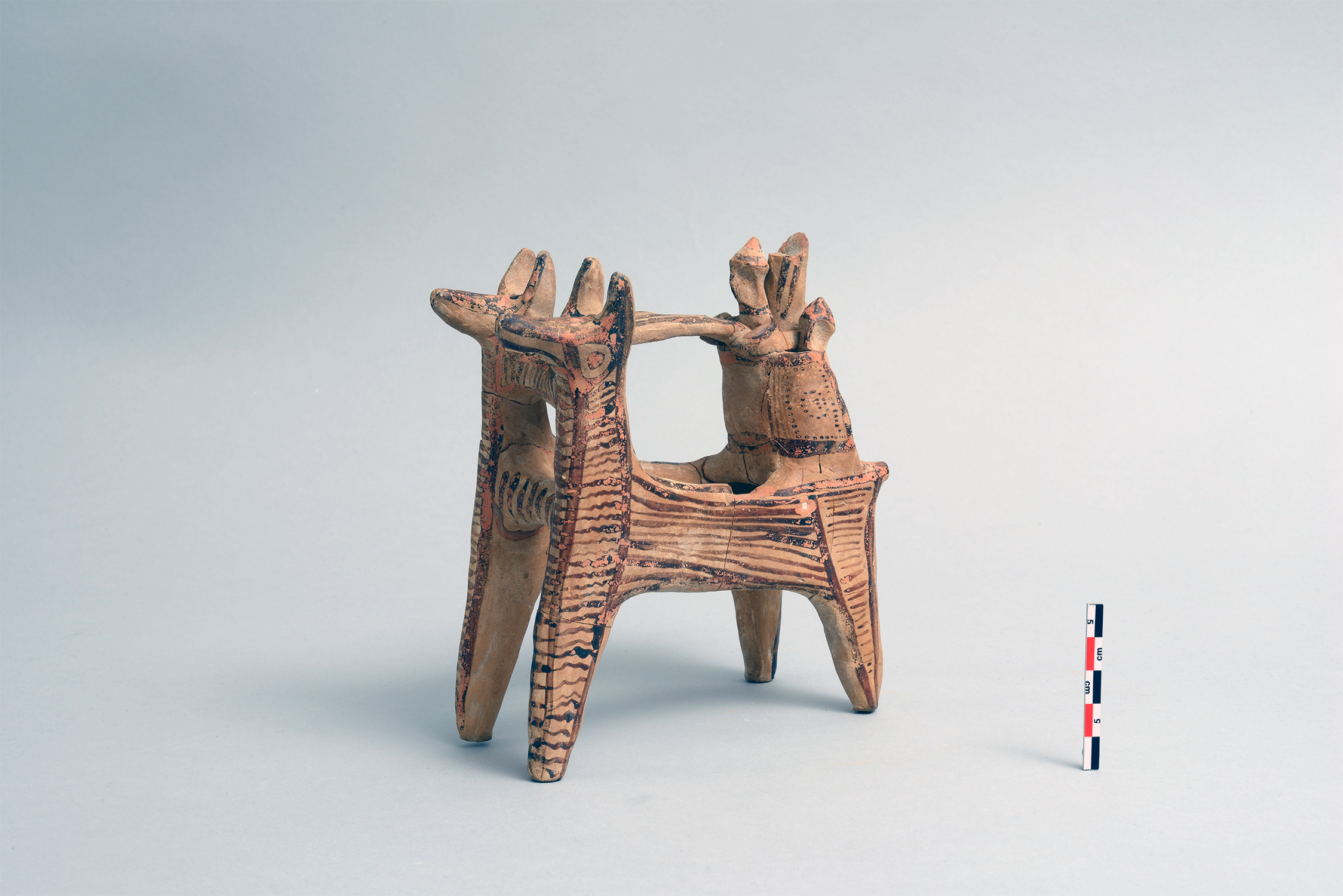
The sanctuary, a rare example of an organized public and urban place of worship in the Aegean, was founded at the beginning of the 14th century BC and houses the clay cult figurine of a female deity known as the ‘Lady of Phylakopi’. Also unique are idiosyncratic male figurines with accentuated anatomical features: argued to be male deities, perhaps they foreshadow the Twelve Olympian Gods of historical times. In its final form, the sanctuary consists of two rectangular spaces – termed the Western and Eastern Sanctuaries – that are of different orientation, size and plan, being built in different time periods. Here three main phases of use can be distinguished, based on separate changes, repairs and configurations. The Sanctuary operated until the beginning of the 11th century BC (middle LH IIIC). Its abandonment, around 1090 BC, coincides with that of the settlement.
Phylakopi was excavated by the British School of Athens (1896-1899, 1911, 1974-1977), while a limited investigation was carried out by the Ephorate of Antiquities of Cyclades west of the defence wall (1964). Maintenance and conservation operations of the building remains have been carried out from time to time by the Archaeological Service, but also by the British School of Athens. The current configuration of the site was conducted during the years 2003-2008 by the Ephorate of Antiquities of the Cyclades within the framework of the project ‘Development and highlighting of the archaeological site of Phylakopi’ (3rd KPS).
The finds of the 19th century excavations are exhibited in the National Archaeological Museum of Athens, while those of the other excavation periods are exhibited in the Archaeological Museum of Melos.
Peggy Pantou