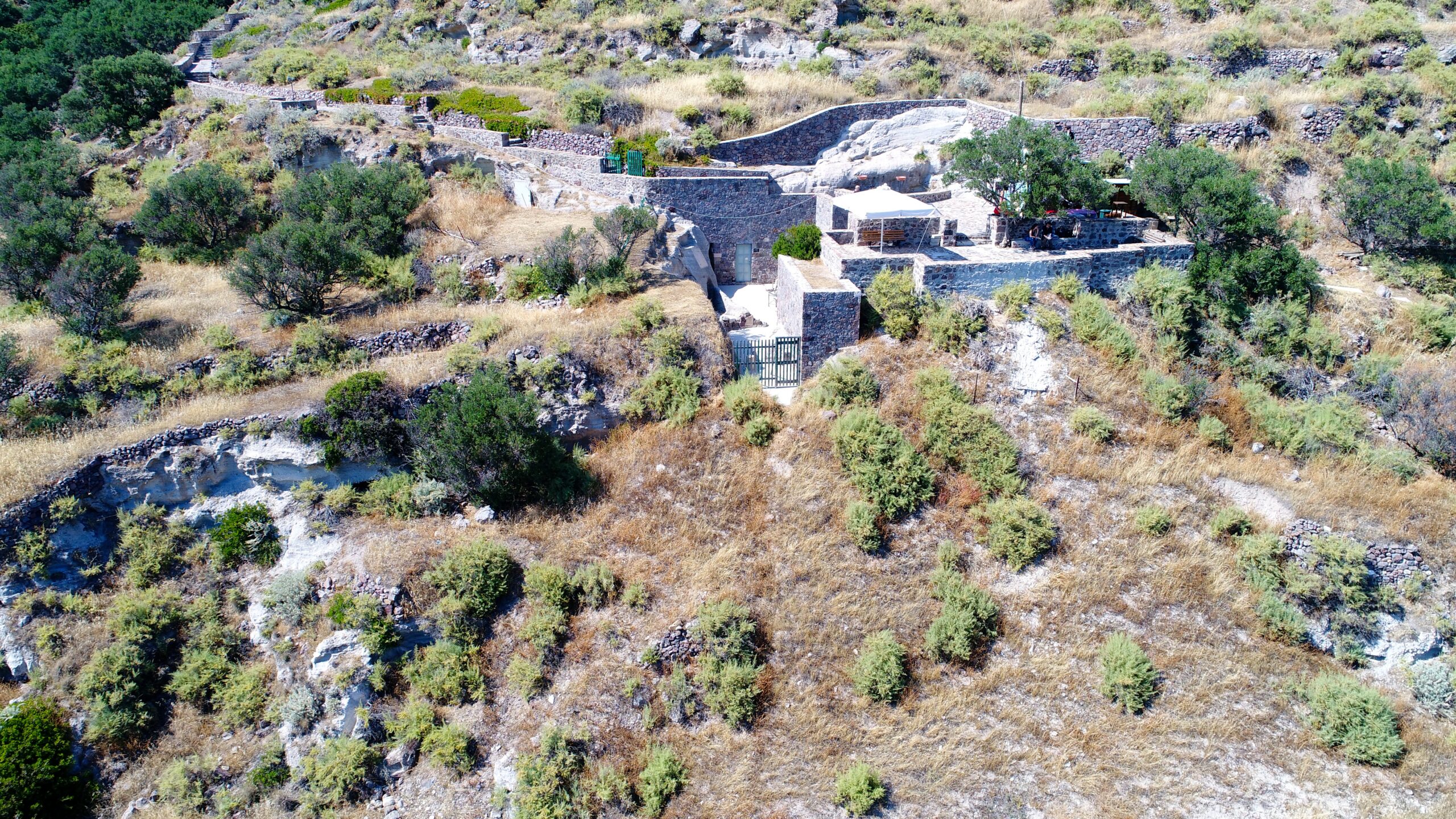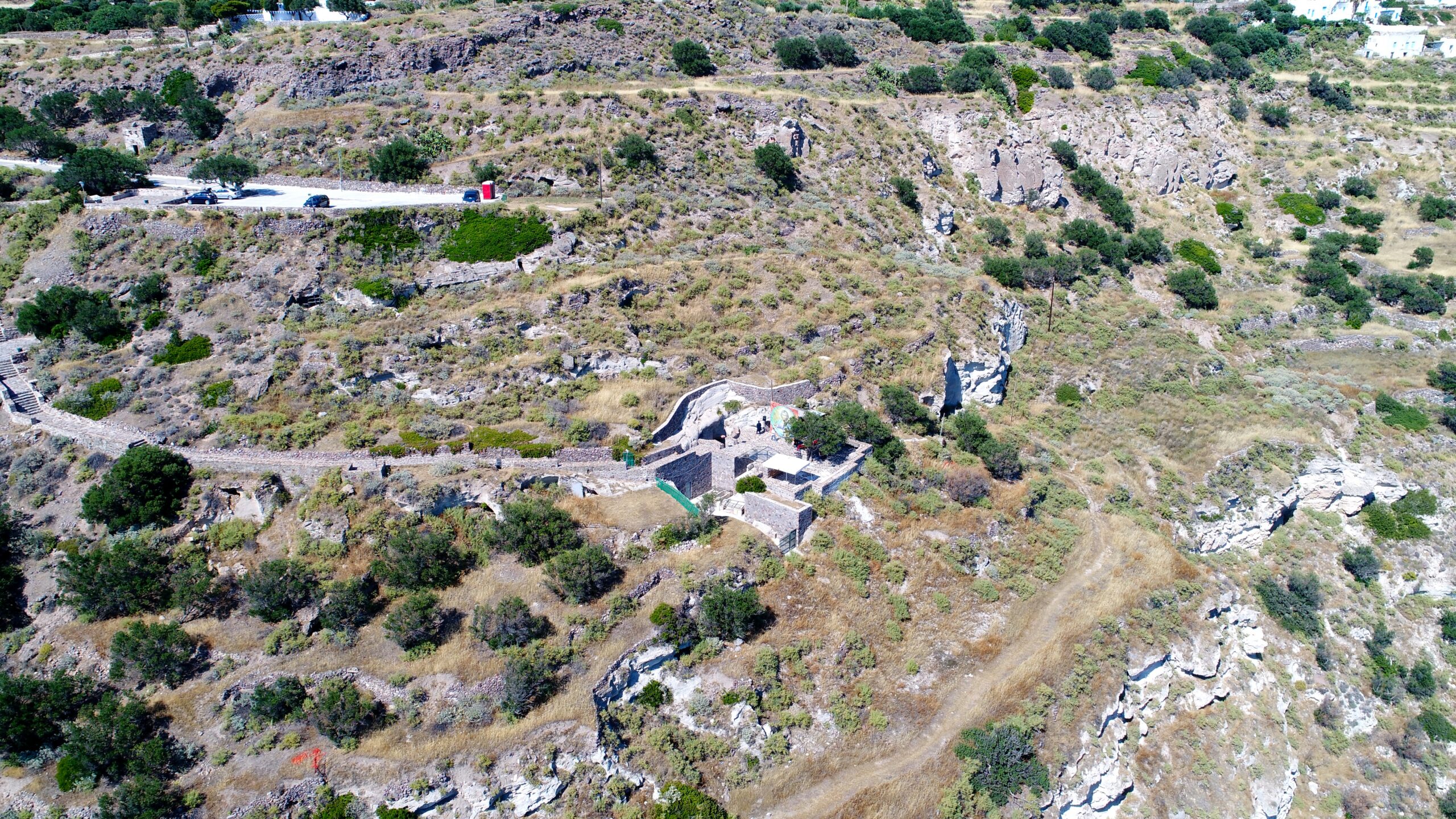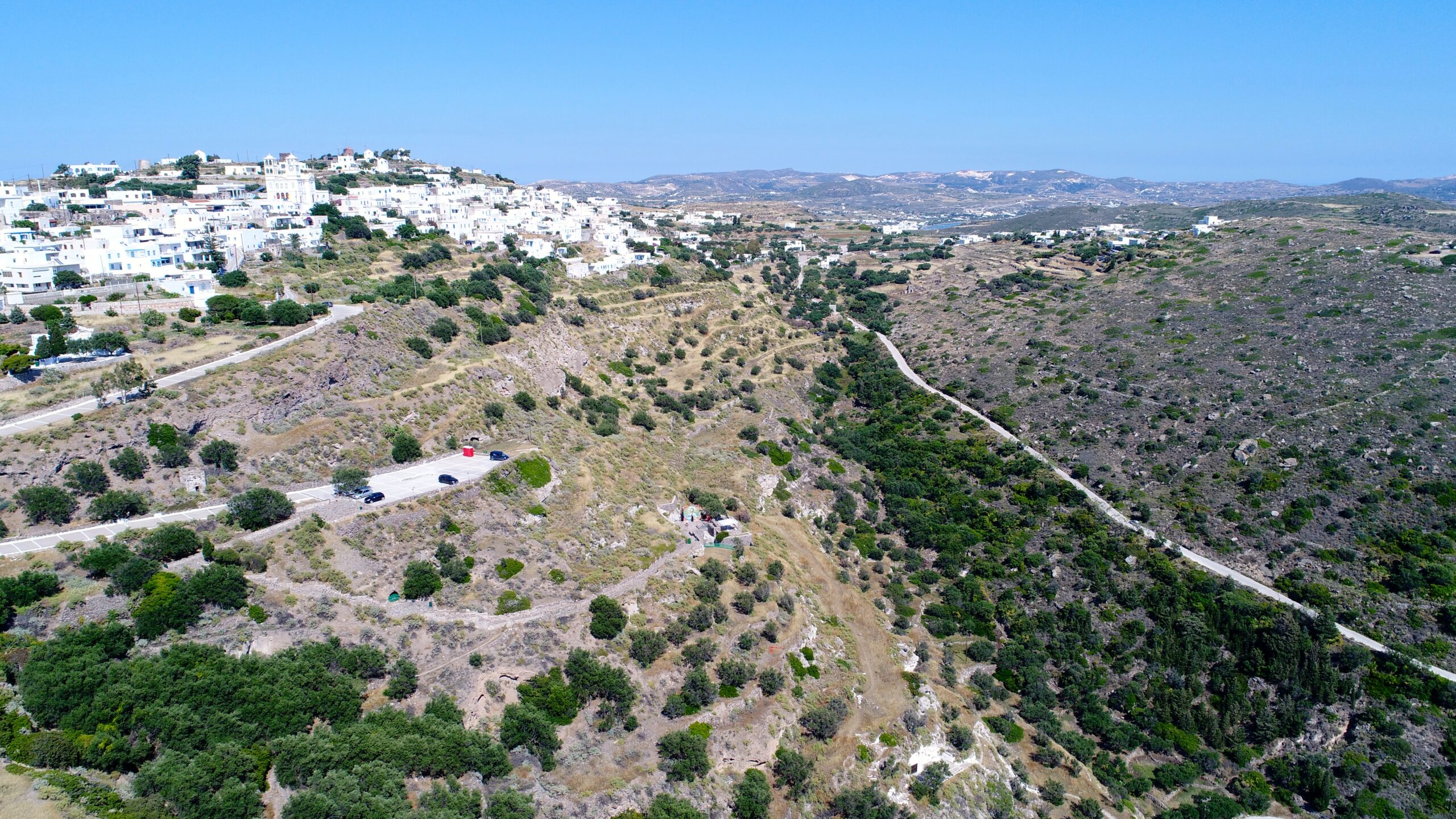


The Catacombs are the largest underground extra muros cemetery of the ancient city, whose use runs from the mid-1st to the 7th centuries AD.
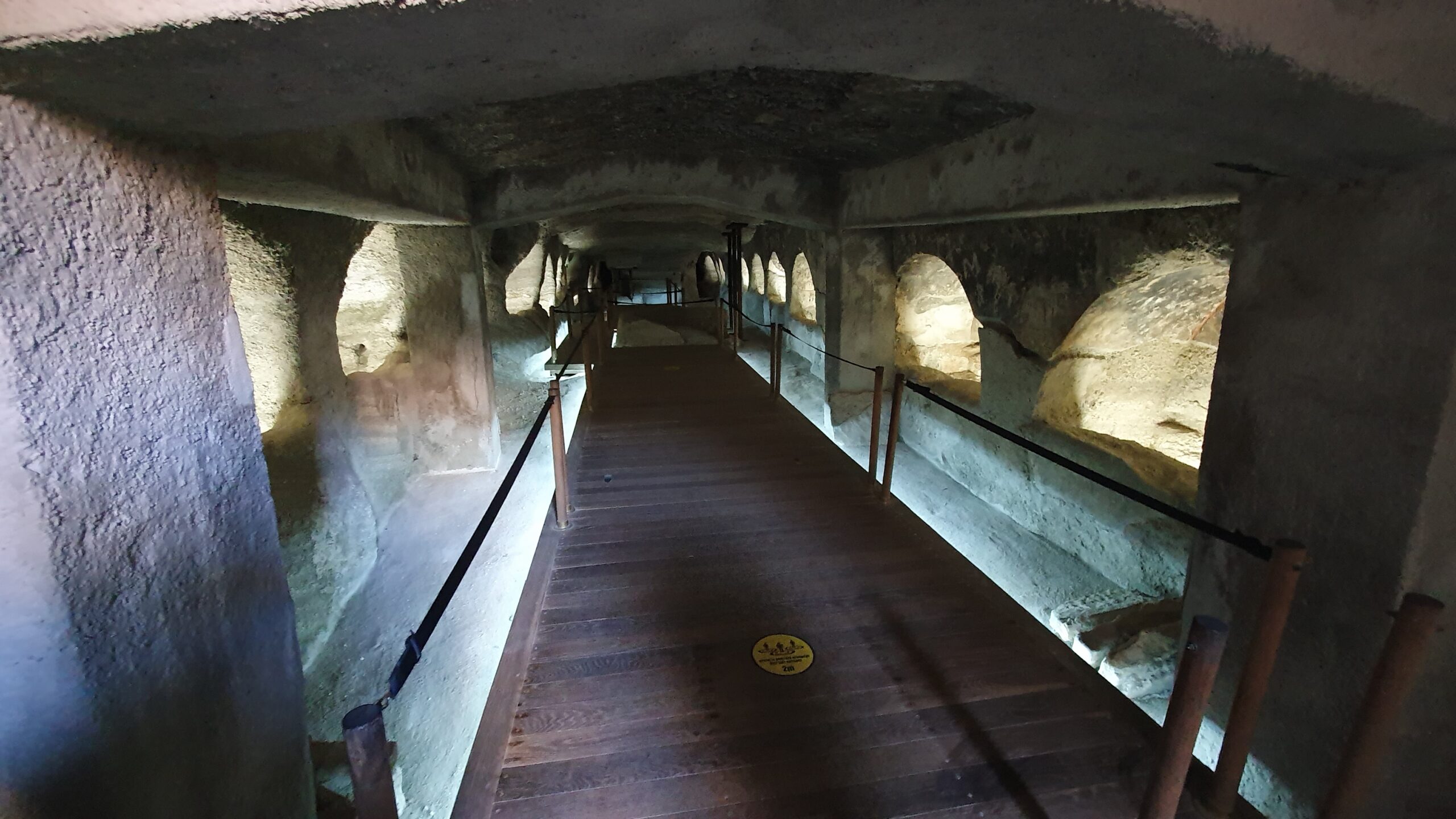
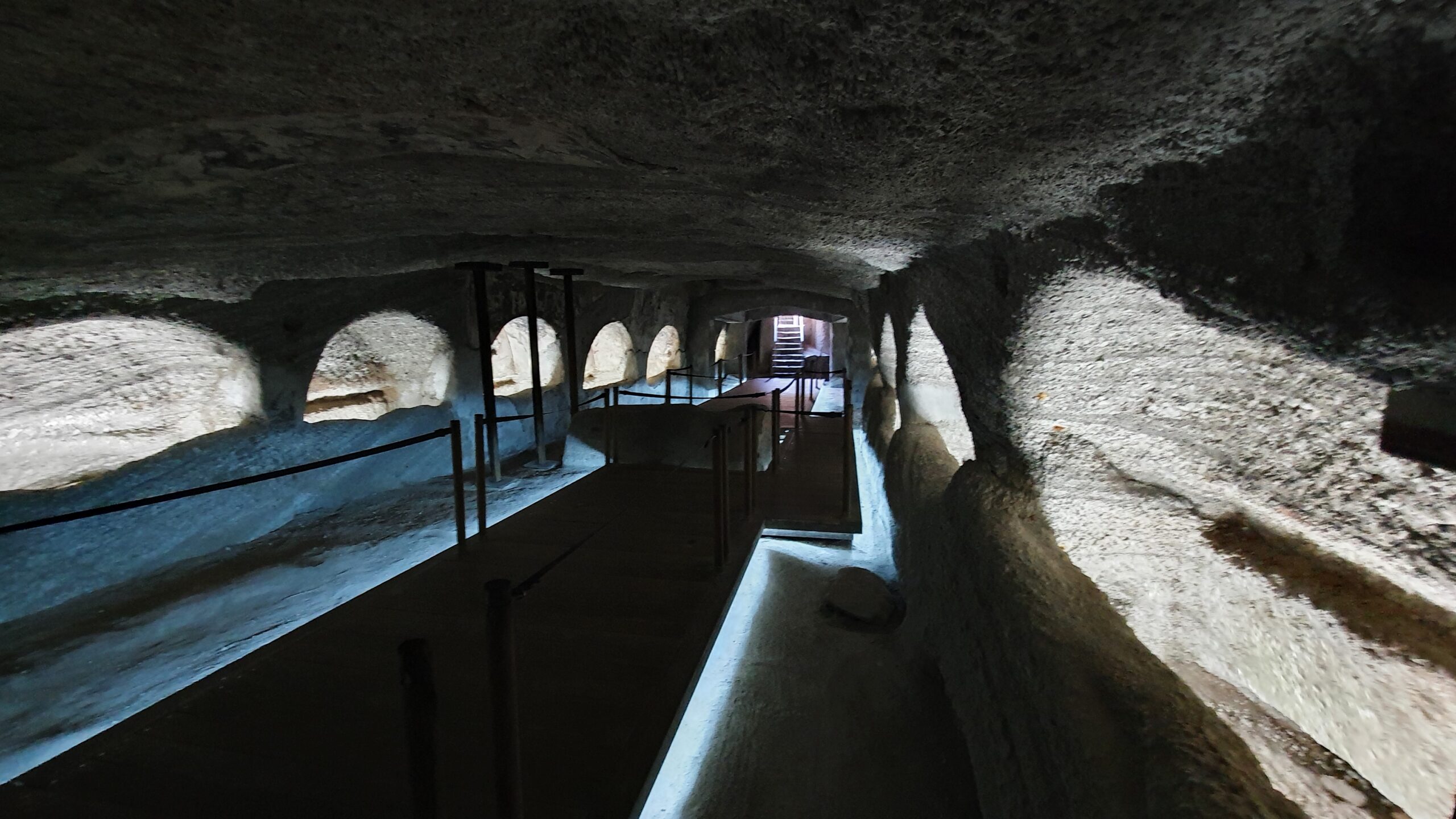
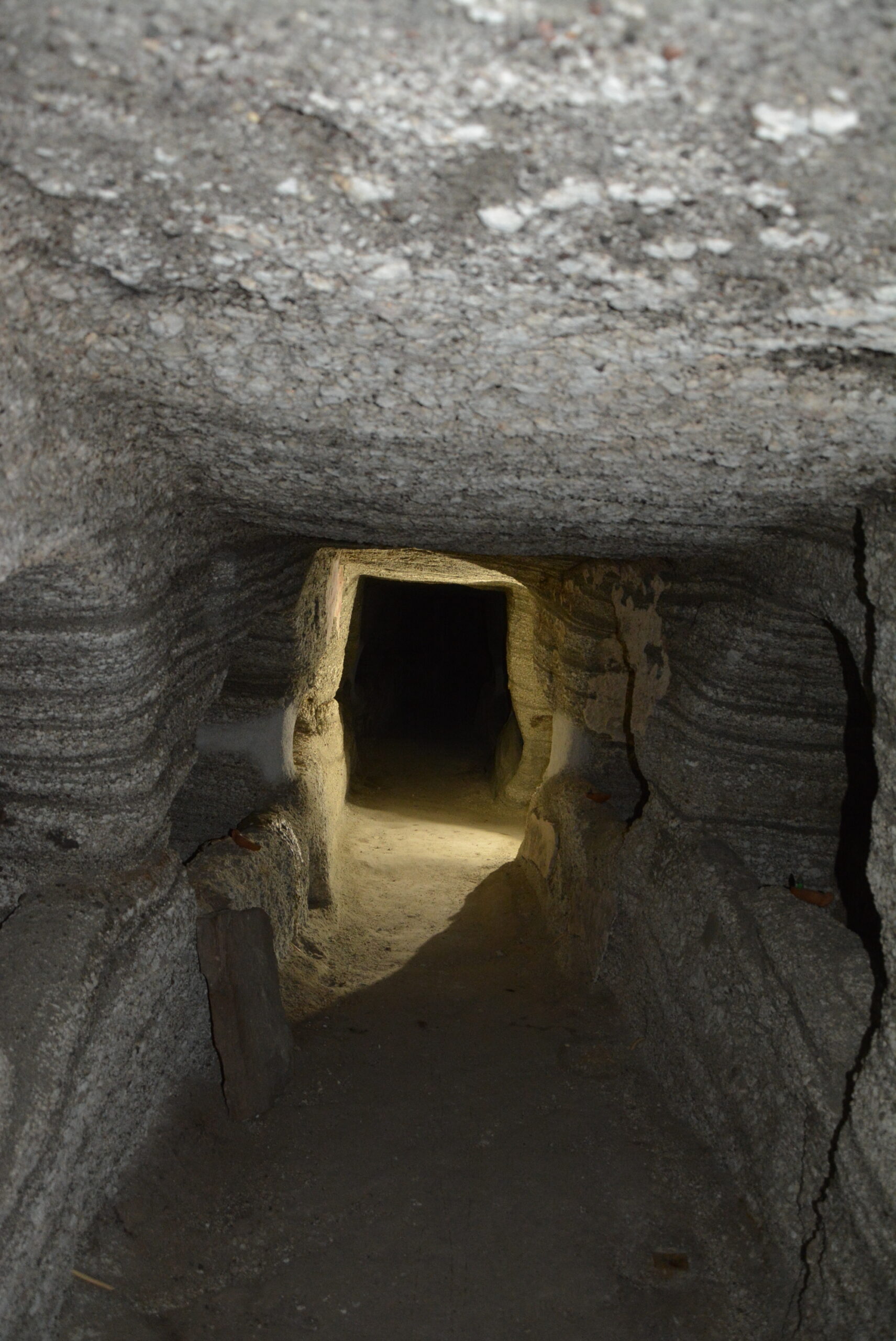
The Catacombs were known to the locals as the ‘Greek Cave’. Even before the German archaeologist Ludwig Ross visited them in 1844, they had suffered extensive looting. In 1878, the French archaeologist Ch. Bayet came to see them and in 1907 Georgios Lampakis, while in 1928 they were systematically investigated and studied by Georgios Sotiriou. Each is a complex of spacious halls and corridors carved into the soft porous volcanic rock (tuff), and today connected by newer corridors cut to improve access. A complex ends in a family burial chamber (cubiculum).
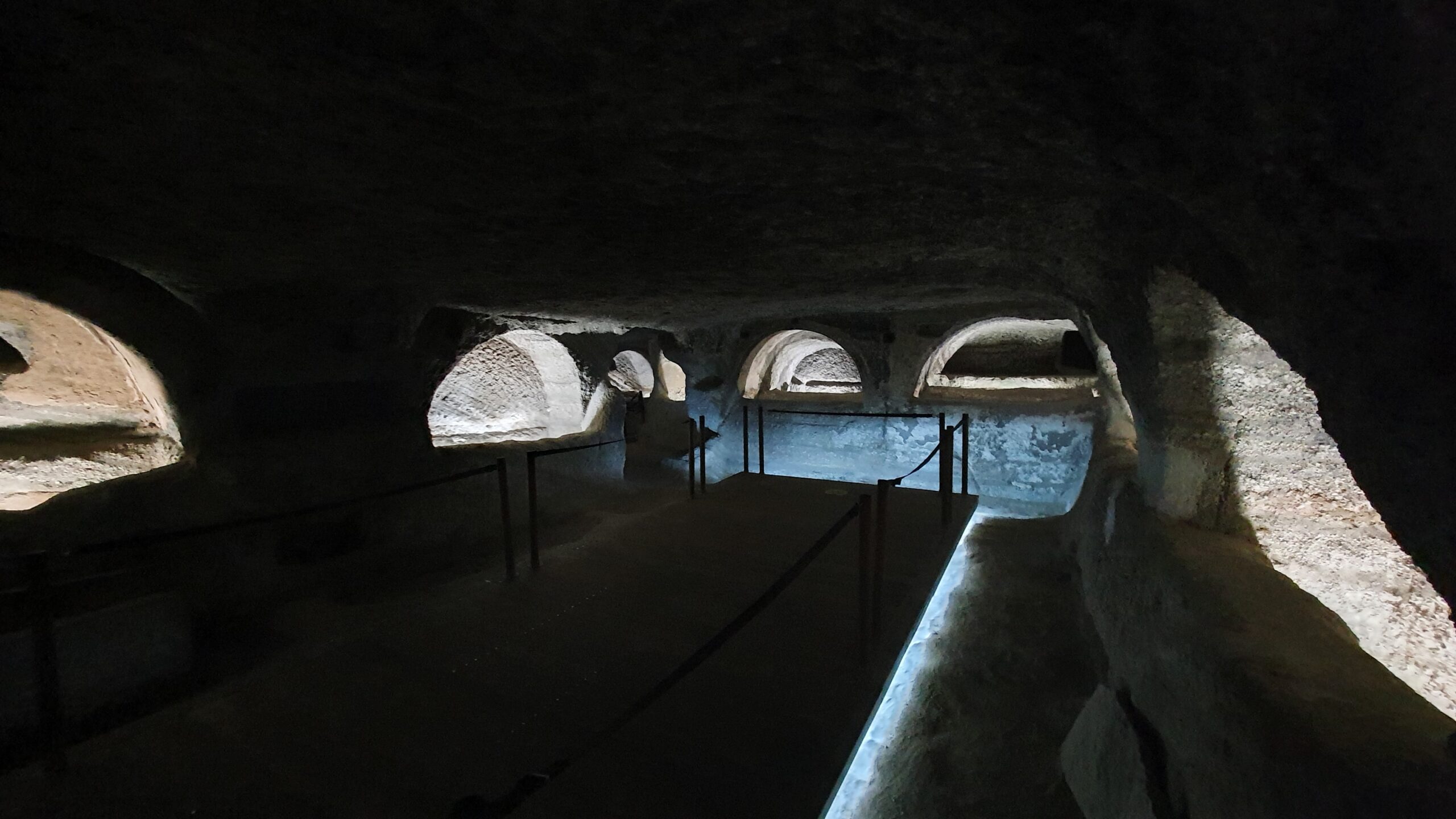
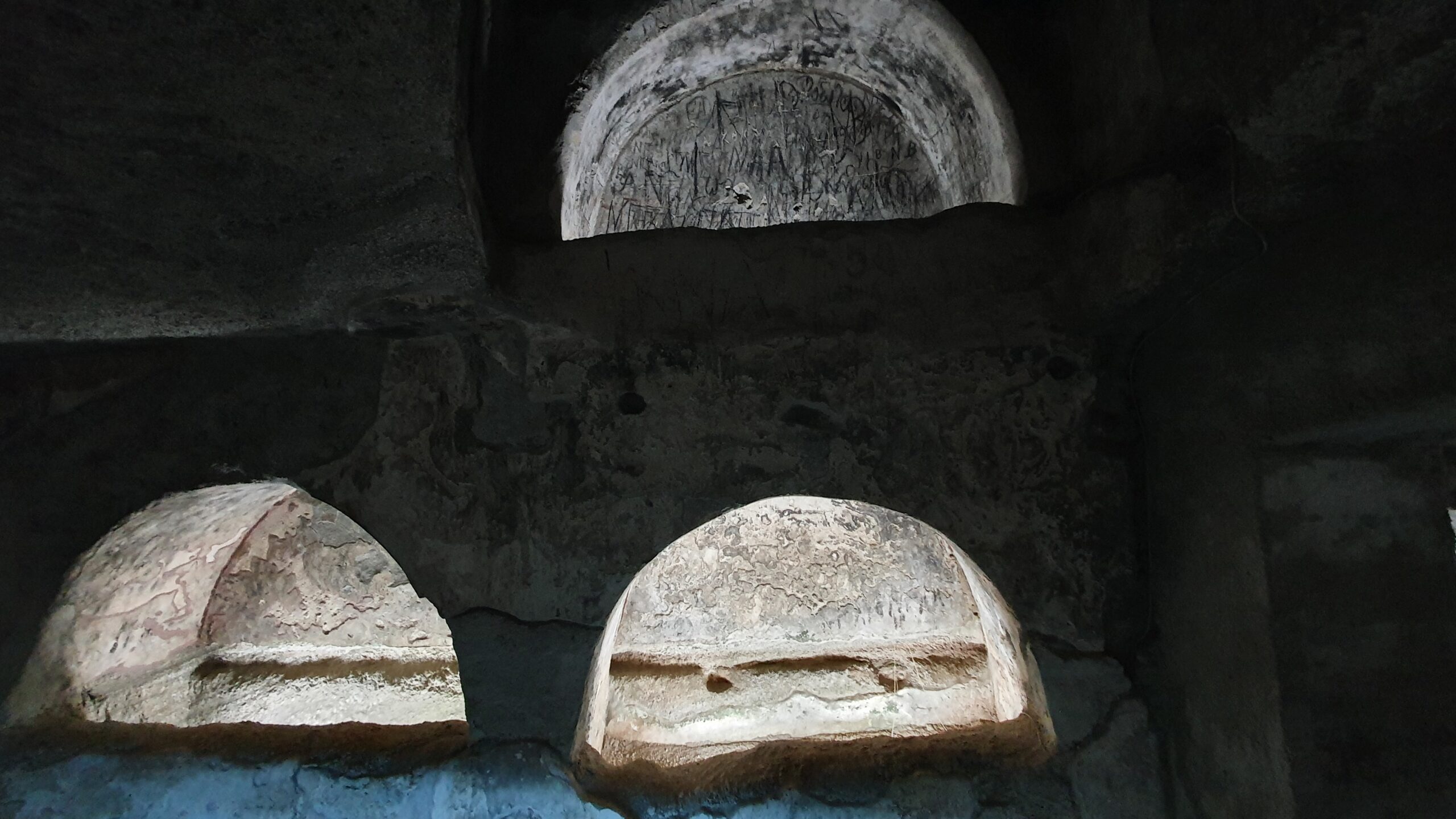
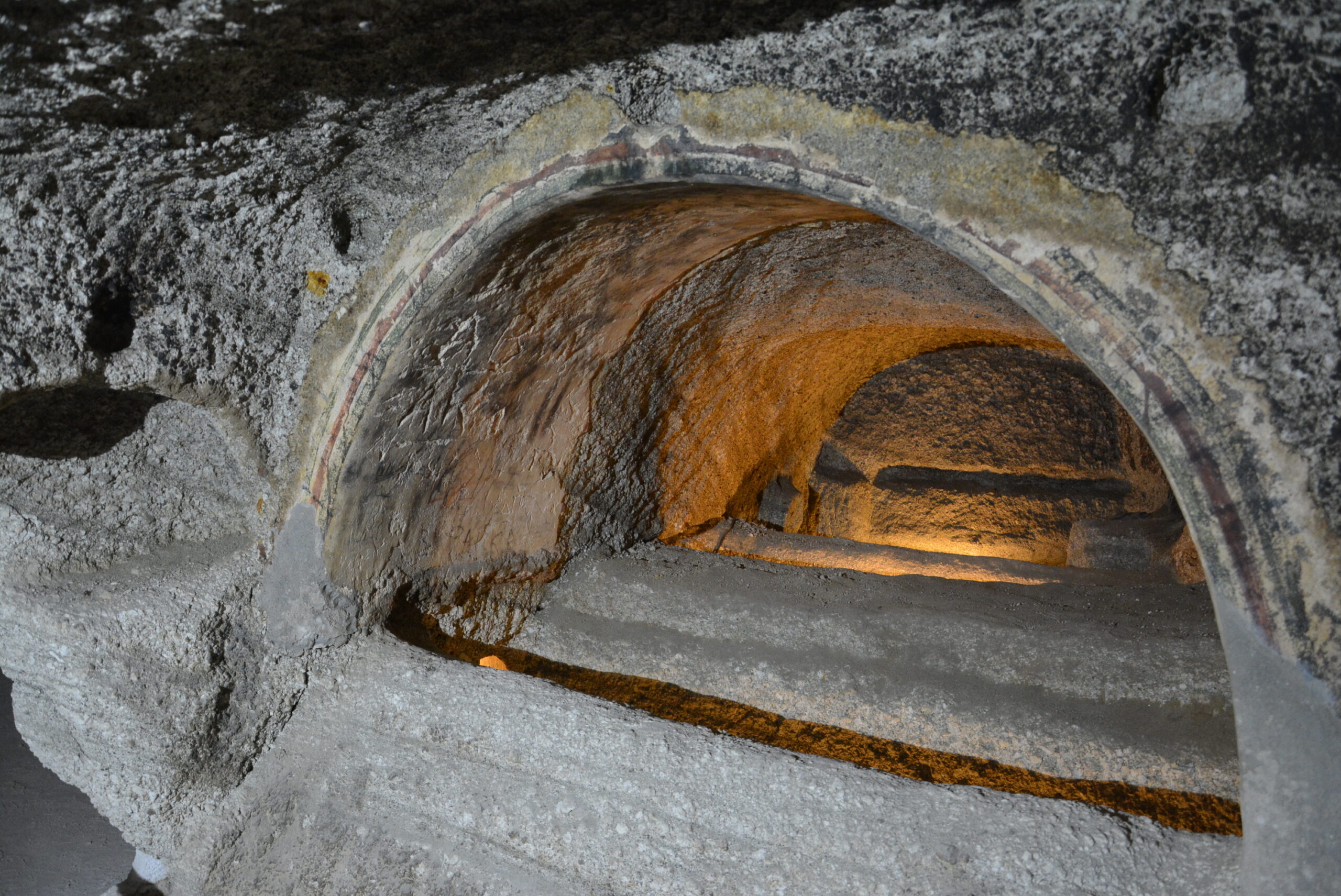
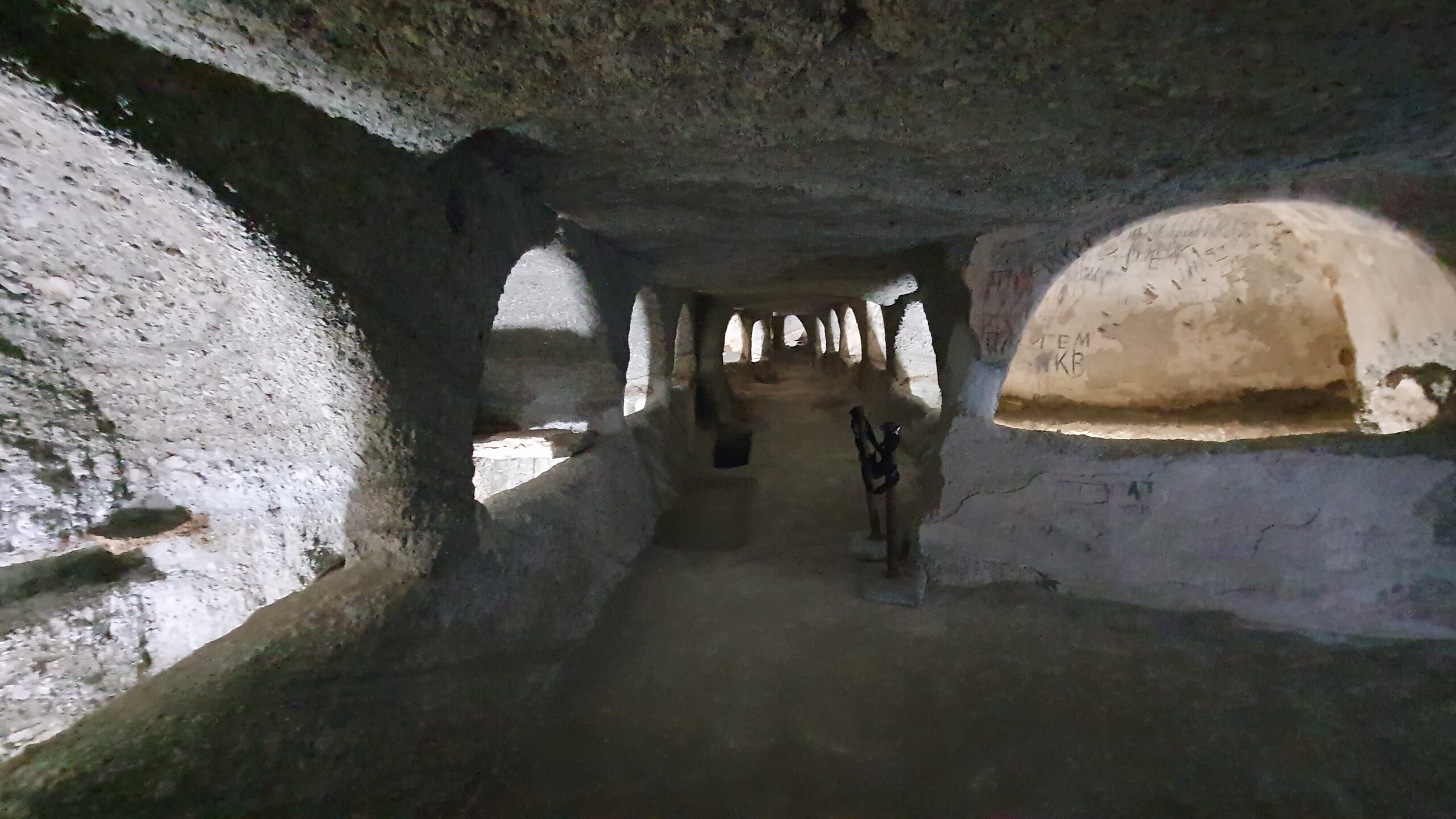
Sotiriou had initially considered that there were three independent Catacombs, A, B and C, consisting of halls and corridors. The total length of the galleries is approximately 200 m, while their width varies from 1-5 m and their height from 1.6-2.5 m. Two types of tombs have been cut into the walls: arcosolium (with an arched profile) and loculus (horizontal rectangular niche), and a third (shaft or pit-shaped) have been dug into the floor.
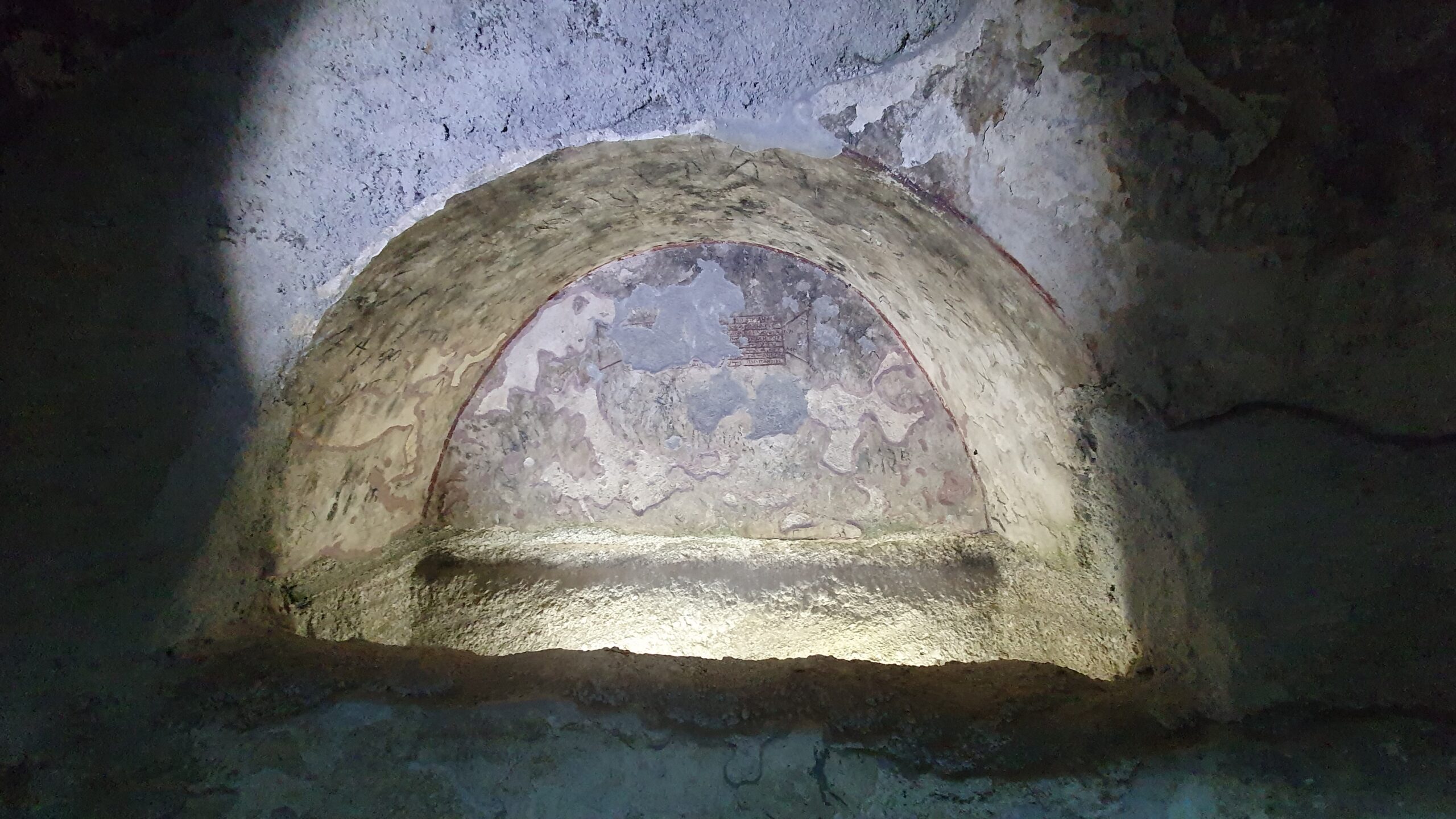
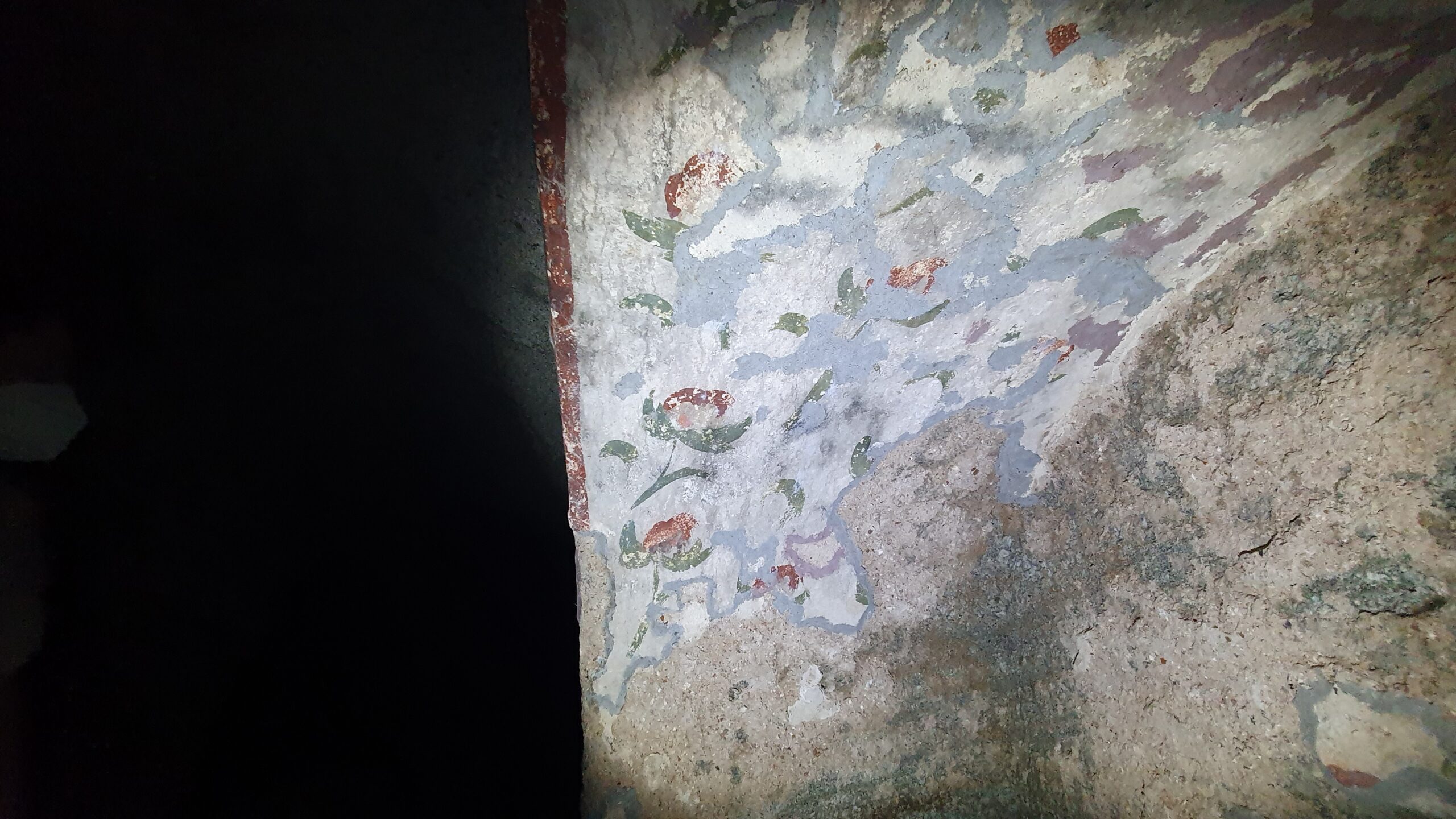
All the tombs were covered with slabs of unequal size. Some arcosolia preserve coloured decoration on the interior surface and at the back of the arch where exist fragments of inscriptions; niches inside exist for the placement of offerings and lamps and in some cases for the burial of infants.
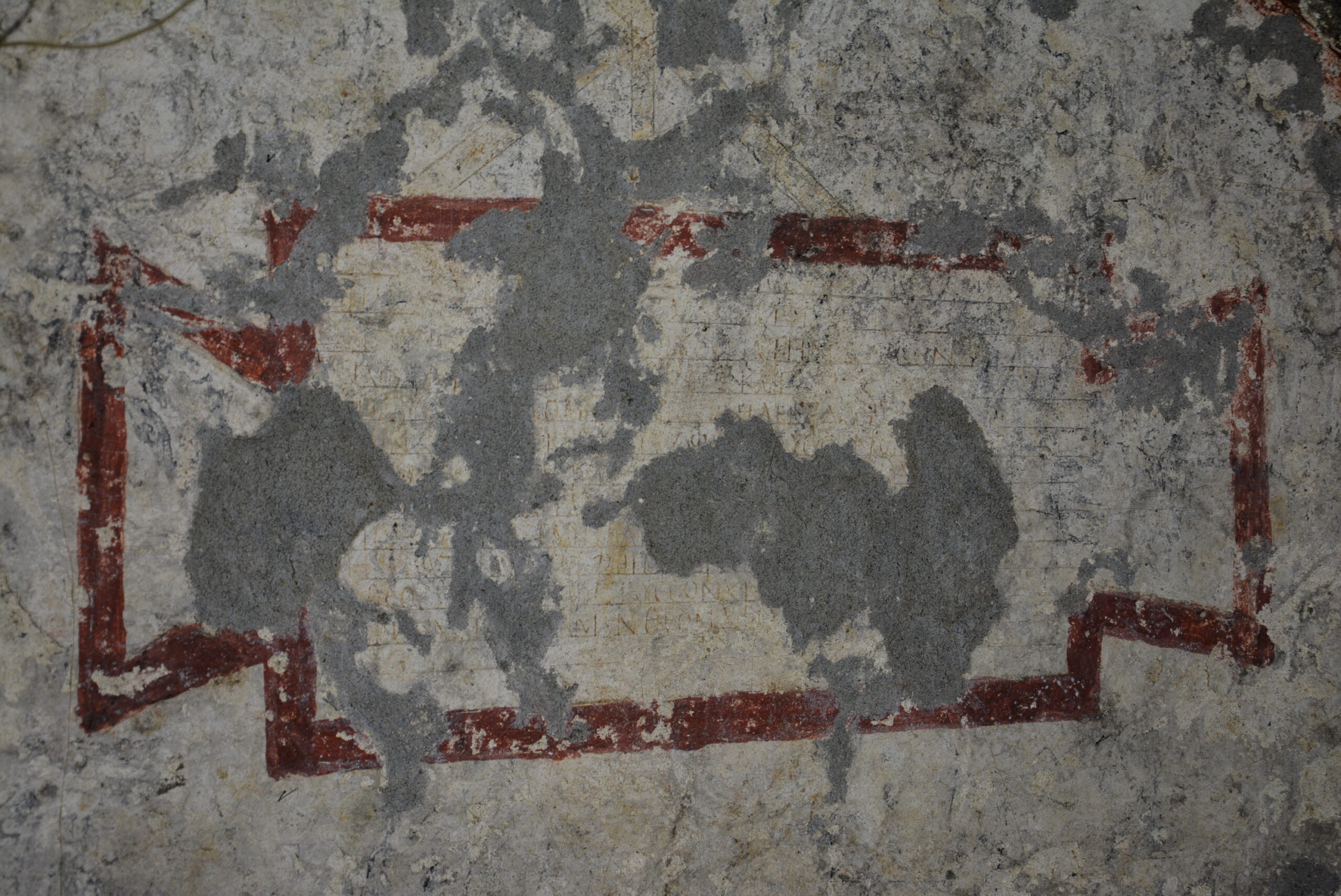
The current entrance to the Catacombs is located in the hall of Catacomb B. On the right side of the hall, the only intact two-story arcosolium survives, with fragments of the important inscription ‘of the Elders’, written in capital red letters in a rectangular painted frame (tabula ansata). Approximately in the middle of the hall and above the floor level, stands a single worked tomb in the shape of a sarcophagus, known as the ‘tomb of the martyr’. This tomb was probably used as a holy altar, as there was a ciborium above it, traces of whose capitals were discovered by Sotiriou in 1928.
To the west of Catacomb B, is the second visitable hall, Catacomb A. On the north side, arcosolia have been cut in pairs, and are probably family tombs. In its corridor, which is not open to the public, are preserved fragments of two large-letter inscriptions in a rectangular frame (‘of Milo’ and ‘of Thomas’).
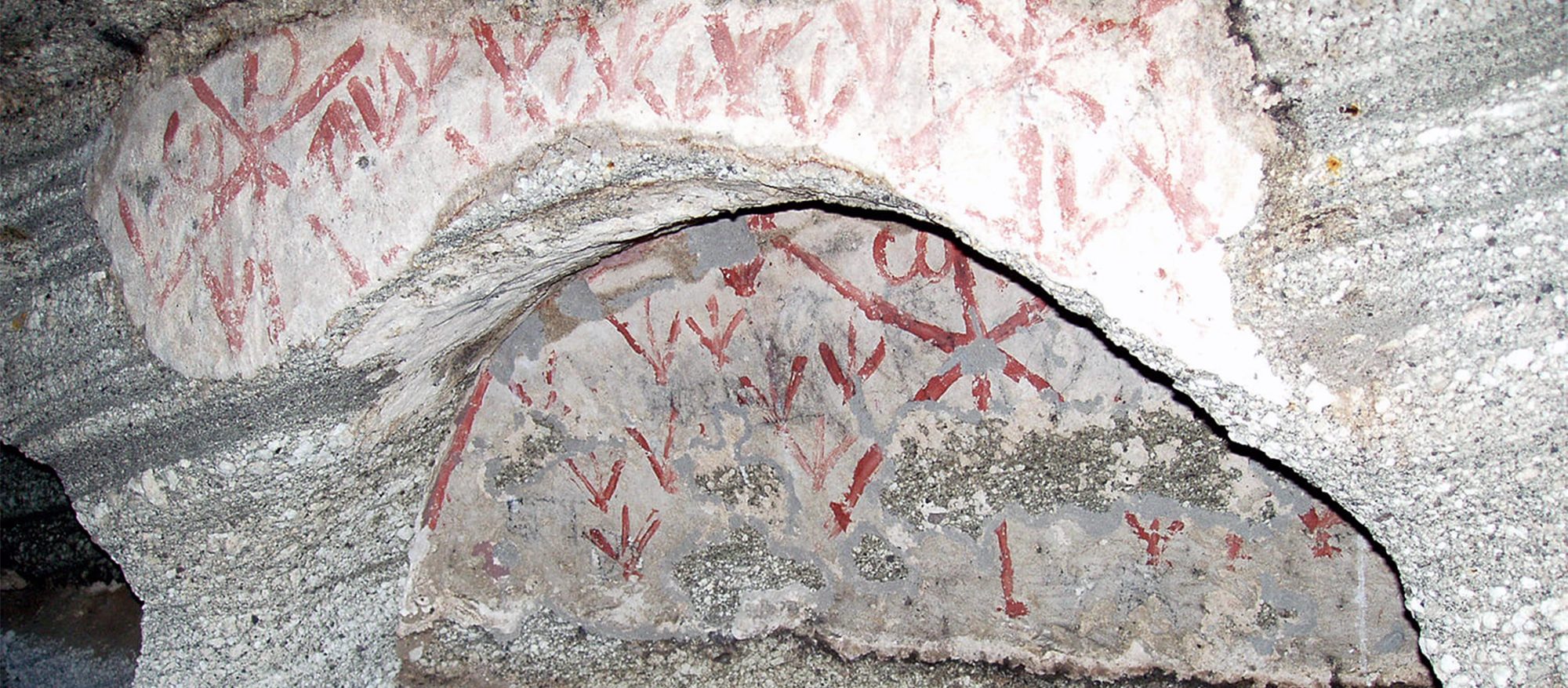
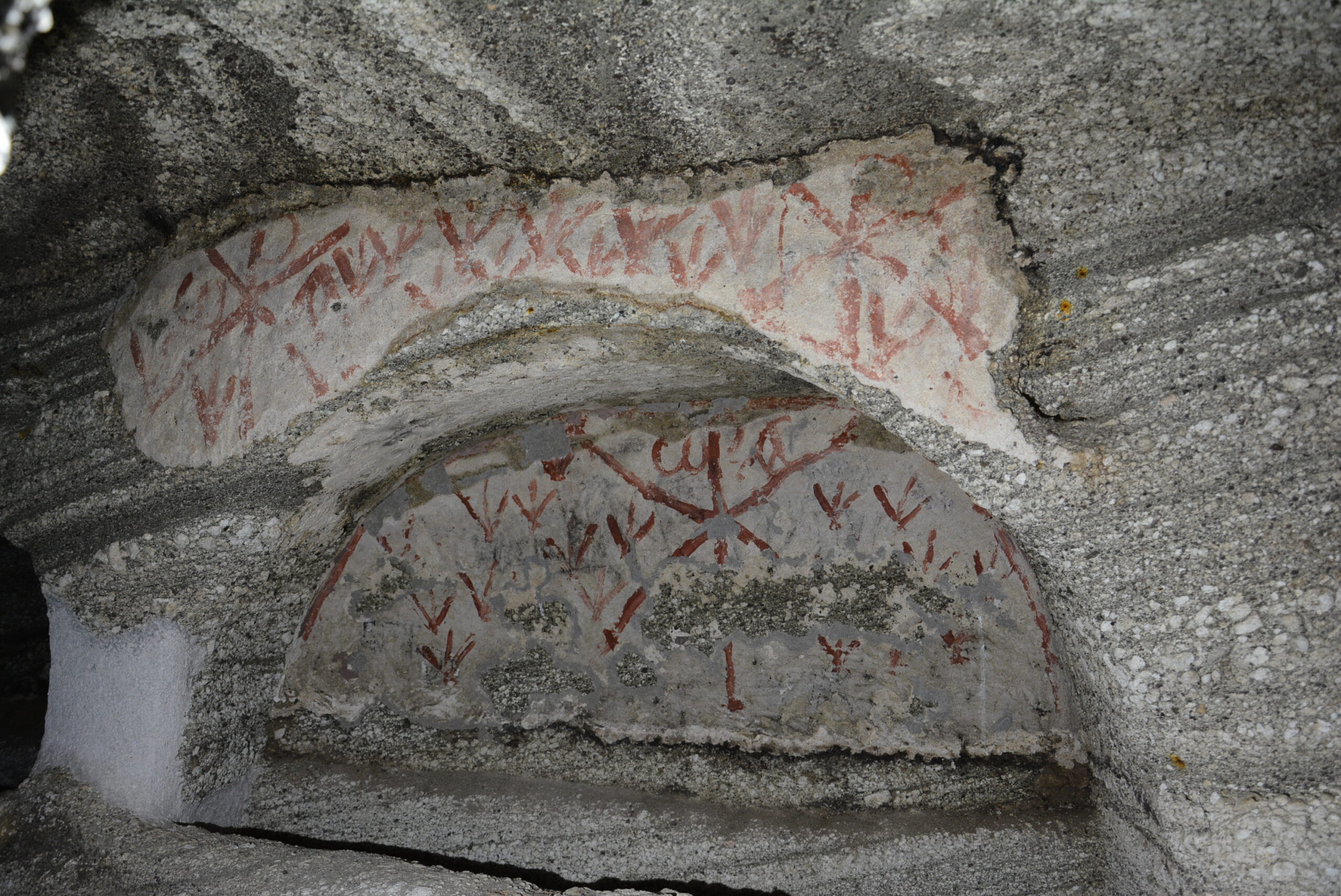
To the east of Catacomb B are a family burial chamber (cubiculum) and Catacomb C, which is not open to the public today. The cubiculum has three arcosolia and a built tomb in its sides. The southern part of Catacomb C has collapsed and the two corridors communicate with each other by a modern one. In two arcosolia of the second corridor, part of a representation with flowers and two birds is preserved, as well as the Christogram and the initial letters Ω and Α.
New elements were disclosed in the excavation research carried out in the years 2007-2009: this occurred in the context of works of consolidation, protection and improvement for making the Catacombs visitable, carried out by the Ministry of Culture, Sports and Tourism. The southern part of the halls of Catacombs A and B, to a length of some 15 m, was revealed, connected to each other by a transverse corridor. A new small cubiculum was found above the southern surviving part of Catacombs B. In addition to the nine arcosolia and the four loculi that were located in the walls of the corridors, two more built tombs, a marble sarcophagus and thirty-three pit tombs were also discovered. Most of the tombs excavated were looted or disturbed. They were covered with roughly worked slabs of unequal size and successive layers of lime mortar. The pit tombs are either simple or with a second chamber with an arch above, as seen in the arcosolium type. Today none of the pit tombs are visible, because they were covered up to protect them.
A few tombs yielded notable offerings, such as amulet-cases, a metal ring, glass perfume bottles and glass beads. Bronze and iron nails with traces of wood were also found. Lamps turned up throughout the excavation. Traces of burning, sherds from everyday vessels (cooking utensils, wine glasses, plates), as well as animal and fish bones, indicate the performance of funeral suppers and other rituals in memory of the dead.
To the west of the hall of Catacomb A, a hall (‘Bayet’s Hall’) was discovered, which was temporarily blocked off to protect it. Nine arcosolia and two cubicula have been opened into its walls, while the original entrance to the hall at the northwest is also preserved