

The ancient city of Kythnos is gradually being revealed to us through surface survey research and systematic excavations. According to ancient sources, the city had the same name as the island, Kythnos, and was located on the northwest coast of the island at the location ‘Vryokastro’. It was founded in the Geometric period, continued to flourish until the Hellenistic period and was inhabited until Late Antiquity (6th-7th centuries AD), at which point the inhabitants moved to the interior of the island and later to the Castle of Oria. The area of the walled city is just over 70 acres, including a small rocky islet called Vryokastraki which in antiquity, as shown by underwater research, was connected to the coast. It has been systematically investigated since 1990 by the University of Thessaly under the direction of Professor Alexandros Mazarakis Ainian in collaboration with the Ephorate of Antiquities of the Cyclades. In the methodical surface research of the years 1990-1995 and the systematic excavation that followed in 2002 and continues to this day, sacred and public buildings have come to light.
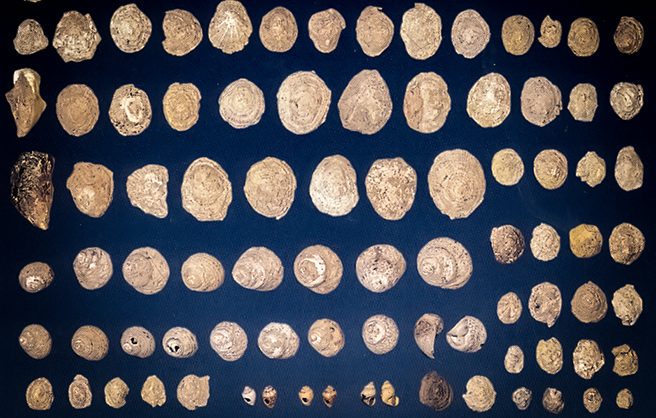
That the heyday of the city was in Archaic times is evident from the excavation of the sanctuary (to Apollo and Artemis) on the middle plateau, which was found intact. Decorated vessels imported from various regions of the Aegean were found, as were clay female figurines, jewellery and other small-scale artistic objects (earrings, rings, bracelets, pins, brooches, beads for necklaces and pendants of various types, discs with relief patterns and cut-out ivory plaques, Egyptian scarabs, Phoenician bearded heads). The wealth of the finds leads one to reconsider the image of the relative poverty of Kythnos formed from the little literary and epigraphical evidence we have. In fact, the exotic origins of the finds show that this sanctuary wielded a significant influence in the Mediterranean area. At the top of the acropolis, a significant sanctuary attributed to the goddess Demeter occupies a dominant position. It was in use from the late 8th century BC to the 1st century AD.
Lower down, on the long and narrow middle plateau along the ridge, a monumental building has been excavated that is identified with the cult of Asclepius. In this area too, the cult of Aphrodite, argued for in the past from part of a colossal statue on the surface, is now confirmed.
Theodora Papagelopoulos, archaeologist EFAKYK