

Every place deserves to have its own museum, be it a spacious facility with plenty of room or just one of more limited proportions. Even the latter can be of historical importance and host significant objects. This is exactly the case with the archaeological collection of Amorgos: gathered together in a limited space, it yet constitutes a most representative and irrefutable witness to the long history of the island, from Geometric times (8th century BC) to the late Roman (2nd century AD). Though lacking in a multitude of discoveries from excavations, the surface finds made in the three cities of Minoas, Arkesini and Aegiali worthily fill the archaeological gap with material that testifies to the sculptural tradition of Amorgos, but also to those historical moments deemed appropriate by its inhabitants to be engraved in stone as a record.
The very building in which the collection is housed is itself a historical monument. This is known as the Tower of Gavras, a building from the Venetian period, attributed to the 16th century and donated to the Association of Amorgos by Sophie Giannakou in 1963. Its architectural form, which preserves elements of the original building – such as the unfluted stone columns, the column capitals, the poros-stone arches and the inscribed door-frames, required great efforts to restore, as well as financial support and labour by local citizens and craftsmen, who dedicated their energy to this important project between 1972 and 1978.
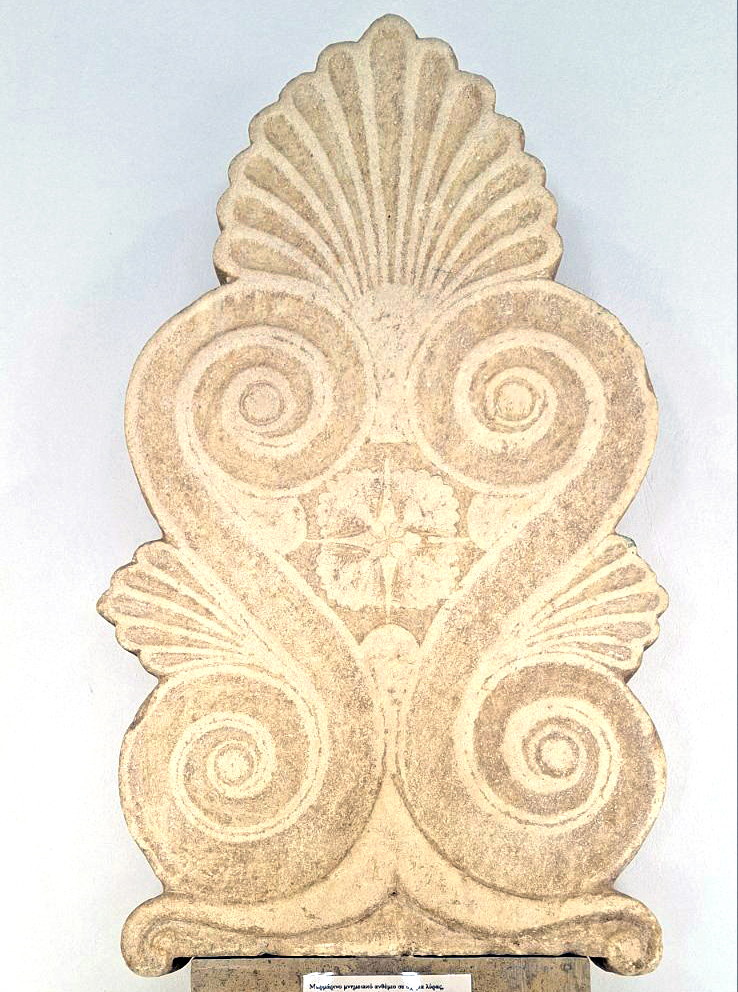
Today, in the reception hall of the Tower of Gavras, the visitor can behold sculptural creations and reliefs fashioned between the Archaic (6th century BC) and the Roman years. Also, there are a few examples of small-scale art, coming from the excavation at Minoas. Outside the hall, architectural members and heavy statuary figures are arranged, and in the courtyard below that is assembled the epigraphical evidence. In the two small rooms that overlook the courtyard in question, there are finds from prehistoric and historical periods alike, from the end of the 4th (late Neolithic times) and the 3rd millennium BC (early Cycladic period) and onwards.