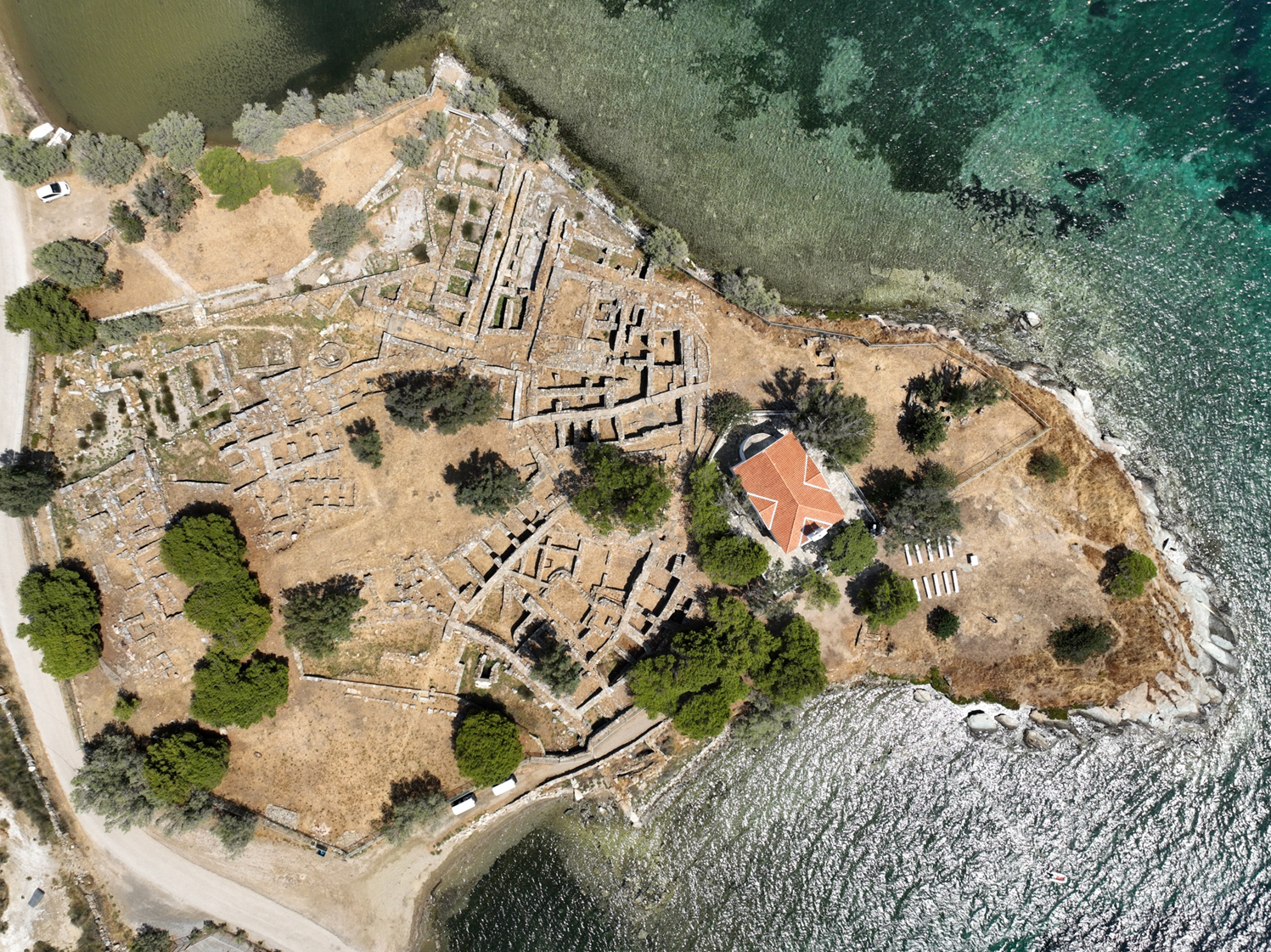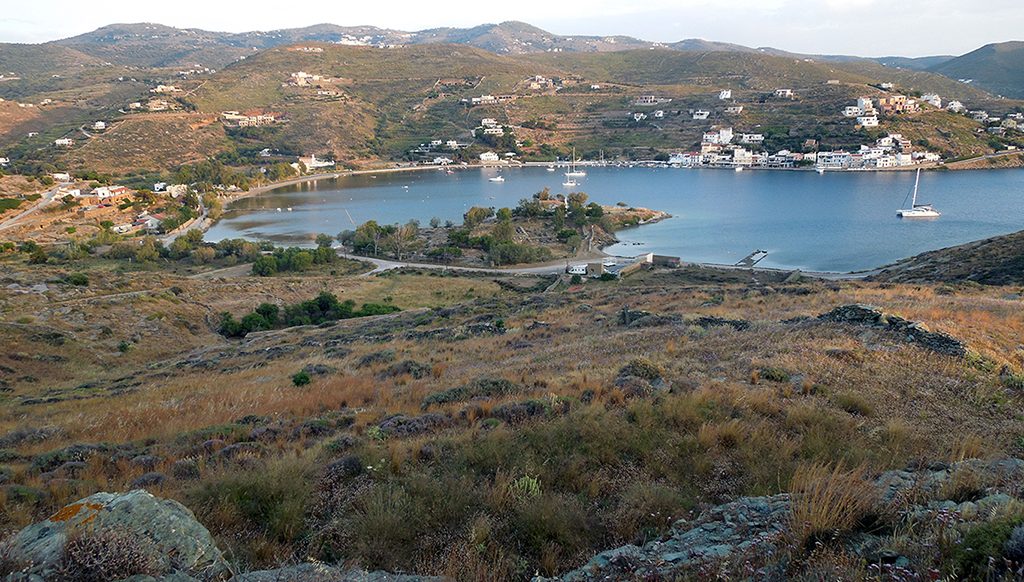


The prehistoric settlement of Agia Irini, Kea is one of the interesting sites in the Cyclades of the 3rd and, mainly, the 2nd millennia BC. On a peninsula inside the large bay of Kea, it is in a protected spot and with an easy escape to the open sea from an adjacent small isthmus (the so-called ‘Strait of Katsonis’). The important settlement begun its development at the beginning of the 3rd millennium: eight chronological periods of development have been recognized (Agia Irini I-VIII). The first permanent remains date back to the Early Cycladic II period (2700-2300 BC); after a possible short period of abandonment, seemingly the settlement was re-established in the Middle Bronze Age (c. 1900 BC). At the end of the same period, it expanded towards the north and was fortified anew by a strong wall with towers and a gate.
From the last phase of the Middle Cycladic era a period of great prosperity begins, culminating in the beginning of Late Cycladic I-II (16th-15th centuries BC): most of the building remains identified were built then, while all kinds of movable finds reveal a dynamic society, with intense contacts with the Aegean, Minoan Crete and mainland Greece. The so-called ‘House A’, one of the largest and most important building complexes, was formed on three levels (basement, ground floor, and first floor). It is considered the residence of a leading personality/group, as storage and workshop areas, wall paintings, and possible cult areas have all been identified in the building, while hundreds of vases and other objects have been collected.
The ‘temple’ is an independent elongated building, oriented NW-SE, which was first built during the Middle Cycladic period with two rooms, gradually expanding in the following periods until it acquired the form it has today. During its excavation, the unique clay statues of the Korai, as they are called, were discovered, depicting women in Minoan attire, perhaps dancing.
A major earthquake disaster at the end of the LM IB/LH II (15th century BC) marked the beginning of the next period, during which the settlement shrank and was finally abandoned at the end of the LH IIIB period (13th century BC). However, the cult building of the settlement of Agia Irini, the famous ‘Temple’, continued to be used during the 1st millennium BC, when it was dedicated to the worship of Dionysus, as attested by an inscribed skyphos from 500 BC.
The settlement of Agia Irini was excavated during the 1960s and 1970s by Professor John Caskey and his collaborators; it constitutes, together with Akrotiri in Santorini and Phylakopi in Melos, a reference point for the study of the prehistoric Aegean.