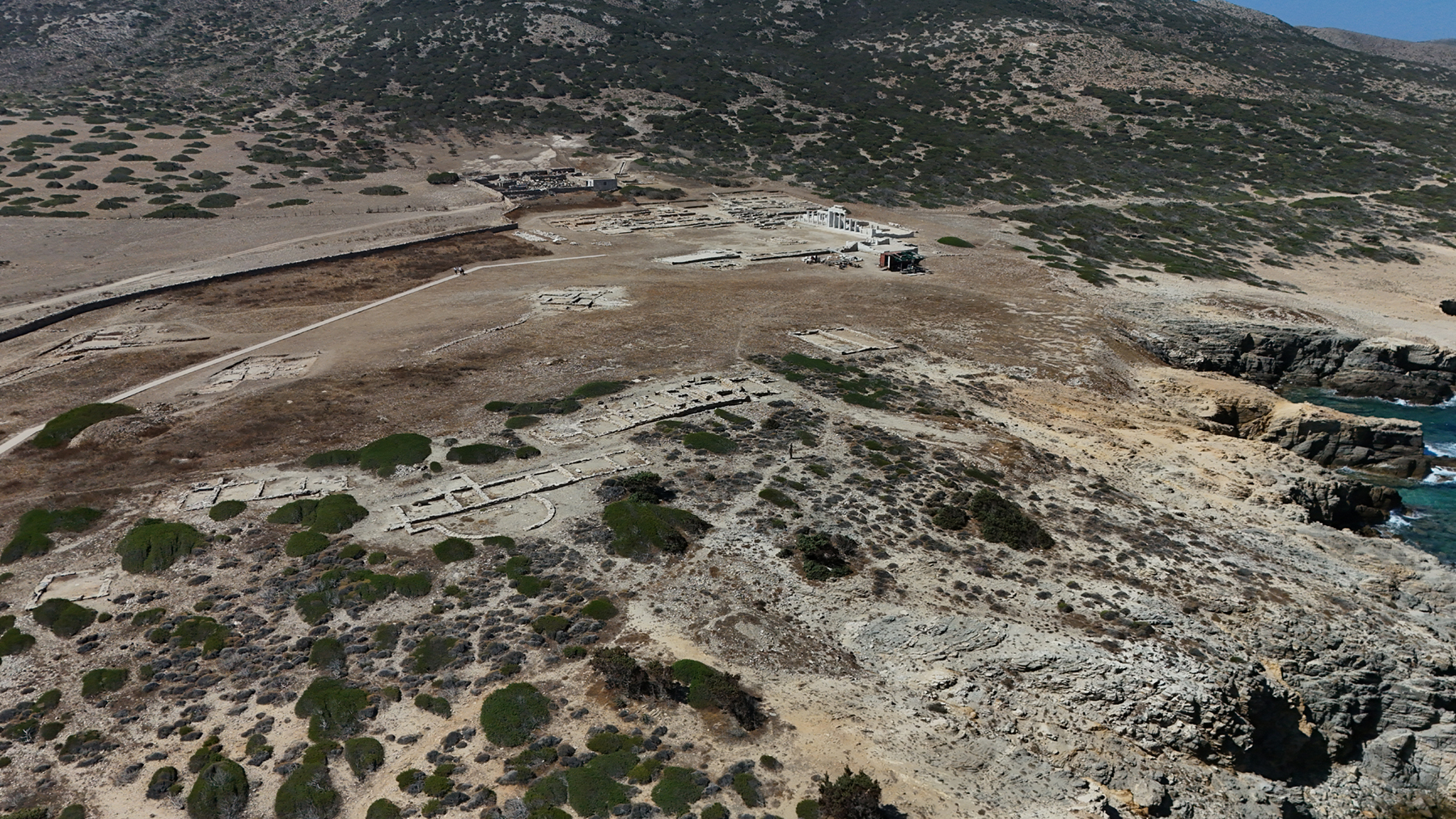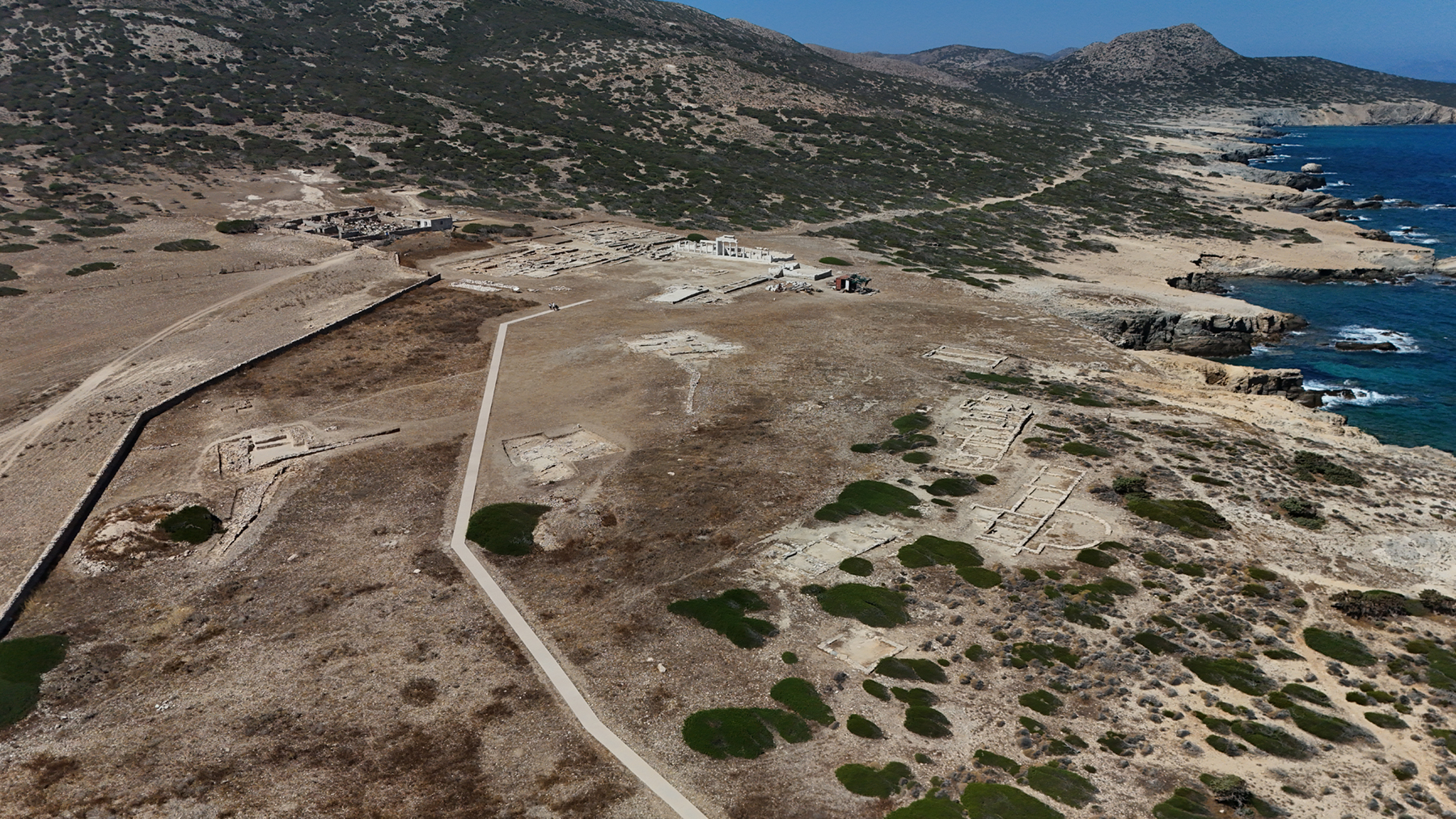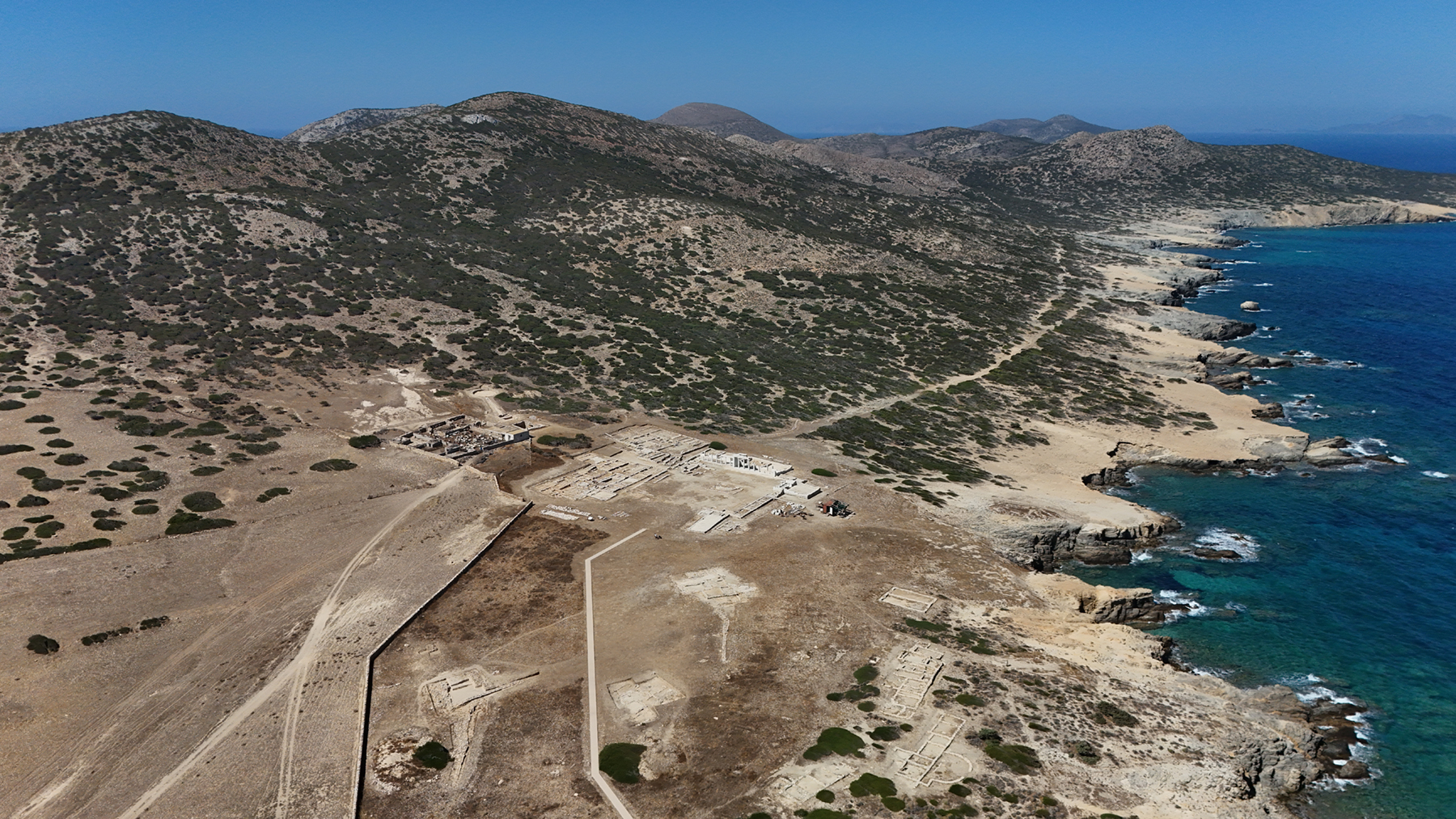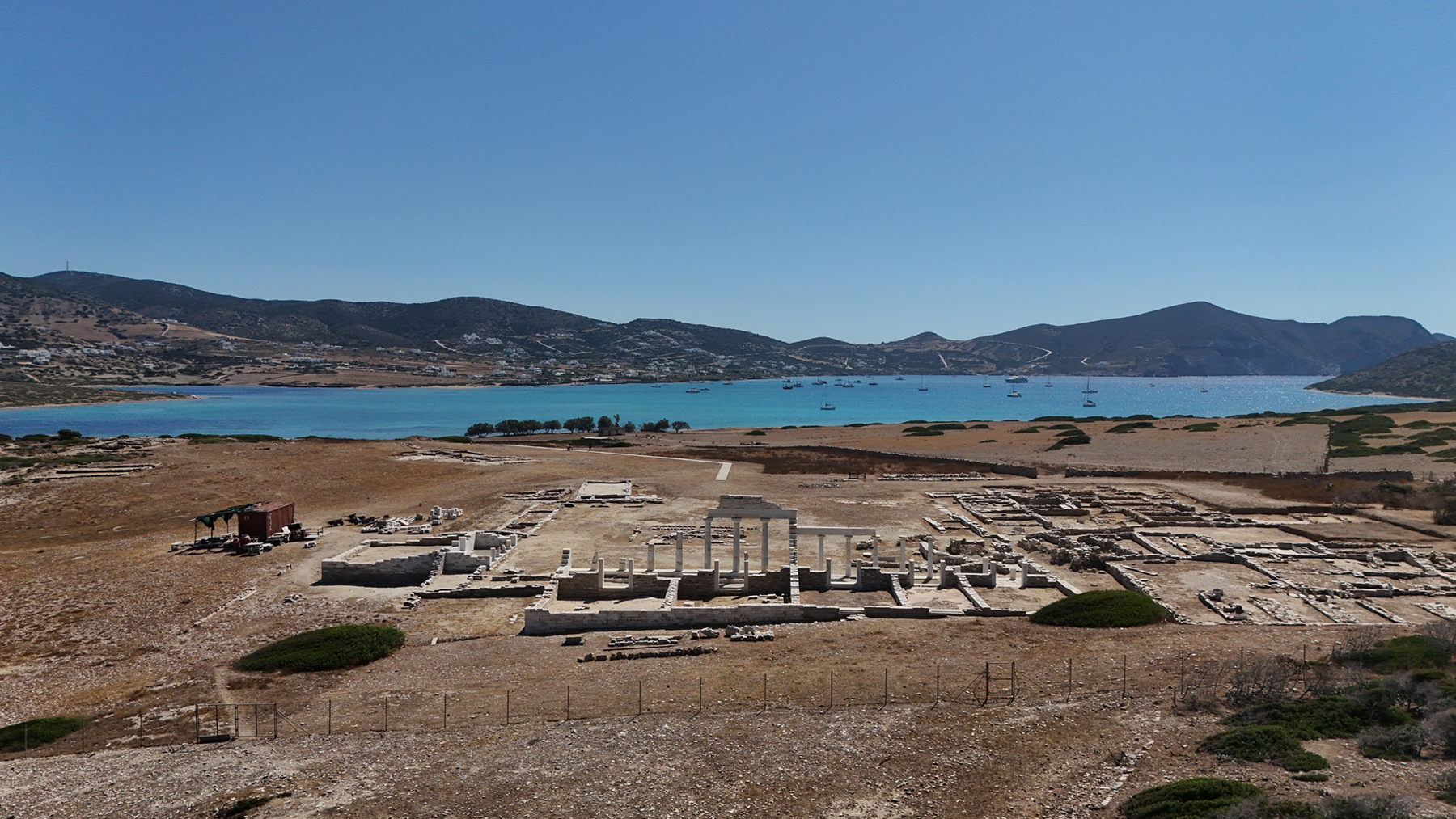


In the centre of the Cyclades lies the ‘Parian archipelago’, a unique cluster of islands around Paros that includes Antiparos, Despotiko, Tsimintiri, Strongylo, Saliagos, Pateronisia, Rematonisi and other smaller islets. On the southern side of the cluster lies the uninhabited island of Despotiko, almost thirteen nautical miles southwest of Paros and just half a mile west of the beach of Agios Georgios, on the southeastern coast of Antiparos, with which it was united in antiquity. For millennia, the history of the island has been inextricably linked to that of Antiparos and Paros.
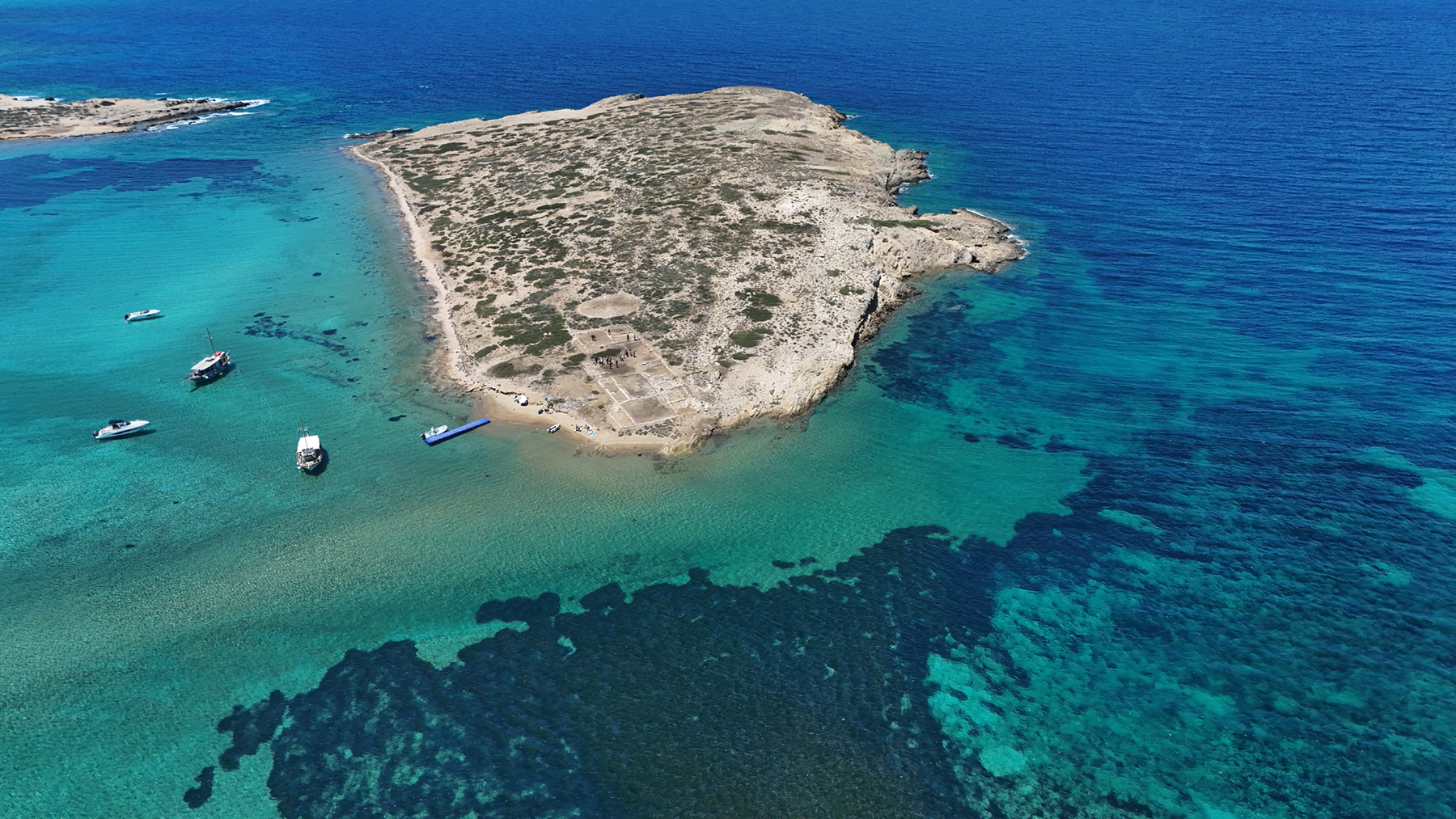
Between Despotiko and Antiparos is the islet of Tsimintiri. Its western edge, which is also the gentlest, is only 100 m from Despotiko. Four plundered Early Cycladic tombs were excavated there, which due to the rise in sea level are now under water. In the interior of the islet, foundations of a square tower and large buildings have been identified, one of which has been excavated.
Despotiko has a total area of 7.65 sq. km. Its terrain contains rocky areas, high hills in the interior, relatively steep coastlines and a few bays, the largest of which is on the southern side, at the location of Livadi. The easiest access to the island is at the areas of Panagia and Mandra on the east coast, which are particularly protected from the weather conditions due to the natural leeward harbour formed between Antiparos, Despotiko and Tsimintiri. As in all the Cyclades, the sea level has risen by at least two metres in the last three millennia. According to recent research in the underwater area of the bay of Despotiko, the three islands were once one. Very close to the coast of Antiparos, a built well was found, a square structure with a special floor plan of internal benches connected by two rectangular structures, as well as a long wall. Along the eastern coastline of Despotiko, near the chapel of Panagia, there are channels carved into the natural rock, similar to those on Paros and Antiparos, whose purpose has been interpreted in various ways.
Paros
The combination of various parameters, such as the key geographical position of Paros on the commercial sea routes connecting Crete, Asia Minor, the East and the Cyclades with mainland Greece, the leeward large port in present-day Parikia, the mild climate and the richness of the land was a decisive factor in the prosperity of the island, especially during the Archaic and Classical eras (6th–5th centuries BC). The ancient city of Paros, the ‘Parion polis’, emerged as one of the most powerful and richest island cities. Its territorial and political sphere included Antiparos (ancient Oliaros) and the present-day Despotiko. The Archaic period (7th–6th centuries BC) was the ‘golden age’ of the island, as it experienced significant economic and cultural affluence, due to its central position in the Aegean and the exploitation of the marble quarries, the famous Parian ‘lychnite’.
Already in the early 7th century BC, the activities of the Parians extended to the Propontis, where they founded the colony of Parion (710/705 BC) and to Thassos where they founded the colony of that name (680/670 BC). The systematic development of the marble-quarrying began in the 7th century BC and by the Classical period it had grown to enormous proportions, as the material became sought after throughout the Mediterranean. It constituted the main source of wealth of the island, but was also the reason behind the creation of a unique school of sculpture with pan-Hellenic reach and influence. Some of the most famous Parian sculptors were Aristion, Palion, Platthis, Agoracritus and Scopas. Gradually, due to the intensive exploitation of marble, the city of the Parions was transformed into one literally of that material. In a climate of economic and commercial enthusiasm and nurturing political ambition for domination and expansion in the Aegean, the Parians from the 6th century BC invested significant wealth both at the Panionian sanctuary of Apollo on Delos, where the Naxians had established their presence a century earlier and the Athenians looked like a leading power on the make, and also on their own island, building many temples and public buildings.
Archaeological data suggests that from the mid-6th century BC to the early 5th century BC, a costly and ambitious building program for the construction of religious buildings was underway on Paros. Excavation finds, inscriptions, scattered architectural members and written sources all testify to the existence of sanctuaries throughout the island. In the centre of the city, three temples were founded (temple of Athena, and temples B and C), while in the immediate vicinity of the city stood two sanctuaries of Apollo (Delian, Pythian), the sanctuary of Demeter and Kore (Thesmophorion) and the Heroon for the poet Archilochus. However, the Parians, aiming to strengthen their geopolitical and economic presence in the central Aegean, decided in the mid-6th century BC to establish a large sanctuary far off from their city, on the present-day island of Despotiko. The sanctuary dedicated to Apollo was founded in a location inhabited since the Geometric period and of a cultic character, but also one with that fundamental geographical feature guaranteed to contribute to the development of a supra-local religious centre, namely a very well-protected harbour.
Antiparos
The long history of Antiparos is inextricably linked to that of Paros. In antiquity, the island was referred to by the Phoenician name Oliaros, which means ‘wooded mountain’, while its modern name was only acquired in the 13th century AD. From geological observations and underwater research it is certain that Antiparos was united with Tsimintiri and Despotiko, at least until the Classical period. The first traces of human presence on the island date to the Neolithic period. One of the earliest settlements in the Cyclades (5th millennium BC) has been excavated on the rocky islet of Saliagos, in the narrow Paros-Antiparos channel, which in antiquity was part of Antiparos. The finds from the Neolithic settlement are exhibited in the archaeological museum of Paros and testify to the operation of a small but organized ‘village’ of fishermen.
At the end of the 19th century the archaeologist C. Tsountas identified cemeteries from the 3rd millennium BC (Early Cycladic period) on the south side of Antiparos, at the sites of Apantima, Soros, Petalidi, Krasades, Georgoulas and Psaroga. The finds from his research are exhibited at the Archaeological Museum of Athens, while the British Museum houses the findings from clandestine excavations by the English traveller T. Bent at Apantima, Soros and Petalidi. Recent research by the Ephorate of Antiquities of the Cyclades has brought to light significant architectural remains from the Early and Middle Cycladic periods (3rd millennium BC to the first half of 2nd millennium BC).
Archaeological evidence for the story of the island in historical times is still scarce: it seems to show that no independent city developed on Antiparos, but politically the island was subordinate to Paros. In the famous cave of Antiparos, in which pottery from the Geometric and Archaic periods has been found, it is believed there was a sanctuary of the Nymphs. Many ancient inscriptions are engraved into the walls of the cave, one of which mentions the name of the Parian lyric poet Archilochus. The finds of recent rescue excavations on the island testify to the commercial activities of the inhabitants and their occupation with agriculture.
In the Byzantine era, Antiparos was deserted due to pirate raids, while during the Latin occupation it belonged to the Duchy of the Aegean. In 1440, the Venetian ruler of Paros, Crusino Sommaripa, gave the island as a dowry to his daughter Francesca in her marriage to the Venetian lord Leonardo Loredano. Loredano organized the settlement of the island, while at the same time building the castle to protect the inhabitants from pirate raids. The castle of Antiparos is a prominent example of Venetian fortification architecture in the Cyclades.
The island was conquered in 1537 by Hayreddin Barbarossa and came under Turkish rule with an insupportable tax-levy of 1200 groschen each year. It is said that in 1756, because the inhabitants of Antiparos were unable to pay their taxes, they were forced to sell the islets of Fira and Despotiko to Petros Mavrogenis from Paros and Tzorgzis Bao from Mykonos.
A ‘Time-Line’
The earliest traces of habitation in Despotiko date to the Early Cycladic period (3rd millennium BC). At two sites on the southern side of the island, Livadi and at Zoumbaria, two Early Cycladic cemeteries with cist tombs containing clay and marble vessels, jewellery and figurines were excavated at the end of the 19th century by Christos Tsountas. More tombs were unearthed at Zoumbaria in 1959 by N. Zapheiropoulos. Traces of residential settlements have recently been identified at the sites of Cheiromylos and Zoumbaria.
The next phase of habitation on the island dates to the Geometric period (9th-8th centuries BC), when a cultic establishment was established at Mandra, on the northeastern peninsula of the island. At the same site in the Archaic years, the city of Paros founded the great sanctuary of Apollo, which operated until the Hellenistic years. During the Roman period, the sanctuary ceased to operate and its buildings were repurposed for habitation until the early Byzantine period (6th century AD). After centuries of abandonment, the site was re-inhabited in the late Byzantine period, until the 17th century. In fact, many architectural elements from the sanctuary’s buildings were transferred and reused in the Venetian castle of Antiparos. The settlement of the late Byzantine years was founded over the ancient buildings and is identified with the castle that can be seen on maps and engravings of the 15th, 16th and 17th centuries.
The fate of Despotiko was inextricably linked to that of nearby Antiparos. Thus, with it, it passed into the jurisdiction of the Venetians, initially of the the Sanudo family in 1207 and then to other Venetian lords until 1537, when Antiparos and the rest of the Cyclades islands fell to the Ottomans. In 1657, as an act of revenge for the surrender of the pirate Daniel to the Turks, the settlement in Despotiko was plundered by French pirates and from then on the island was permanently abandoned. In 1756, it came into the ownership of the Mykonian George Bao and the Parian Despot Petros Mavrogenis. Over the last two hundred years, shepherds from Antiparos have established animal pens on the island, the largest of which is at the site of Mandra, on the ancient remains of the sanctuary of Apollo. However, the number and importance of the archaeological sites have now caused Despotiko to enjoy the highest degree of protection. At the same time, it is also safeguarded by the Ministry of Forests due to the special Cycladic vegetation – of cedars, junipers and creeping cypresses, that make it an island of particular natural beauty.
The history of archaeological research in Despotiko
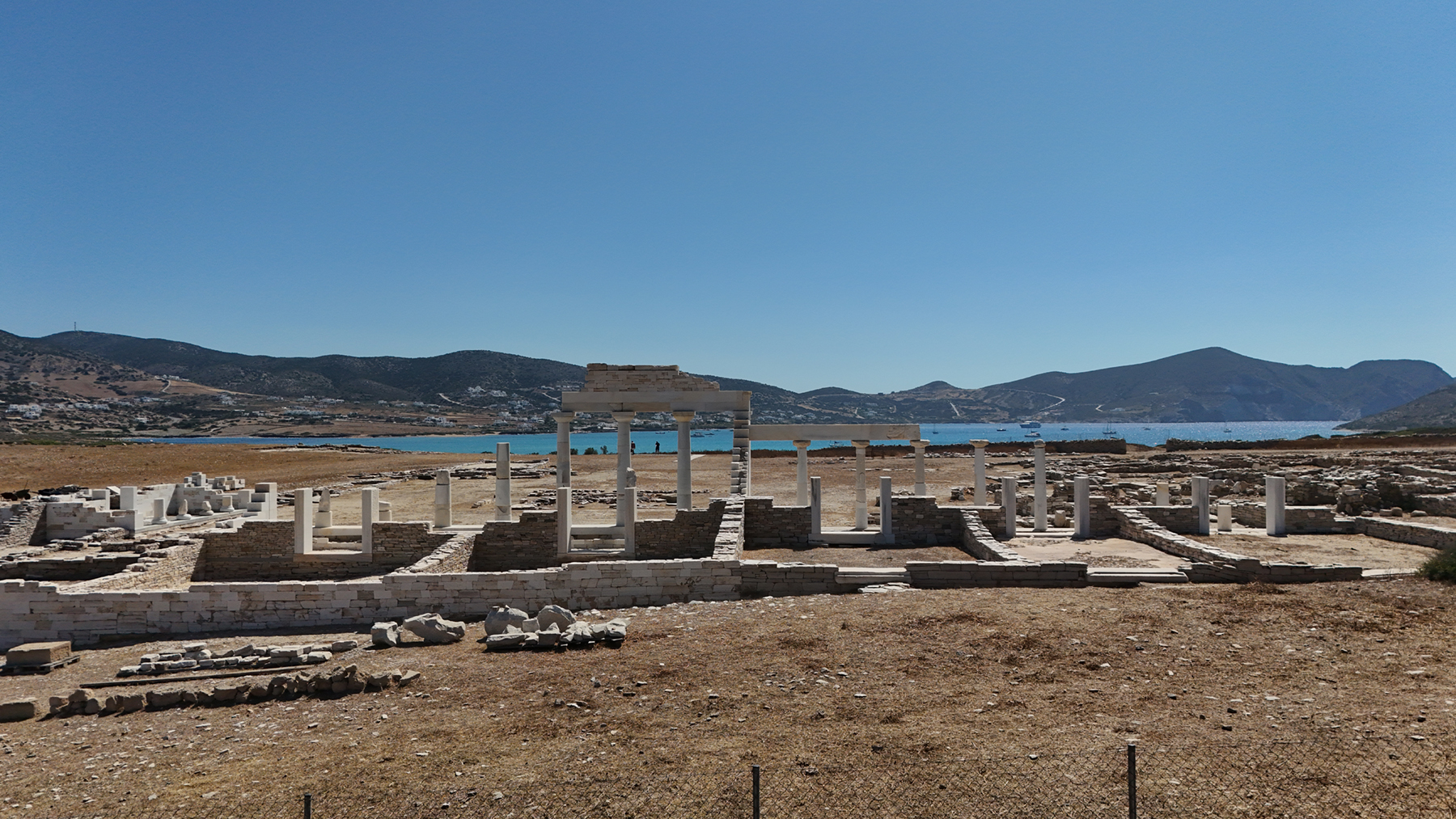
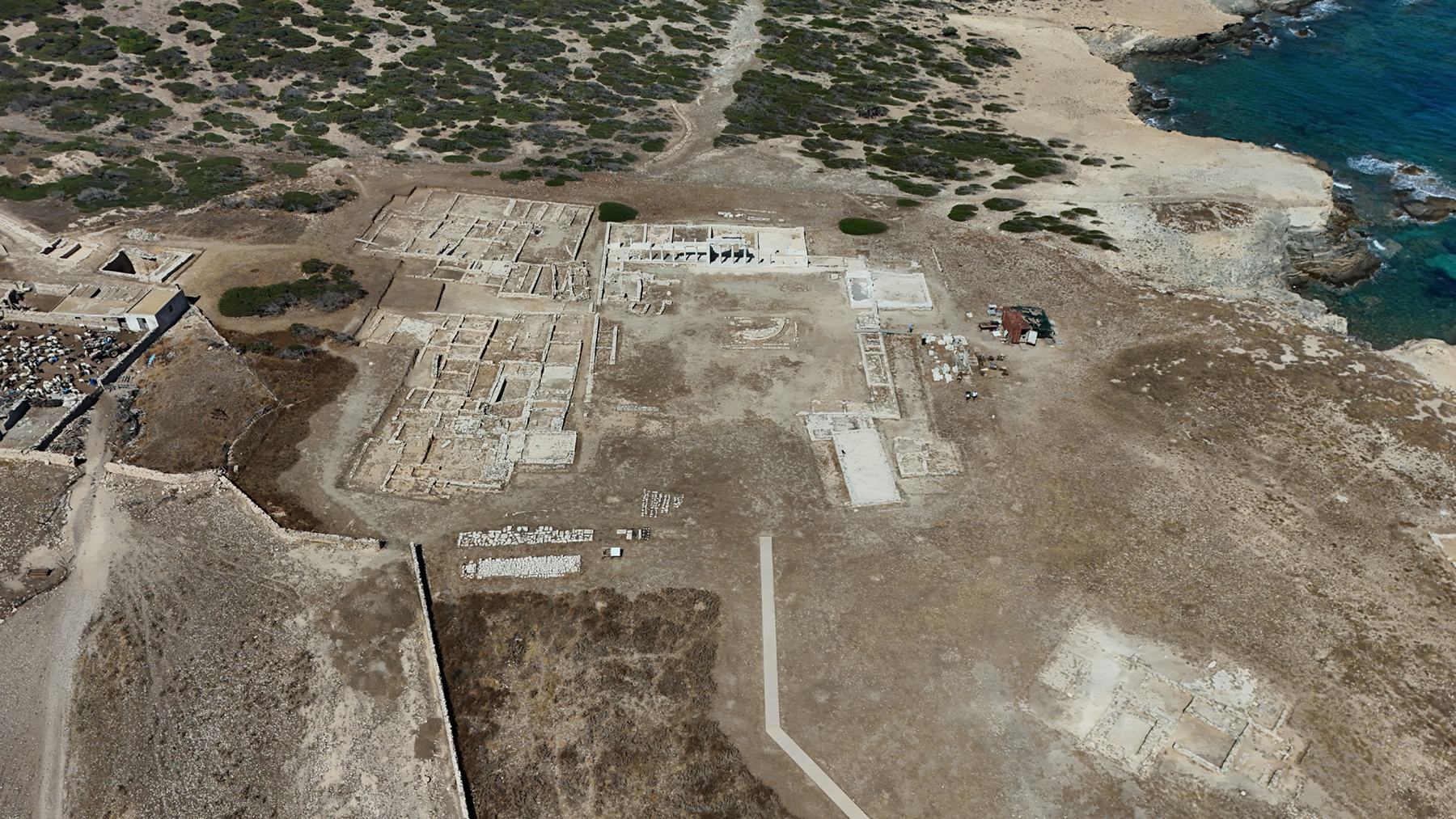
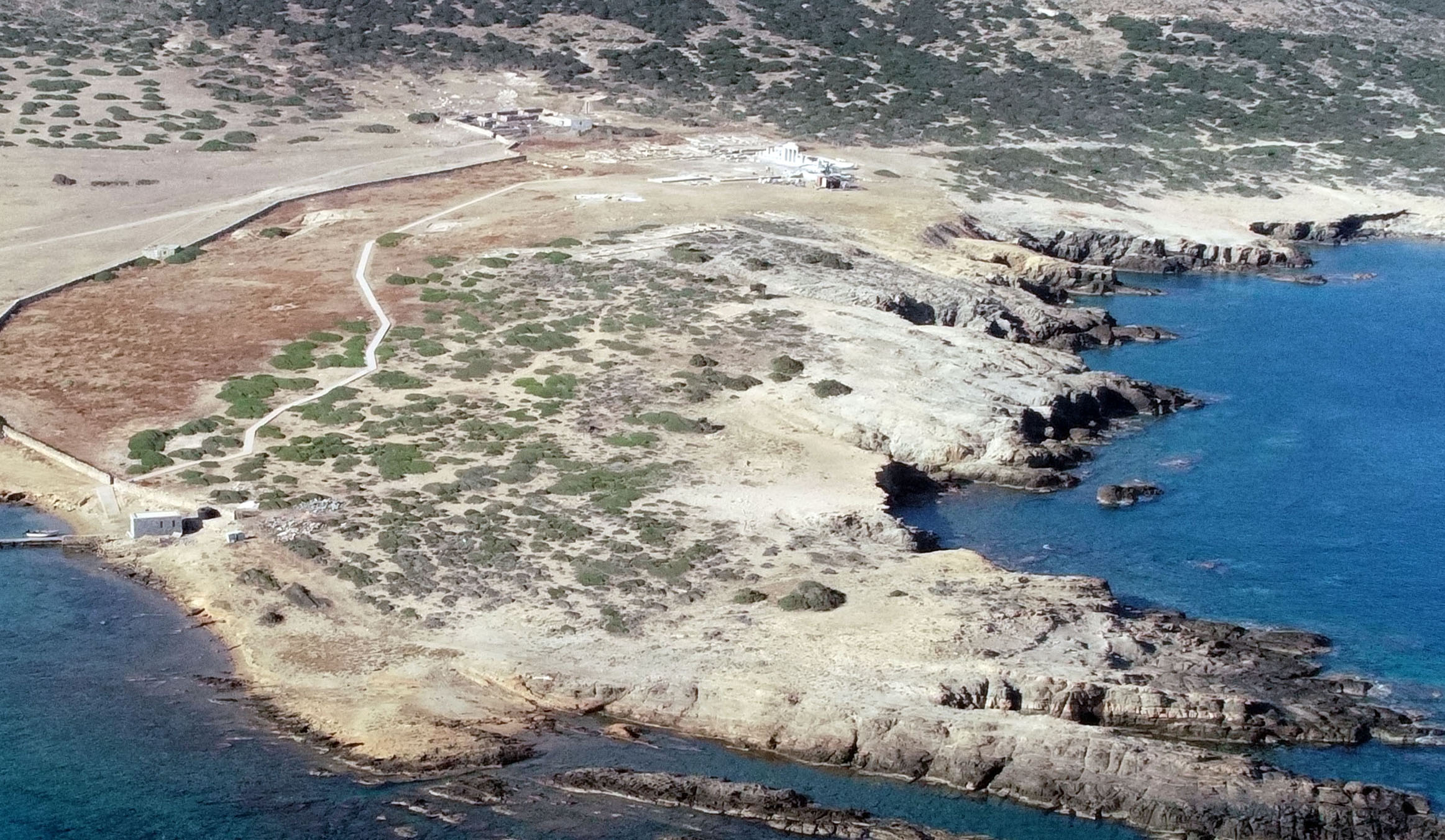
The site of Mandra is located on the northeastern side of the island, on the plateau of a large peninsula, at the northern entrance of the leeward bay that is formed between Antiparos, Tsimintiri and Despotiko, opposite Agios Georgios on Antiparos. The name of the site is taken from the animal pen that existed in the area since the 19th century and currently belongs to Petros Marianos of Antiparos.
Its archaeological importance has been known since the 19th century from a brief report by the English traveller T. Bent, mentioning the existence of foundations of ancient buildings near a fold on the northeastern side of the island. In 1959, the superintendent of antiquities Nikolaos Zapheiropoulos carried out a few days of research at the site, during which he brought to light a building that he interpreted as a Roman house, in which architectural members of an Archaic Doric building had been reused. In 1985, architects G. Gruben, M. Schuller, K. Schnieringer and A. Ohnesorg from the Technical University of Munich published the Doric members that had come to light during the excavation of Zapheiropoulos and also others that were scattered about or built into the mandra, which they attributed to a Late Archaic building (500 – 490 BC). Yannos Kourayos (archaeologist of this Ephorate) first visited the Mandra site in 1996 with a team from the then 21st Ephorate of Prehistoric and Classical Antiquities (now the Ephorate of Antiquities of the Cyclades). After a brief surface survey in which ancient marble structures, architectural members, sherds and partially visible walls were identified, the excavation proper began, which continues to this day. The first investigations from 1997 to 2000 were of a rescue nature and focused on the area west of the sheepfold. In 2001, the systematic excavation of the site began with the organization of a volunteer work program of students from Greek and foreign universities. Due to the need to expand the excavation, in 2002 the shepherd’s sheepfold was removed and a new one was constructed, away from the archaeological site. Today, after almost twenty years of research at the site, a large Archaic sanctuary dedicated to Apollo has been uncovered. Its discovery rapidly changed the archaeological landscape of the ancient Cyclades, since it is a previously unknown Cycladic sanctuary, not mentioned in any known ancient source, and yet its size and richness can only be compared to the sanctuary of Delos.
The Sanctuary of Apollo and the Temenos
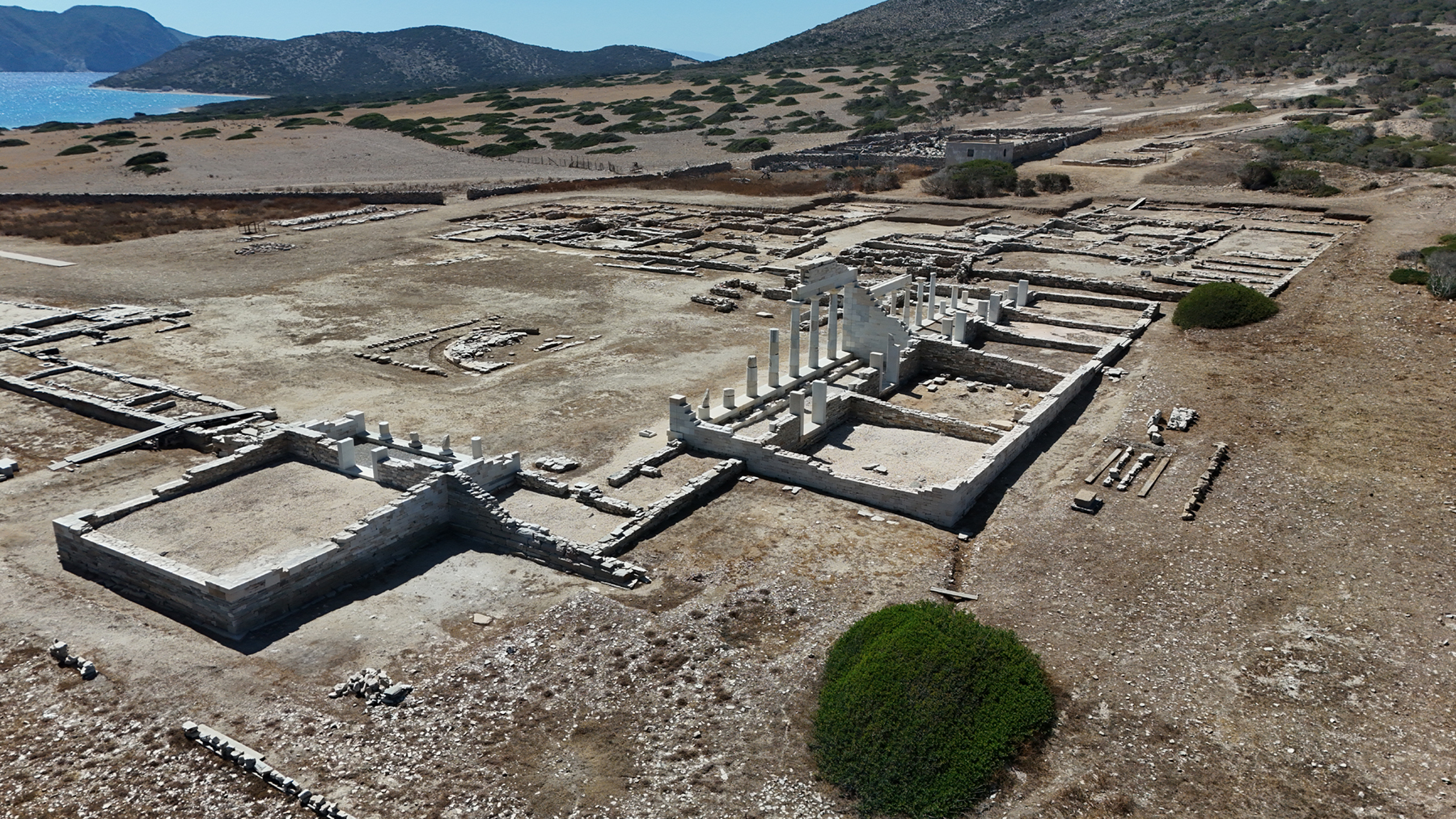
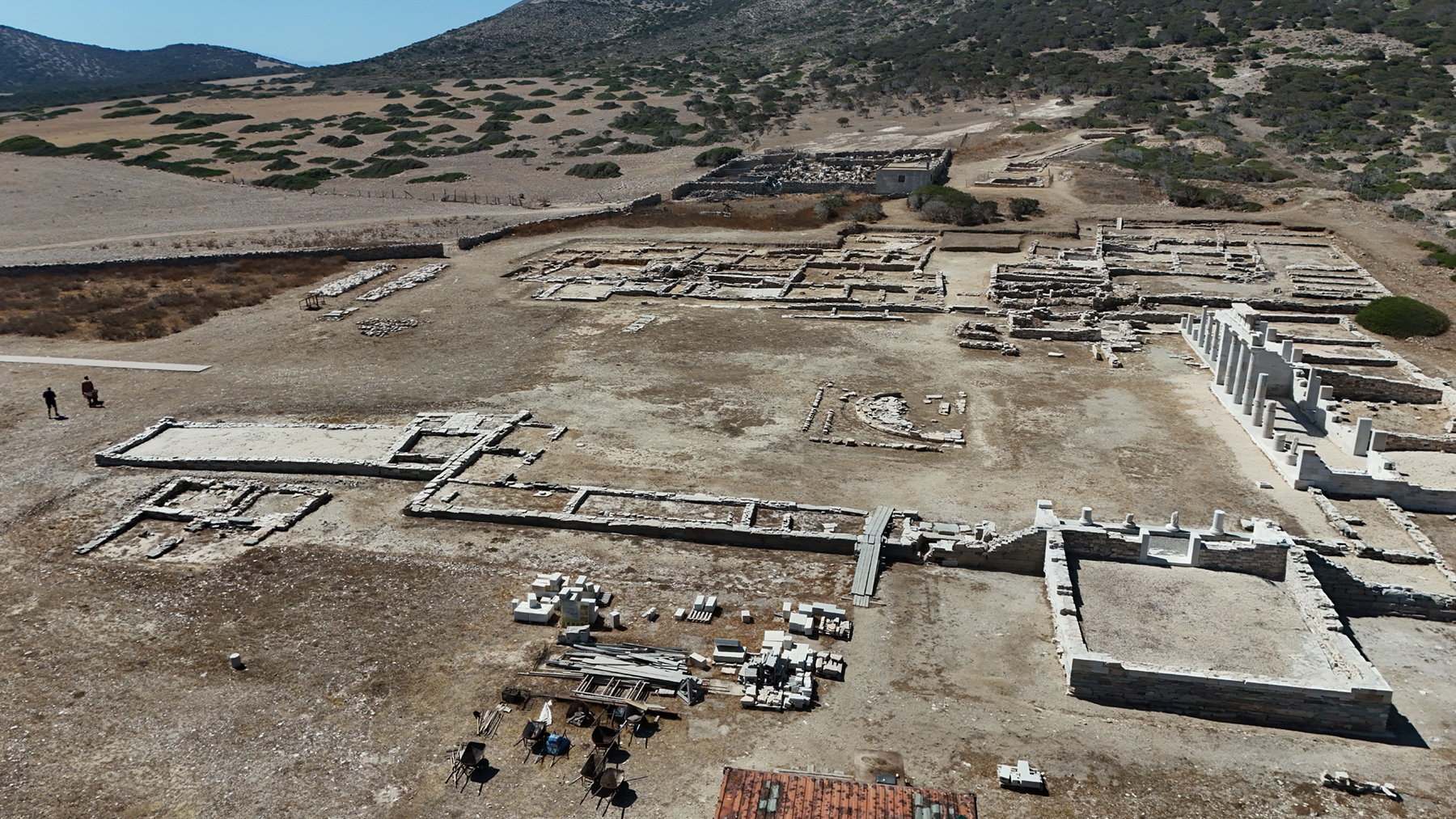
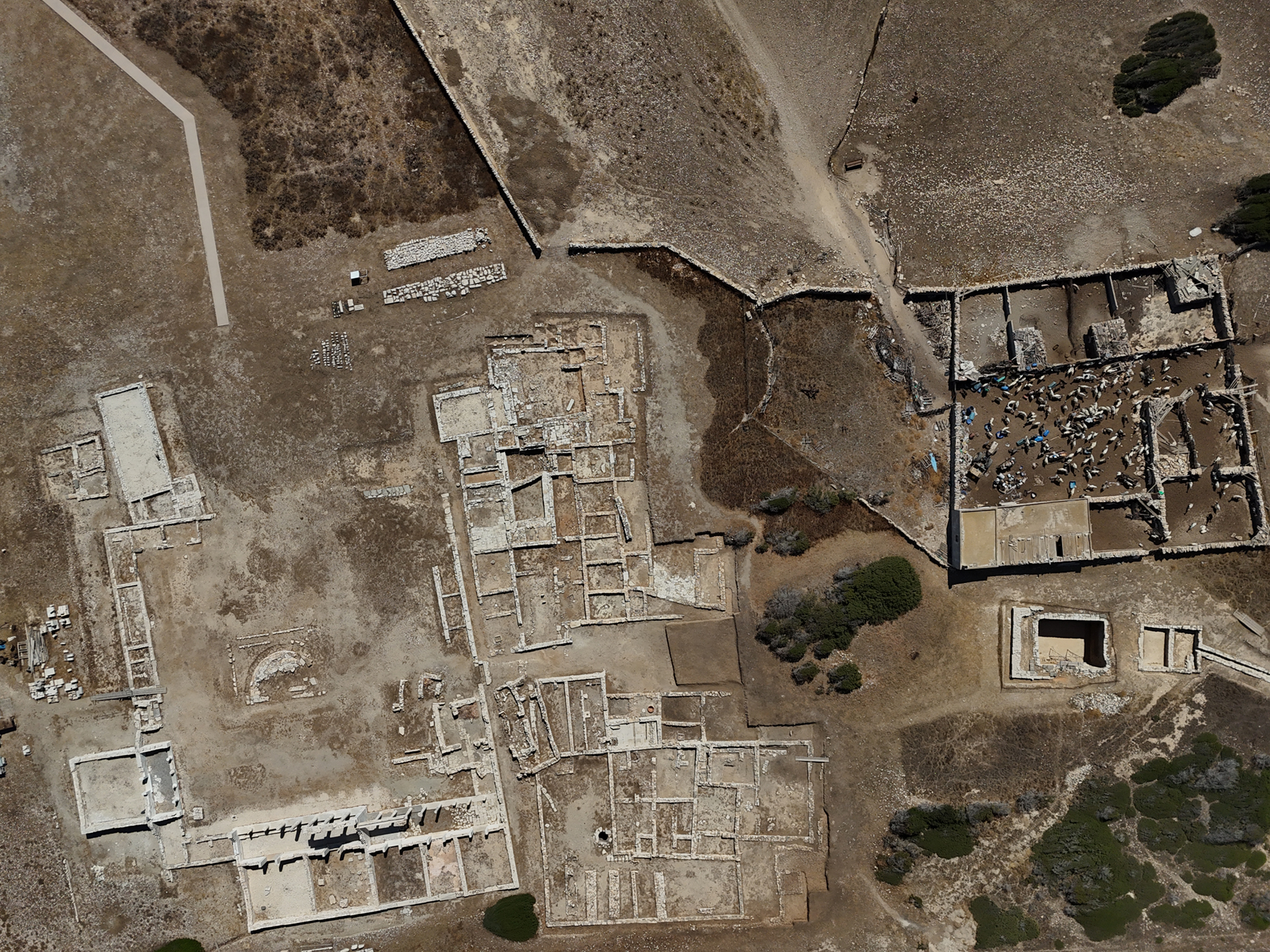
The sanctuary flourished in the late Archaic period (second half of the 6th century BC), but the earliest traces of worship in the area date to the Geometric period (9th-8th centuries BC). Despite the absence of written sources for the foundation and operation of the sanctuary, the historical and archaeological evidence known so far suggests that it was founded and managed by the city of Paros. The control of such a large extra-urban sanctuary – the largest in the Cyclades after the Panionian sanctuary of Delos – clearly indicates the ambition of the Parians to expand their geographical, economic and political dominance in the central Aegean, at a time when Athens had begun her own expansion in the Cyclades. The perfect organization of the sanctuary, the architecture of the cult and non-cult buildings and the wealth of its offerings are indicative of the prestige and reach of a religious centre of far more than local scope. Here the deity worshipped par excellence was Apollo, as evidenced by dozens of inscribed pottery sherds from the 6th and 5th centuries BC. The worship of Apollo’s sister, Artemis, is also possible, since the types of finds are consistent with both the worship of a male deity (numerous fragments of kouroi, daggers, spears, agricultural tools) and a female deity (jewellery, clothing accessories, figurines of female figures, part of a female statue). In the Classical period, the goddess Hestia was also worshipped in the sanctuary, with the epithet ‘Isthmia’. The excavation to date has brought to light twenty buildings dating from the Geometric to the Classical periods. The core of the sanctuary was developed on the highest and largest plateau of the Mandra peninsula, with an unobstructed view of Antiparos, Paros and Siphnos. Gradually, the auxiliary buildings of the sanctuary spread all over the peninsula, right up to the port.
Temenos*
The most sacred area of the sanctuary, the temenos, occupies an area of about 1600 sq.m. It is protected by a built enclosure-wall and houses Buildings A (temple and banqueting hall), Building D and three stoas. Entrance through the enclosure-wall was gained by two gates, one each on its north and south sides. The temenos itself was formed gradually. Initially built around the middle of the 6th century BC was the northern part of the cult Building A: this functioned as the temple of the sanctuary, along with the northern wall of the enclosure and the northern gate. Around 540-530 BC the southern part of Building A was constructed: this functioned as the ceremonial eating-place, along with the southern wall of the enclosure and the southern gate. By the end of the 6th century BC, Building D, Building E, the northern, southern and eastern stoas had all been erected. Finally, at the beginning of the 5th century BC, around 490 BC, the facade of the temple was reconstructed, adding a monumental marble colonnade. (* The temenos is a delimited (artificially or not) space within which a deity or more commonly a hero was worshipped in ancient Greece.)
The finds from the cult building at Despotiko
Room A1:Under the floor slabs of the northern room of the temple, a large number of objects (almost 650) were discovered of Cycladic, Corinthian, Attic, East Ionian, Cypriot, Syrian and Egyptian origin. Most date to the Archaic period (7th–6th centuries BC), while a few vases from the Geometric period (8th century BC) were also discovered. They belong to the usual types of votive offerings found in most archaic sanctuaries of Greece and the East (Delos, Paros, Kythnos, Thasos, Samos, Rhodes, etc.). Many were found intact, something that indicates their careful and deliberate deposition. This fact, combined with the earlier dating of the objects than that of the construction of the room in which they were found, argue they are earlier offerings made to the sanctuary. In the construction of the new space for worship, these were placed inside it, so that they would be protected and not destroyed. This practice is also found in other Archaic sanctuaries, but the peculiarity in the case of the Despotiko is that the votive offerings were protected under the floor of the temple and not placed in depositories. Most are exhibited in the Archaeological Museum of Paros.
Finds from the temple
Room A2: Inside the southern room of the temple, three large marble bases were found, two square and one rectangular. One – pieced together from four fragments – was probably the base of the cult statue of the sanctuary. It is dated around 500-490 BC, as it is typologically similar to the base of the cult statue of Artemis from Delion in Paros. During the demolition of the old animal pen in 2002, two fragments of the torso of a colossal-sized clothed statue were found embedded in it. Associated with these fragments must be a part of the left lower limb and plinth found a short distance from the temple: the sandal has two holes, one on each side, for the insertion of bronze straps. Based on its size and its stylistic characteristics, it is likely that this is a cult statue. It is not clear whether it belongs to a female deity or whether it represents the god Apollo, who is often depicted wearing a long garment.
Porch: Inside the colonnaded porch of the temple, under the foundation of its eastern wall, Corinthian vases were discovered, placed there to ensure good fortune for the building – a kind of ‘foundation deposit’. With them was an Archaic marble perirrhanterion that bears the inscription ‘MARDIS ANETHIKEN’ on the rim. The name Mardis is of Eastern origin, akin to other male names of that region, recalling that of Mardonius, the famous Persian general.
Votive offerings at the sanctuary of Apollo
The various and numerous finds that archaeological excavations have brought to light are irrefutable evidence of the history of the sanctuary at Despotiko. These shed light on the history of a truly important Cycladic centre of worship, the existence of which yet remained unknown until recently. Their dating, types and origins testify to the long-term use of the site, from the Geometric to the post-Byzantine period. They offer valuable information about the cult practices and daily life at the sanctuary, and so underline the central position of the sanctuary in the cult and political-economic network of the Cyclades, as well as the different origins of the those making the offerings. Marble statues, vases, figurines, jewellery, seal stones, weapons, tools, are all indicative of the prestige, the wide origin and the high attendance numbers enjoyed by this more than local sanctuary, whose founder and administrator was the city of Paros.
Of particular interest are the marble statues found in the sanctuary, the most magnificent of the votive offerings to the god Apollo. More than 70 parts of Archaic sculptures have been found (feet, thighs, shins, ankles, lower limbs with plinth, arms, shoulder blades and hands of Archaic kouroi), eight kouroi heads, one kore head, fragments of a Severe-style statue of an athlete and fragments of a colossal statue, probably the cult figure. Also, many marble bases of statues and votive columns have come to light. In addition to the above, a wing of a marble Archaic sphinx, marble votive capitals of the Archaic and Classical periods and a marble inscribed relief of the 7th century BC have been found.
The Paros Museum exhibits the upper torso of an Archaic kouros and the same of an Archaic kore from the second half of the 6th century BC (no. 742 and 791 respectively), as well as a part of a statue of Nike from the first half of the 5th century BC (no. 183), which were found on Antiparos. It is very likely that these also come from the sanctuary of Despotiko, since no place of worship has been identified on Antiparos. Finally, in the Museum of Cycladic Art there is a head of a half-finished kouros of under life-size (no. 725) which is reported as a chance find from Despotiko.
The reuse of marble sculptures
In no other Cycladic sanctuary, except Delos, have so many sculptures been found. All are carved from the pure white Parian marble – the famous ‘lychnite’ – and most are exceptional examples of the Parian school of sculpture that flourished in the second half of the 6th century BC. Their number and quality are irrefutable proof of the glory, splendour and wealth of the sanctuary of Apollo. However, many were destroyed very soon after their placement in the sanctuary, and their fragments were found built into its later auxiliary buildings. Their short lifespan and their ‘recycling’ through their reuse as building material must be linked to some destruction suffered by the sanctuary, at the end of the 6th to the beginning of the 5th centuries BC. Based on archaeological and historical evidence, it is likely that when the Athenian Miltiades besieged Paros in 490/489 BC – on the excuse that the Parians sided with the Persians during the Persian Wars, but actually because of the wealth of Paros and to consolidate Athenian dominance in the Aegean – he also attacked the Parian sanctuary in Despotiko, causing its destruction.
The buildings outside the temenos at Despotiko
The area demarcated by the temenos was approximately 1600 sq.m., and in the 6th century it was adorned with impressive votive offerings. Outside the temenos, the establishment continued to expand. By the end of the 6th century, to its east near Buildings B and H were erected Buildings C and Y. Building T was reconstructed with the addition of two courtyards, while two more new buildings were built just half a metre to its south: Building E and the so-called Connecting Building.
The core of the establishment outside the temenos was now the southern area, to which the southern gate in the temenos leads directly. There, at the same time as the temple, the so-called Square Building was built with a two-sided floor plan and wooden columns on the inside, and at the end of the 6th century the ‘Bath’. The second half of the 6th century also dates the construction of Building P, a building with a two-part, megaron-shaped floor plan with a large courtyard possibly associated with cult practices. At the same time, or perhaps a little earlier, a large rectangular cistern was constructed in the area between Building P and Building F. The first half of the 5th century marks further spatial configuration of the facility. Specifically, Buildings M, N, the South and the East Complexes were all built, consisting of at least nine rooms that seem to have served ‘secular’ needs, such as storage and catering.
Buildings with one or more rooms are spaced out along the route leading from the temenos to the coast. In addition to buildings B, C, H were constructed Buildings Z, K, L, R, S, which must have had either residential or workshop functions.
Mandra may have suffered some destruction at the beginning of the 5th century BC, possibly in connection with the siege of Paros by the Athenian Miltiades, but the sanctuary did not cease functioning throughout the Classical and Hellenistic periods, as is indicated by the rich votive offerings, as well as the construction of the marble altar of Hestia Isthmia.
Cisterns
In the area south of the temenos, part of an organized and extensive water collection and treatment system was excavated in 2020 and 2021. The central tank has the internal dimensions of 7.50 m x 5.50 m and a preserved depth of 3.80 m. Its main period of use is placed in the Archaic and Classical periods. In Late Antiquity and the Byzantine period, various reconstructions and additions of small spaces inside it were made, which have survived to this day. At a distance of about one metre south of the large tank, another rectangular two-part structure measuring 6 m x 4 m was discovered, which is divided into two individual rectangular spaces that can be interpreted as small filtration/settlement tanks. A 25 m long stone-built channel running N-S begins at another large built tank, almost circular at 11 m across (the walls stand about 1 m high). The channel follows the downward slope (10-11°) of the terrain to end in the southernmost settlement tank. Of particular interest is the poros-limestone structure found in the middle of the upper large tank where the channel begins: the poros-structure had four holes (arranged in two rows), of which two survive. The arrangement of holes allowed the flow of water from the tank to the channel to be controlled.
Similar water-reservoir systems are rare in the Archaic period in Greece. That such a large water collection and management project existed in this period at Despotiko is not surprising though, since the number of visitors to the sanctuary would have been high and the water requirements would have been great (meeting the needs of the sanctuary and its visitors, irrigating crops, supplying ships with potable water).
Tsimintiri
The islet of Tsimintiri (or Cemetery), with an area of approximately 11 acres, is located between Antiparos and Despotiko, on the northern side of the leeward bay formed by the three islands. Access to the islet is only possible from the south or southeast coast, where a small beach with shallow waters exists. In antiquity, Tsimintiri was connected to Despotiko by an isthmus and probably also to Antiparos, so forming part of the Archaic temenos of Apollo at Mandra on Despotiko.
Its current name is taken from the Early Cycladic tombs that were discovered on the southeast coast of the islet and that are now partially below sea level due to the gradual rise in the same.
To date, eight buildings have been identified that occupy the southern side of the island, which has direct visual contact with the sanctuary at Despotiko. All are of very large dimensions and strong construction. They seem to be structurally connected to each other, creating a dense presence on the southern side of the rocky islet. The location and dimensions of the buildings probably indicate that they were structures of a public nature, perhaps related to the operation of the port. After all, Tsimintiri essentially was the isthmus that connected Antiparos and Despotiko, so one could access the sanctuary from Antiparos as well.
The restoration of Despotiko
The responsibility for an archaeological site does not stop at its excavation, the study of the finds and the conservation of the ancient remains, but must be complemented and topped off by their protection and promotion.
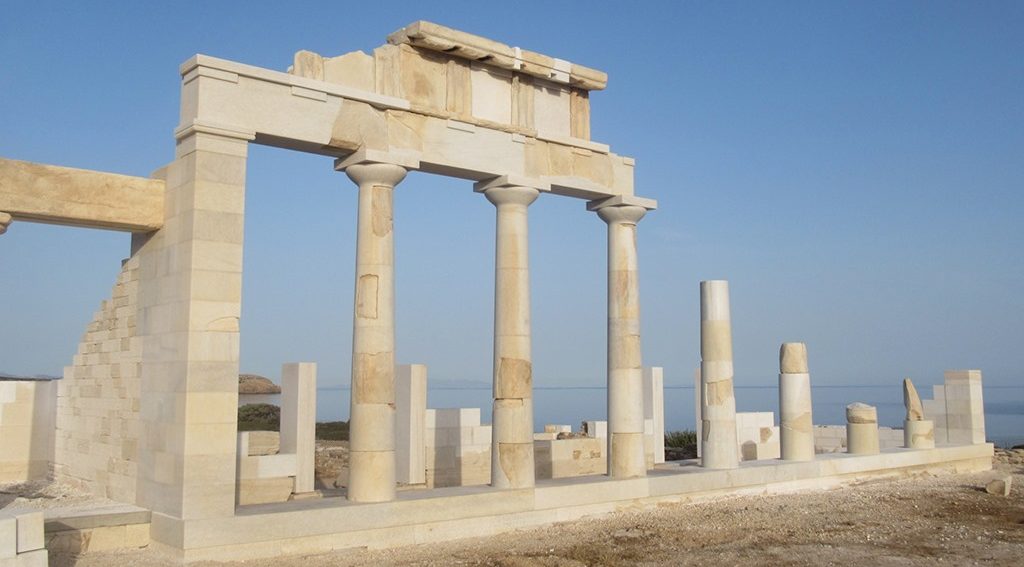
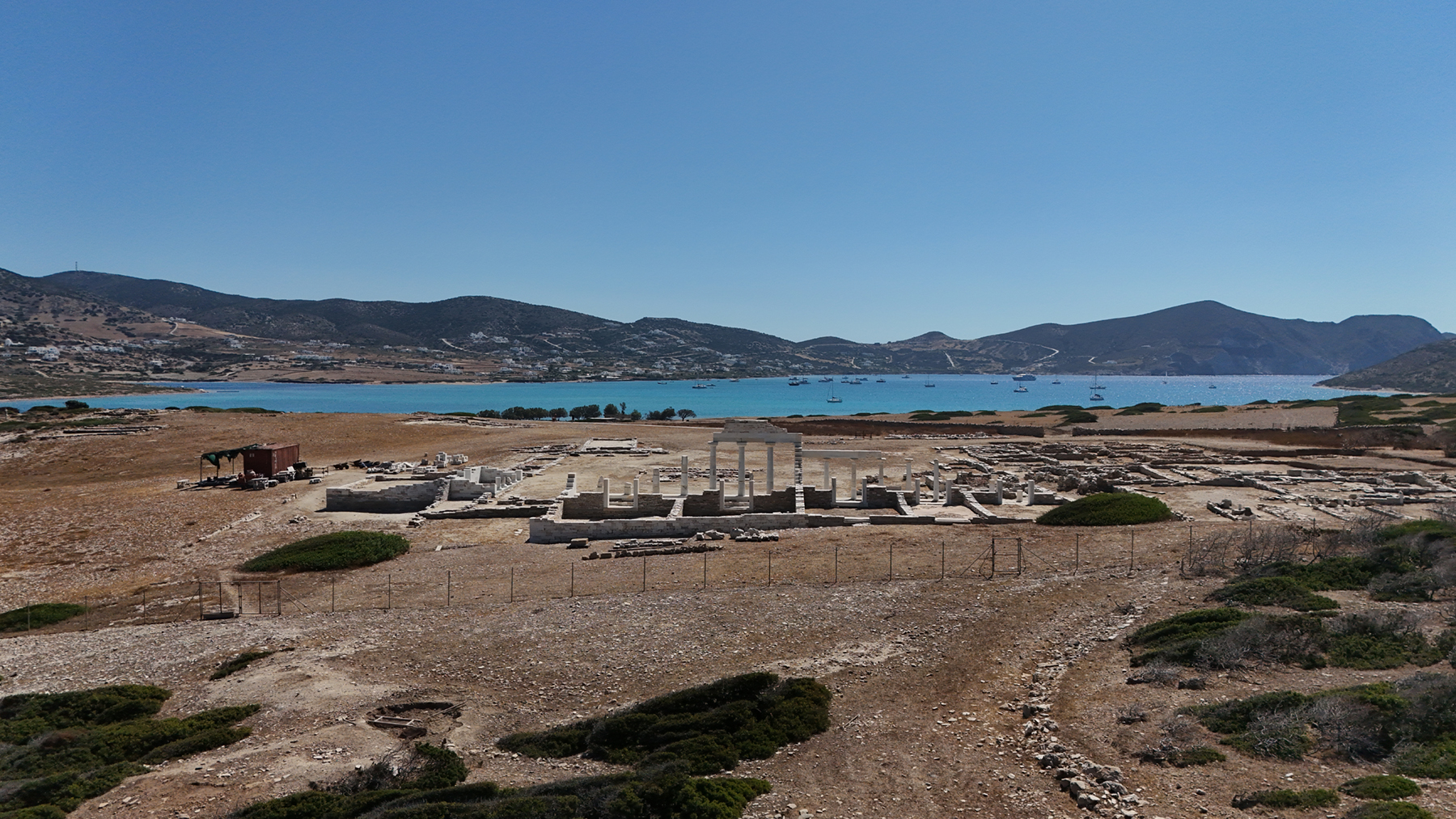
After twenty-three years of research, and in addition to completing the excavation and study of the archaeological finds, the primary goal of the Despotiko team has now shifted to become that of protecting and promoting the monuments and the archaeological site in general. The ultimate objective is to present it to the public as one of the most well-organized archaeological sites in the Cyclades that can be visited. The restoration and conservation work of the main temple and the ceremonial banqueting hall began in the autumn of 2014, in agreement with the approved studies. Today, after almost seven years of hard and thorough work by the restoration team, the project has been completed: the monument stands once again in all its immensity. Dominating the area, it now constitutes a unique landmark of Antiparos.
The completed works can be summarized as follows:
- The underpinnings and the stylobate of the Temple and the Banqueting Hall were completed.
- In the Temple, the remains of the first phase of the porch were restored by completing with new and ancient marble blocks the original eastern wall, uncovered west of the stylobate of the second-final phase of the building.
- The three southernmost columns of the Temple were completely restored and the capitals were replaced with new material, while the remaining four columns of the Temple were partially restored.
- Parts of the entablature of the Temple were restored with the installation of three pieces of epistyle/architrave and new backing stones, the completion and installation of ancient and new fillet mouldings, five ancient triglyphs, ancient and new metopes, three ancient cornices and the construction of a backing wall behind the triglyphs and metopes.
- The common wall of the Temple and the Hall was repaired with the restoration of the southern pilaster of the Temple, while the northern equivalent was partially completed.
- The five northernmost columns of the Hall, which bear their original Archaic capitals, were fully restored, while the remaining three columns were partially so.
- The three ancient epistyle pieces at the north of the Hall were installed with backing stones of new material.
- The western wall of the porches of the Temple and the Hall was completed and the thresholds of the doors of rooms A1, A3 and A4 were reconstructed and put in place, while that of room A2 was rearranged and the lower parts of the side pilasters of the doors restored.
- The northern wall of the Temple and the common western wall of rooms A1 and A2 of the Temple were brought up to their full height with new and ancient material.
The restoration work at the sanctuary in Despotiko is part of a series of other textbook efforts to manage and protect the monumental wealth of the Cyclades (Naxos with Sangri and Yria, Kea with Karthaia). They aim to stimulate the interest of the local community in our cultural heritage and to save important historical groups of buildings. The archaeological site at Mandra will not have been altered or transformed after the restoration interventions. On the contrary, the restored monuments will contribute to a better understanding of the place, where for centuries there coexisted monumental buildings of a cultic nature alongside buildings and auxiliary complexes of the temenos in this very important sanctuary. The archaeological site is now accessible to the general public, as in 2020 the main visitor route was constructed in keeping with the study approved by KAS. Starting from the northeast shore-line, the route, following the natural lie of the land and the naturally worn paths, approaches its goal in a smooth incline (at nowhere more than 6°), so allowing a comfortable access even by people with reduced mobility. Thus is a special mental and spiritual bond created among modern visitors, since they likely tread the very same route followed by pilgrims of old to the ancient sanctuary. Despotiko, where nature and history have remained unscathed by human intervention for centuries, can as a whole serve as a model for how to arrange an archaeological park, and ensure a timeless tour of Cycladic history.
The People of Despotiko
The archaeological work on Despotiko and Tsimintiri seems endless, as much of the past remains buried beneath the soil of the two islands. The progress made from 1997 to the present is the result of tireless effort, systematic scientific research, and the dedication and passion of all members of the archaeological and restoration team, along with the hundreds of students and volunteers, under the guidance of Yannos Kourayos.
ARCHAEOLOGISTS: Ilia Daifa, Alexandra Alexandridou, Erica Angliker, Iphigenia Leventi, Dimitris Palaiothodoros, Manolis Petrakis, Angelos Matthaiou, Luigi Lafasciano, Caspar Meyer, Simon Davis, Isabelle Algrain, Bryan Burns, Bob Sutton, Eleni Hasaki, Katerina Karakasi, Natalia Velli, Konstantina Frangou, Eirini Poupaki, Kristy Konstantakopoulou, Doug Forsyth, Spyros Petropoulos, Louiza Panopoulou, Mata Samioti, Ignatios Assatof, Anastasia Mallikopoulou, Kleio Papathanasiou, Eftychia Choumadaki, and many others.
CONSERVATORS: Giorgos Karambalis, Eva Tsavou, Vasilis Galanakos, Kostas Alexiou, Vaitsa Papazikou, Eleni Saiti.
ARCHITECTS: Goulielmos Orestidis, Aenne Ohnesorg, Katerina Papagianni, Martin Lambertz.
CIVIL ENGINEERS: Eva-Eleni Toumbakari, Dimitris Englezos, Vasilis Papavasileiou.
GEOLOGIST: Erich Draganits.
WORKMEN: Thodoris Velentzas, Takis Efstathianos, Yorgos Biliris, Dimitris Makrypoulis, Savvas Triantafyllidis, and the late Vasilis Sylvestros.
MARBLE ARTISANS: Markos Armaos, Loukas Ioannou, Yorgos Kontonikolaou, Yorgos Palamaris, Giannoulis Skaris, Vangelis Chatzis, Christos Bligiannos, Ilias Sipsas, Panagiotis Zestanakis, Minas Maravelias, Thanasis Mastoris.
From the very beginning of the research, when the late Dolly Goulandris financially supported the first excavation season, to the present day, the continued, hands-on support of Despotiko’s friends – including donors, public institutions, local associations, and individuals – has allowed the team to fulfil its goals. Notable supporters include Athanasios & Marina Martinou (AEGEAS NGO), the Paul & Alexandra Canellopoulos Foundation, the A.G. Leventis Foundation, the John S. Latsis Public Benefit Foundation, the Municipality of Antiparos, the Ministry of Maritime Affairs and Insular Policy, the Friends of Paros and Antiparos Association, Alpha Bank, the National Bank of Greece, College Year in Athens (CYA), the Antiparos Preservation Society, Elias & Marion Stassinopoulos, Nikolas & Irini Lemos, Petros Pappas, Aliki Goulandris, Maria Empeirikou, Atalanta Goulandris, Eleni Aloupi & Ion Siotis, Nikos & Maria Marsan, Nontas & Marilita Lampadariou, Kyveli Alexiou, Nick & Alice Galakatos, Giannis Patelis, Rigas Doganis, Thomas & Ζanine Koerfer, Giannis & Eugenia Koumandaros, Smeralda Malenchini, Luciana Moretti, Sofia Mylonas, Katharina Wienziger-Schnack, Marily Frangista, Rosamund Shakespeare, Nikos Adamantiadis, Michalis Panagis, Heiner Bastian, Dominique Senequier, Jonathan Lurie, Bubi Baehler, and many others.