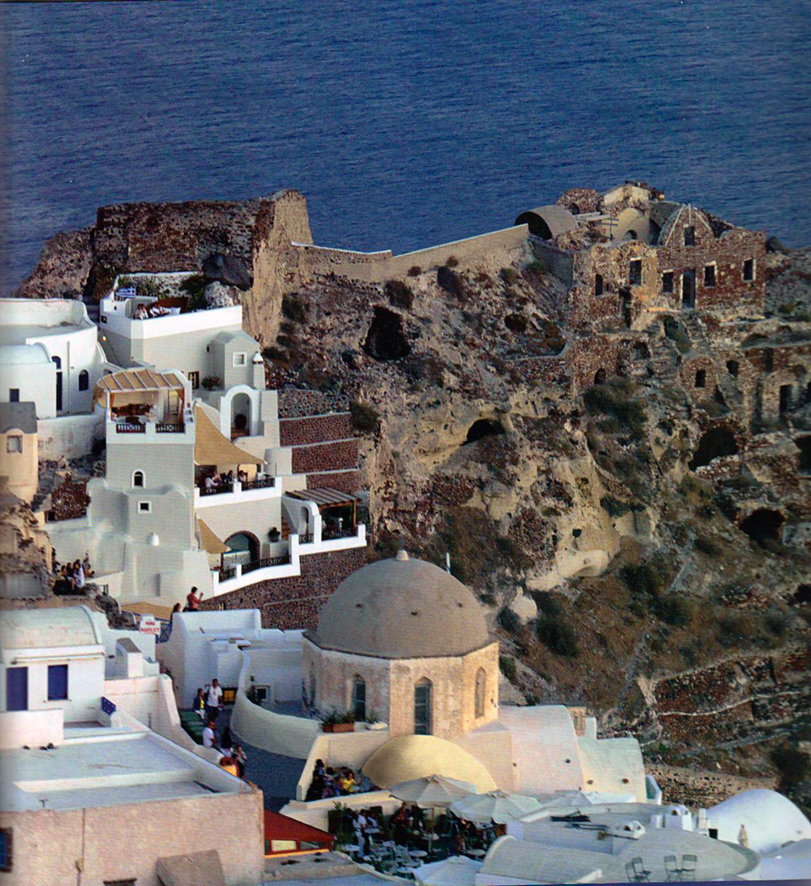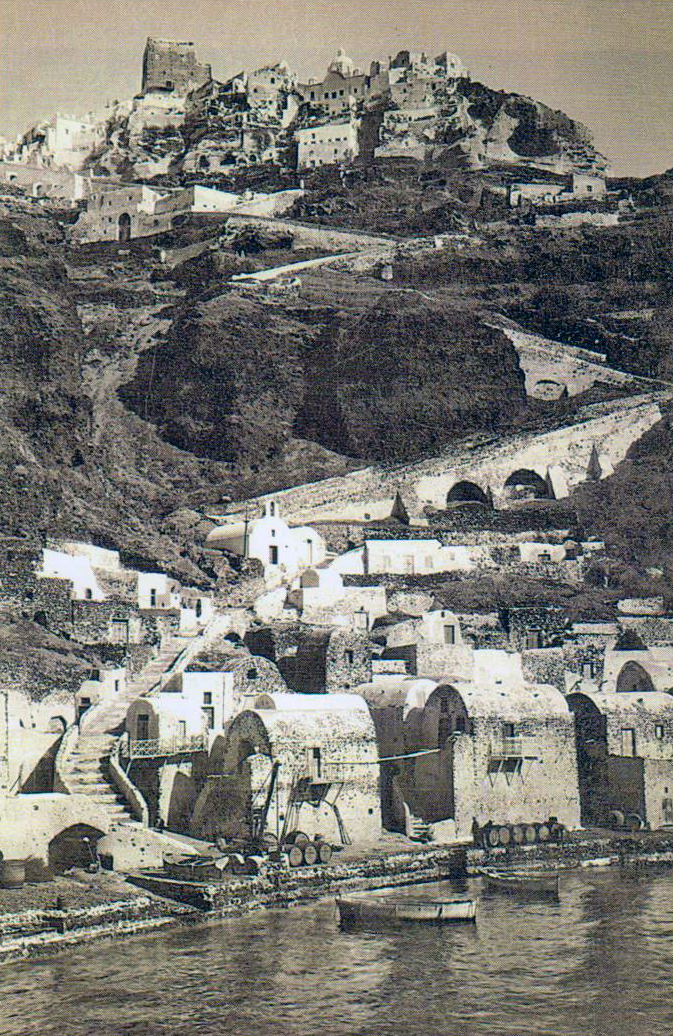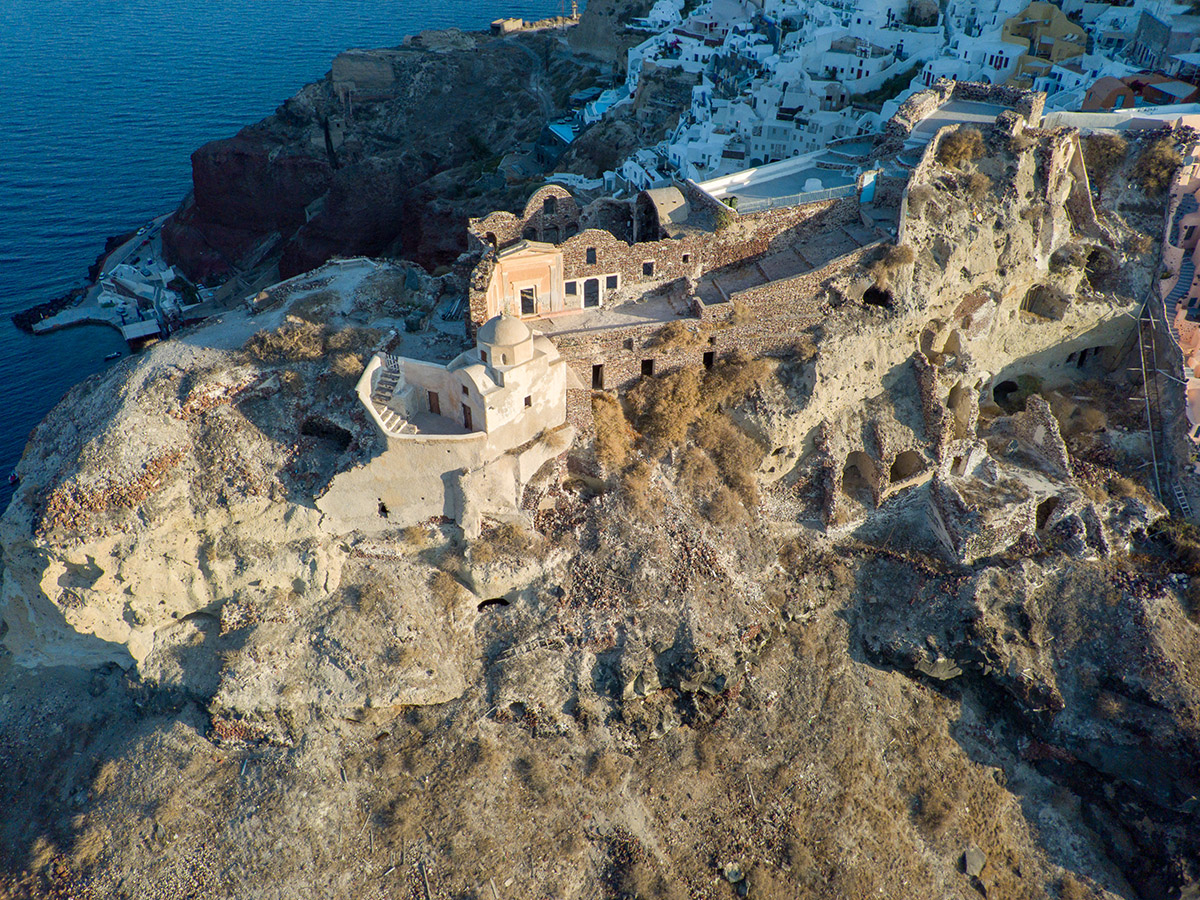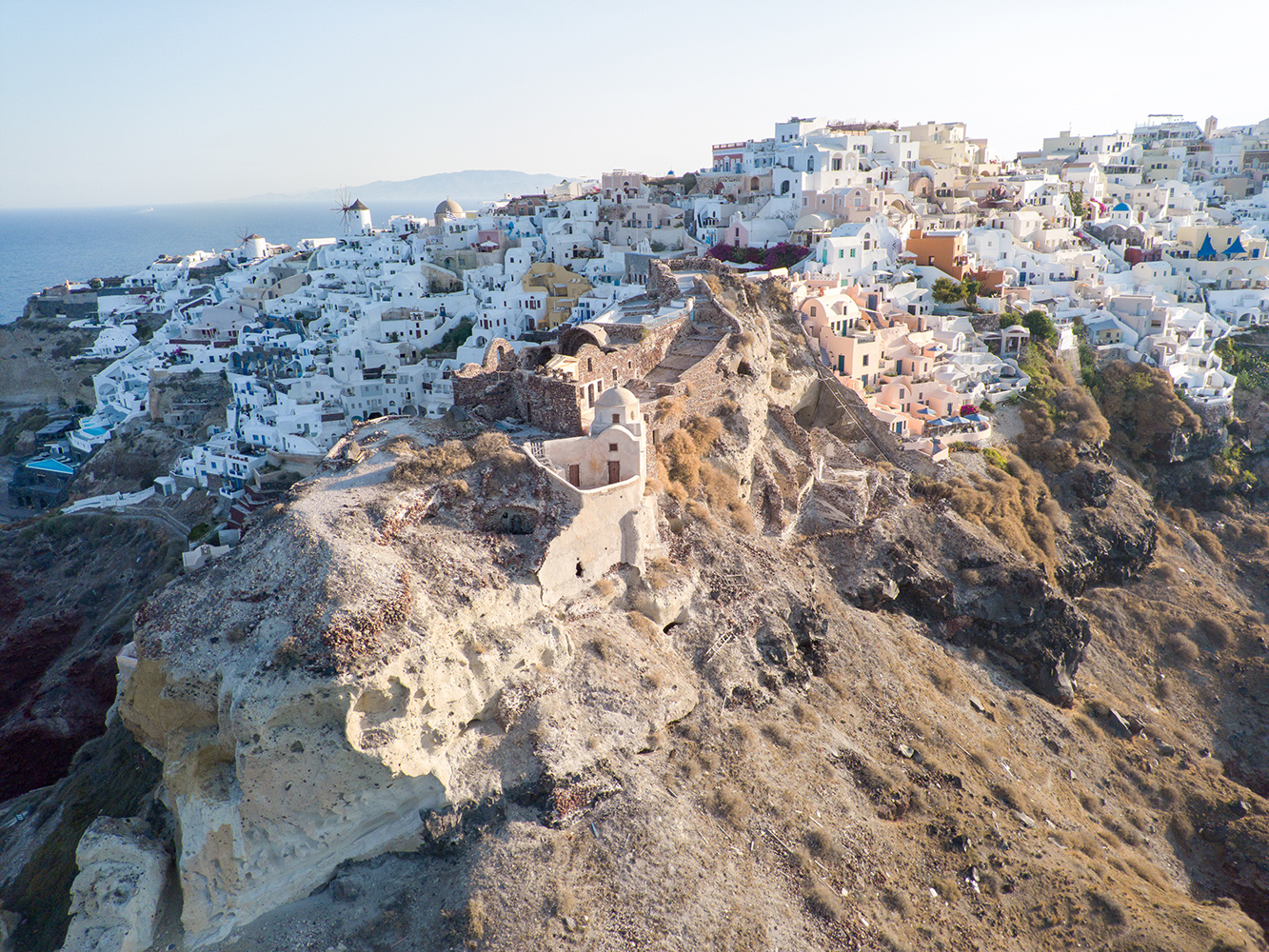


The Castle/Kastro of Agios Nikolaos, one of the five fortified kastlelia that protected the island from the first period of the Frankish rule (13th/14th centuries AD), was built on the northwestern tip of the island called Epano Meria or Epanomerea and took its name from a semi-subterranean church in this area. The initial core of it is attested from 1480, as it is reported that at the ceremony of handing over the island by the Duke of the Aegean, James III Crispus, to his son-in-law Domenico Pisani, ‘the D’Argentas, of the castle of Agios Nikolaos’ were present and declared their vassalage. The D’Argentas were Latinized Greeks, a branch of the Argyros family, descended from Emperor Romanos Argyros. They had been settled on the island since at least the 14th century, and in 1372 they received the area of Agios Nikolaos from the Duke of the Archipelago, Nicholas III Delacarceri, as a reward for services rendered. They remained as masters of the Castle until 1577 when they were captured by Turkish pirates along with the inhabitants of the kasteli. The Castle of Agios Nikolaos was one of the best fortified on the island because it defended three leeward harbours, which were used as trading posts. It appears on travellers’ maps as early as the 15th century (woodcut, Bartolomeo dalli Sonetti-Isolario Venice 1485), under the name Agios Nikolaos or Agios Sozon, because of the homonymous church located in the area.
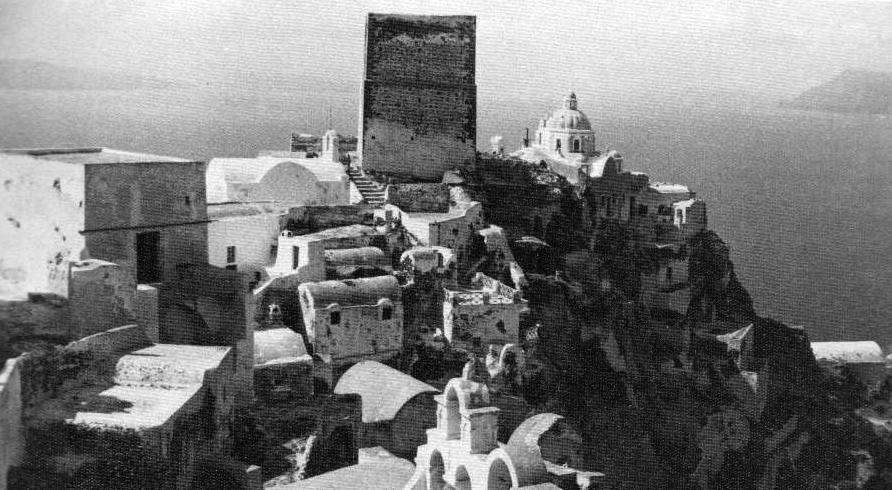
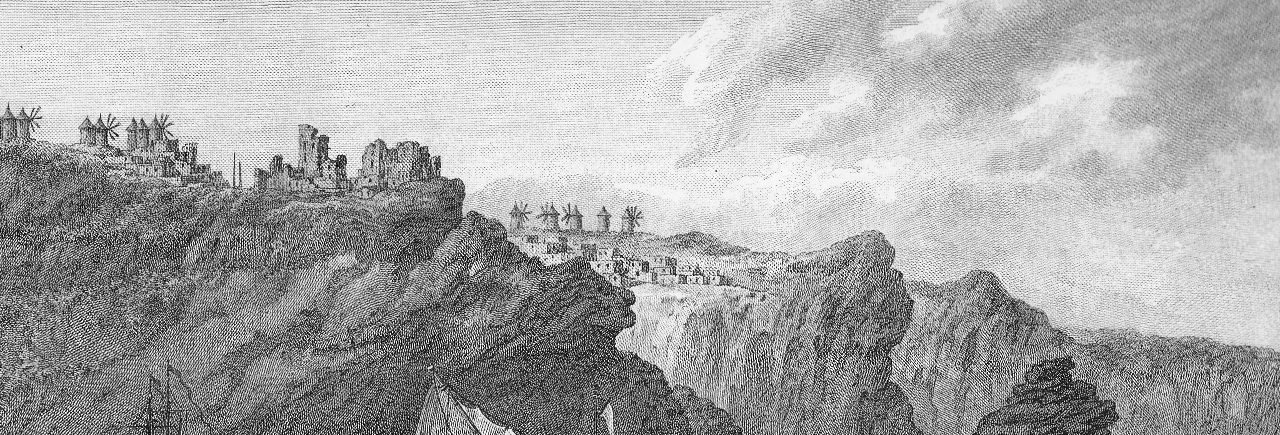
In the Choisel–Gouffier album of 1782, the original fortified core of the settlement can be seen, consisting of tall three- and four-story-high buildings, with a few openings in their higher parts. At the entrance to the kasteli there stood the Goulas, currently in ruins. This is a defensive tower within the kasteli, a rectangular multi-story structure that, in keeping with the nature of similar fortification structures, must have had an iron gate, battlements, arrow-slits and a machicolation: it was the last refuge of its lords and residents of the Castle in case of siege. The settlement of Agios Nikolaos, which subsequently expanded along the main roads that connected it to the mills, was the seat of an Orthodox Greek bishop with a flock of about 500 souls, as reported by the French traveller Thevenot (1655). It was the most populous settlement on the island, compared to Kasteli of Pyrgos which had 200 residents, Emporio less than 200, Akrotiri 150 and finally Skaros which did not exceed 150 houses.
The Russian monk Vasilios Barkij, who visited the island in 1745, depicts Agios Nikolaos as an extensive and densely built settlement, still the most populous on the island, with a fortress at its northwest end, where Goulas loomed large. Due to the continuous earthquakes that struck the area over the centuries, as well as the changes in socio-economic conditions, which are reflected in the houses of Kastro, the picture changed. In the place of the fortified structures that we see in the drawings and maps of travellers, the Kasteli of Agios Nikolaos was now dominated, right down until 1956 by the Goulas and the church of Panagia Platsani. The devastating earthquake of 1956 turned the once powerful Castle into a ruin: they have been declared a historical site (Government Gazette 1456/issue B’/13-12-73). Of the original Castle of Agios Nikolaos, only the base of the Goulas