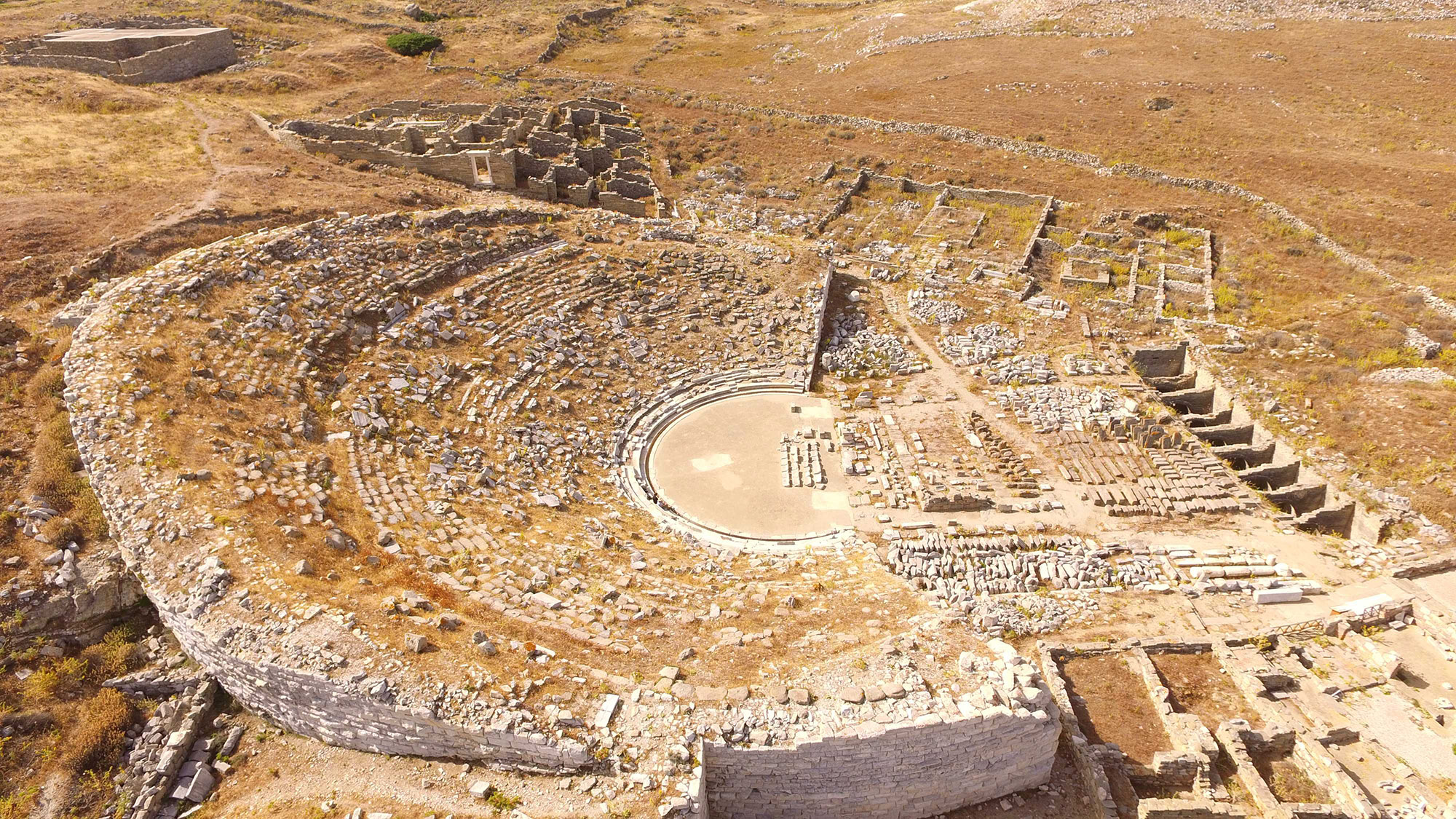


Delos, a World Heritage Site since 1990
Its creation as seen in the mists of myth
In the poetic narrative of the creation of the world as set out in Hesiod’s Theogony, ‘… the Earth first gave birth to Uranus, equal to her, … the high mountains, … the barren sea … and Pontus, without any joyful mating. And then she lay down with Uranus and gave birth to the deep-sea Ocean, … and the beautiful Tethys’. Here we recognize elements of the geological past in which the Greek mountain ranges, the Aegean islands and the Cycladic complex emerged from the bottom of the primordial Tethys sea. At their midst was a tiny island, which was to evolve into a great centre of the ancient world. From the humble prehistoric era to the heyday of historical times, and again from the oblivion of the Middle Ages to its rediscovery by romantic travellers and archaeologists, it has participated in important occasions in the history of the societies of the eastern Mediterranean basin. It was constantly being transformed, as the flow of events whirled around it.
The ‘invisible and unremarked’ island (a-delos in Greek), sailing freely on the waves, moved to centre stage and became ‘visible and famed Delos’, when in the mythological timestream the Hyperborean Leto, pursued by the jealousy of Hera, found a hospitable refuge there to bring to birth her twin children by Zeus. They were Apollo and Artemis, deities of sunlight and moonlight respectively. This was by Zeus’ own planning, when he had asked Poseidon for help. The poet Callimachus lyrically describes the proposal made to the island of Delos to accept the interest (i.e.. financial compensation, as the phrase goes) for this act, namely the gifts that the devotees of the gods would bring her to enjoy, among other things. The young Apollo, piling up the horns of the goats that his sister hunted on the slopes of Kynthos, created the first installation, the Horned Altar, and so introduced the concept of his organized worship on the island.
The first inhabitants of the tiny island
The geology of the island gave it an unexpected gift: a rich aquifer with abundant water, that basic element for human life. However, the restricted living space and limited natural resources of the tiny island could not support life beyond a small community. The oldest human traces on the island are located on the granite peak of Kynthos. The inhabitants of the small early Cycladic settlement, dating from the third millennium BC, wanting to protect themselves from the dangers that characterized this turbulent era, built their elliptical-shaped houses in a naturally fortified position. The constant use/reuse of the space did not favour the preservation of many architectural remains; only a few movable finds are exhibited in the Museum.
In Mycenaean times, the safe conditions in the Aegean allowed the settlement to move down to a more hospitable and functional position, on the small plain of the western coast, through which the river Inopos flowed into the sea. The excavated remains, however, do not show whether the area had already acquired the sacredness in that organized form it later took.
On the question of the beginning of the cult of Apollo on the island, some scholars propose an opinion based on the location of the island in the Aegean. The geographical position of Delos, on the main sea routes connecting the Western with the Northern and Eastern Aegean, is important. Sailors who wanted to travel eastward may have stopped at the small island to stock up on water from its rich sources and, hoping that the rough Ikarian Sea would calm down, offered gifts to their protector, Apollo Actios, somewhere on the leeward coast of western Delos.
The Panionian Sanctuary of Apollo, geopolitical epicentre of the Aegean
During the Early Iron Age – the Dark Ages of the older scholars, which followed the decline of the Mycenaean world, the societies of the Greek peninsula sought new forms of social-organization and gradually ordered themselves into new political establishments, the city-states. At the same time, in Olympia, Delphi, Isthmia and Nemea, pan-Hellenic sanctuaries were established with festivals that attracted believers according to customary and ideological-religious criteria and origin. On Delos, the Sanctuary of Apollo was established that mainly was of concern to the Ionians of the two coasts (Greece and Asia Minor) and the islands of the Aegean in between. The theoric ships of the Ionian cities were to sail for centuries to the Sacred Port of Delos to participate in the festivals of Apollo, Artemis, Leto and the other gods worshipped on the island. The Sanctuary would be adorned with numerous gifts, sculptures, altars, cultic and secular buildings, smaller and larger offerings from mortals who wanted to honour the god and at the same time put themselves forward in some prominent public space.
Political, economic and social developments in the Aegean determined the fate of the island. From the tyrants of the Archaic period to Athens of the Classical and Hellenistic periods, every political figure or city ambitious to dominate politically and economically in the Aegean sought to bring the religious centre of Ionia under its control. The Naxians, the Parians, Athens of Peisistratus, of the 5th century BC and of the later Hellenistic years, Samos under Polycrates, the Romans, Mithridates of Pontus all indirectly or directly assumed control of the Panionian sanctuary to express their ambition and power in the Aegean.
The two best-documented periods of influence exerted on Delos concern Athens. In the aftermath of the two Persian invasions of the Greek peninsula at the beginning of the 5th century BC, Athens – having achieved political superiority based on the military power of its fleet and exploiting its ideological qualification as the metropolis of the Ionians – assumed a leading role in the supposed defensive alliance founded in 479 BC. The Delian League, which constantly expanded the network of allied cities by bringing in islands of the Cyclades and cities of the Aegean, had its headquarters in Delos. The targeting was obvious. Always playing upon the ideological dichotomy of ‘us and them’, the Athenians maintained the martial climate against their common enemies the Persians, and so kept the League alive and cohesive, ensuring too their leading role in it and finally – from 454 BC – the conditions for financing developments with money drawn from the allied tax/contributions. At one time, the control of the island and the Sanctuary took on an extreme form: it went as far as to force the exile of the Delian inhabitants and to prohibit births and deaths on the island. By rendering the inhabitants effectively stateless, it was hoped to more easily manipulate them.
The only period during which Delos was autonomous, and not under some external influence was that of the Macedonian rule in the Aegean, which scholars call the Period of Independence (314 to 167 BC). The Macedonian kings encouraged neutrality in the Aegean, a condition that led to the emergence of Delos as the capital of the Koinon of the Islanders, enjoying an independent urban development and economy.
The largest commercial centre of the Hellenistic world and the most cosmopolitan
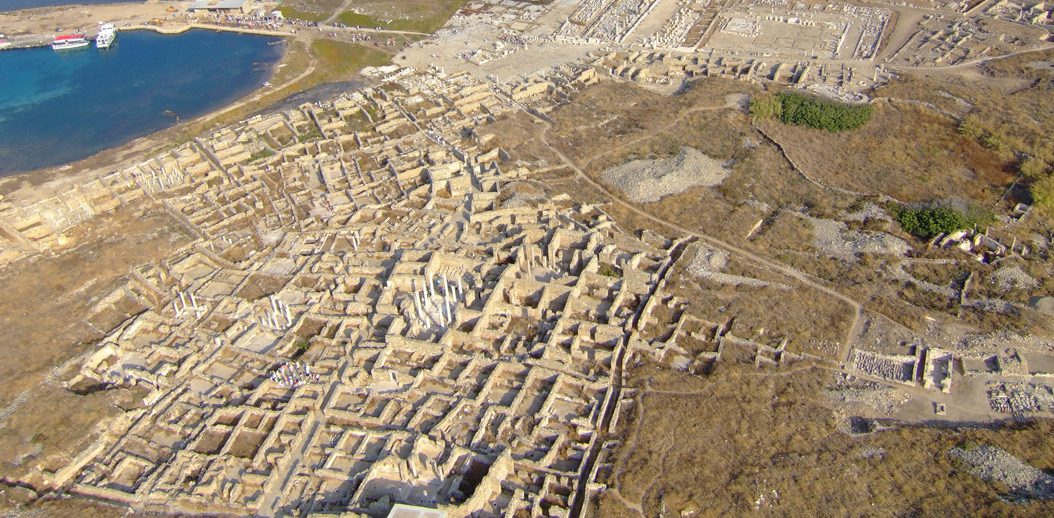
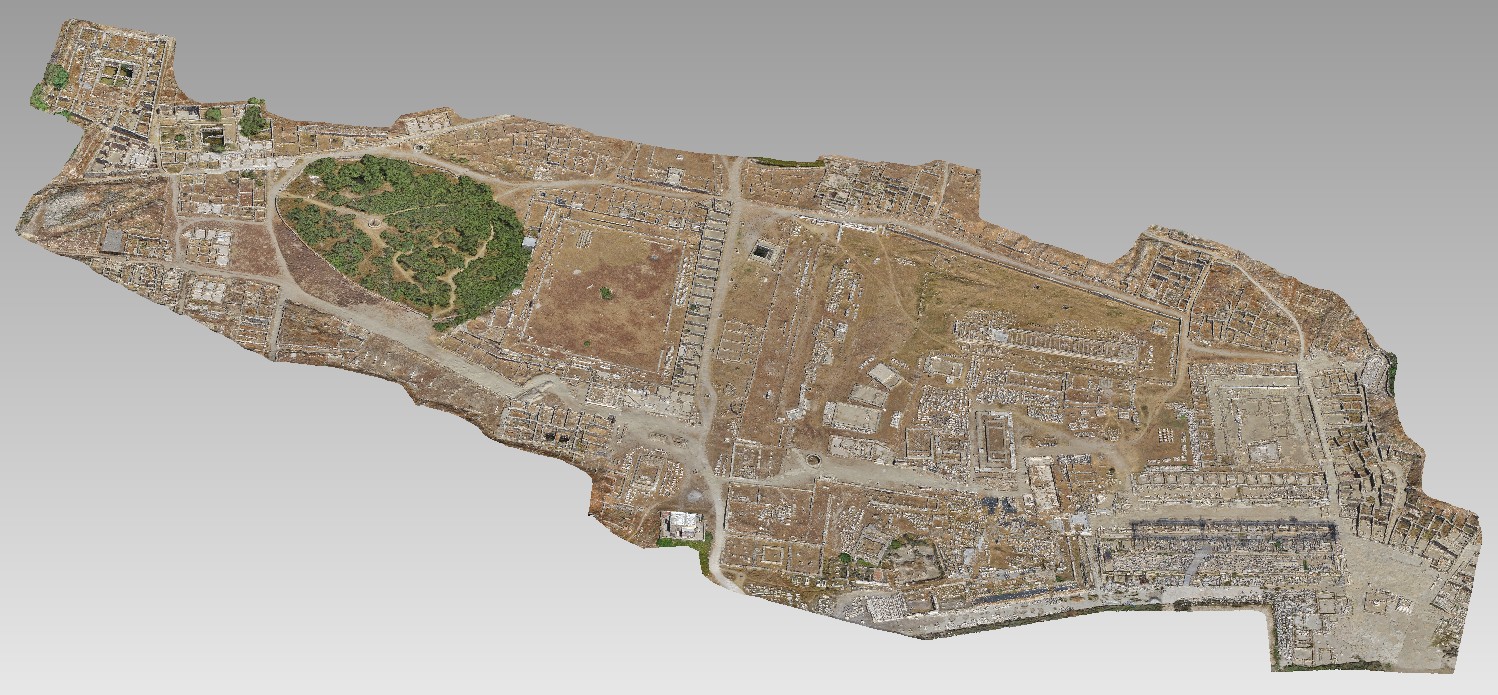
The character and image of Delos changed dramatically when, from the mid-second century BC and lasting for about 80 years, the Romans, as ambitious protagonists in the geopolitics of the Aegean, ceded control of Delos to the Athenians. In an effort to change the balance of power in the Aegean to their advantage, they built up Delos against the competing harbours of the Aegean – mainly Rhodes and Corinth – and offered its port exemption from taxes. No commercial transaction and no economic activity would be taxed. Delos would benefit from the surplus that the untaxed turnover about to be launched would provide. The exemption immediately attracted merchants and bankers from every part of the known world, led to a population ‘explosion’ and created the maximum emporium totius orbis terrarum, that is, the largest commercial centre in the world. It is estimated that the population of Delos quickly rose to approximately 30,000 inhabitants, with a confirmed presence of people from at least 98 cities, from the Italian and Greek peninsulas, the Aegean islands, North Africa, the Near East, and the Black Sea. The new and extensive rich urban fabric, which housed the newcomers and is admired today by visitors to the archaeological site, was developed in the northern part of the island, surrounding the Sanctuary of Apollo, which continued to operate. New extensive harbour facilities were formed along the main western coast of Delos, where thousands of ships moored every year. New markets and commercial shops were established at the new quays and around the Sanctuary, where it is estimated that hundreds of thousands of tons of goods were traded annually, while countless slaves acquired new masters. Strabo delivers the most eloquent observation about Delos: ‘Merchant, come to the port, unload, and everything is sold’. As well as the wealth that accumulated on Delos, it is appropriate to emphasize the peaceful coexistence of so many citizens of the world from such different cultural and ideological backgrounds.
The cycle of forgetting and rediscovery
In 88 BC and again in 69 BC, the King of Pontus, Mithridates, wanted to harvest the accumulated wealth of Delos and in two invasions he massacred the inhabitants and burned the rich city. However, by this time the Romans had already secured domination in the Aegean and the great commercial port of Ostia, the seaport of Rome, had been founded. Athens itself was no longer necessary to them, and the tax exemption of Delos was abolished. In fact, Athens was destroyed during the invasion led by Sulla a year later. Without this financial benefit, the changed economic factors of Delos no longer offered any incentive to remain on the island. Matters began to wither away and the community of Delos entered a prolonged downward spiral, dropping to a level that the natural living space and natural resources of the island could support. Until the early Christian era, however, it still seems to have maintained a sufficient number of inhabitants to keep 6 or 7 Christian churches in operation. In fact, thanks to its old prestige, it became the seat of the Bishopric to which Kea, Mykonos, Kythnos, Syros and Seriphos belonged.
From the 8th century AD, the island is abandoned. It is not even mentioned in the list of islands belonging to the successor Bishopric of Syros. The oblivion of the turbulent Middle Ages that follows is sometimes interrupted by visits from antiquarian travellers, who come to ‘quarry’ ready-made blocks of marble for buildings or as raw material for the lime kilns.
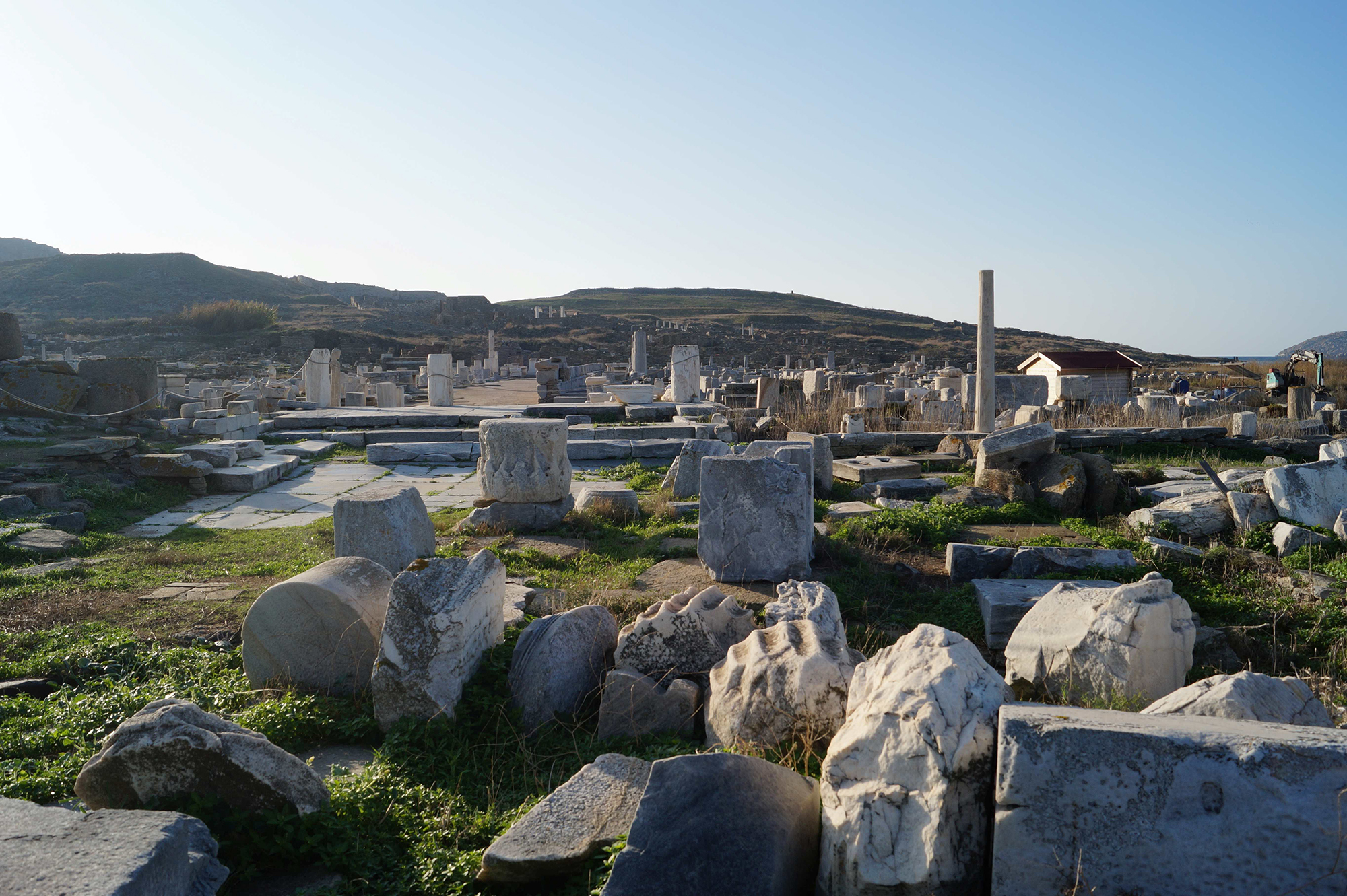
The excavations that began on Delos at the end of the 19th century brought to light and re-connected the ruins of the ‘heartland of the islands’ with myth and history. At the same time, they created the conditions for a new persona to emerge– as an organized archaeological site that today sees more than 180,000 visitors annually.
As has been aptly said, Delos has kept from its past only the memory of its historical reputation – and the ruins. Its erstwhile sacredness and cosmopolitan nature have been bequeathed to the neighbouring islands of Tenos and Mykonos, respectively.
Themistoklis Vakoulis, Dr. Archaeologist
The Archaeological Museum of Delos
Construction of the Archaeological Museum of Delos began in 1904 in 1904 to house the important antiquities brought to light by the excavations of the French School of Athens on Delos from 1873 onwards. The extensions of 1931-1935 and 1972-1976 gave it the form it has today.
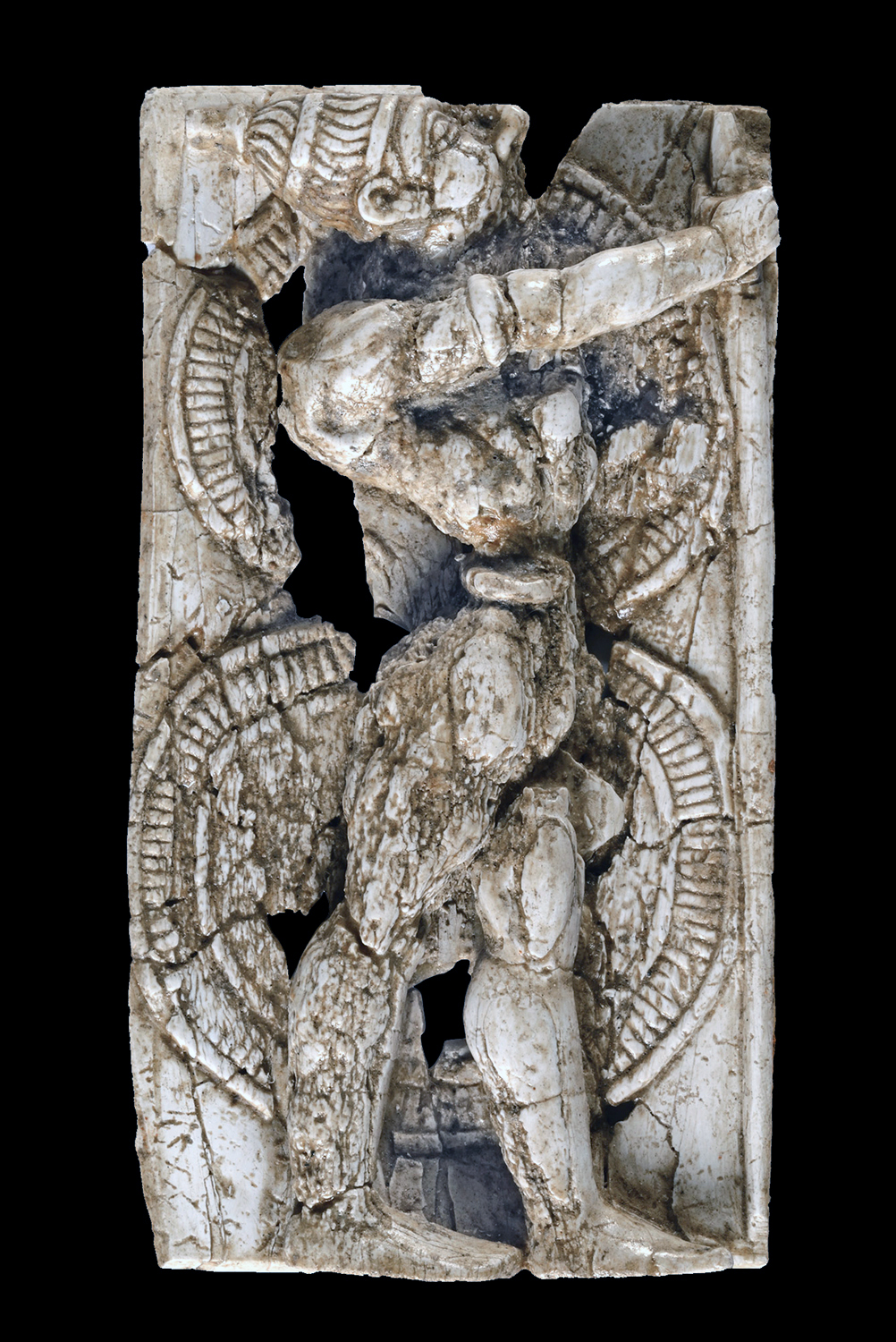
The Museum today consists of nine main rooms, and two more for temporary exhibitions. After the entrance (room I), where unfolds a comprehensive introduction to the main stages of the history of Delos, are exhibited (rooms II, III, V) the important Archaic sculptural votive offerings that come mainly from the Sanctuary of Delos, such as kouroi and korai, but also sphinxes, sirens and lions. Mainly the works of Naxian and then Parian workshops, the sculptures from Delos offer valuable information on the development of Archaic sculpture. The famous base of Euthycartides stands out in room II: decorated with relief heads of a ram, a lion and a gorgon, it has an inscription stating that Euthycartides of Naxos made the kouros and dedicated it.
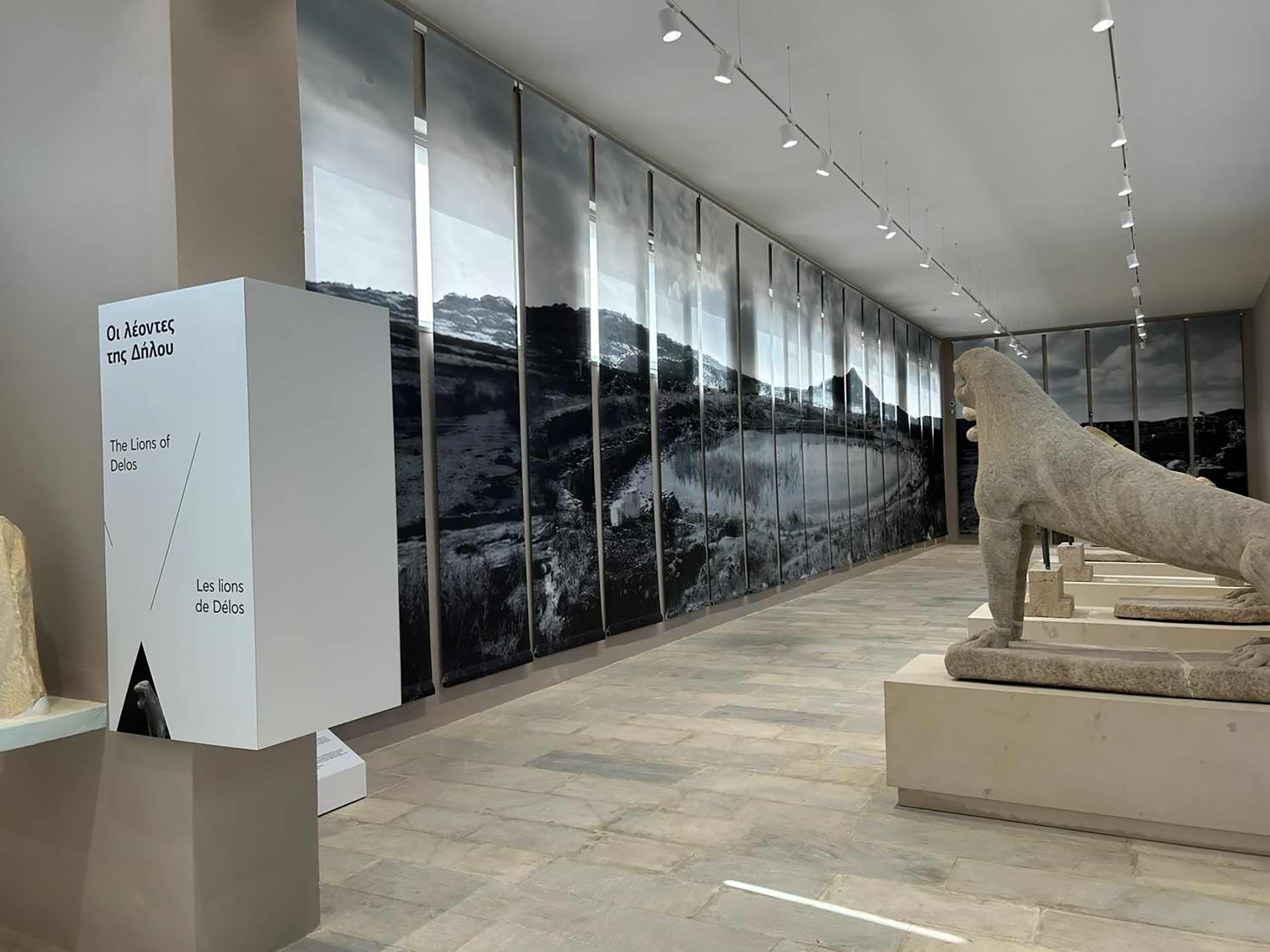
The famous Lions of Delos (room IV) are also fruits of the Naxian workshops: they were erected in the late 7th/early 6th centuries BC on the road leading from the sanctuary of the god to the sacred lake that was the birthplace of the twins. They stood there, as sleepless sentinels, for thousands of years, until they were moved inside the Museum in 2000 to protect them from the extreme weather conditions of the island. Using old photographs and a specially designed soundscape, today the visitor can appreciate in an experiential way the environment in which the Lions were in antiquity.
A very few votive offerings from the 5th and 4th centuries BC have been preserved (room V), but the famous group of the abduction of the Athenian princess Oreithyia by Boreas, the central pedimental ornament of the Temple of the Athenians from the end of the 5th century BC (425-420 BC), stands out without a doubt. The projection of Athenian myths onto Delos reflects the control exercised by the Athenians then on the island and indeed throughout the Aegean.
After the period of Delian independence (314-167 BC), the Romans ceded Delos to the Athenians and granted it a freehold: from then on, the island became a bustling port, attracting merchants and bankers from all over the Mediterranean, who founded businesses, built sanctuaries and houses which they decorated with sculptures (room VI), many of which were sculpted in the Delian sculpture workshops. Among others, the statue of Artemis Elaphevolos stands out, the product of an Attic workshop, where the serene face of the goddess is in stark contrast to her violent act in killing the deer.
Sculptures depicting historical figures or connected with historical events are exhibited in room VII. They include the over-life-size statue of Gaius Ophelius Ferus, a wealthy Roman merchant from the Campania region, who financed the construction of the western portico of the Agora of the Italians, earning him the right to place his likeness in a niche of this building.
The Delos Museum exhibits one of the most important and securely dated sets of portraits (room VIII) depicting men and women from Rome, Athens and the East. Among them, the owners of the House of Seals, Roman merchants of a relatively advanced age, must have been particularly successful businessmen. This is made evident from the thousands of contracts that were burned in the fire caused by the pirate attack (69 BC), which baked the clay seals that bound them, preserving them to this day.
From the great Hellenistic city of Delos, numerous finds have been made, revealing the high standard of living enjoyed by the inhabitants (room IX). The houses had atriums and were decorated inside and out with wall paintings on the thick plaster that covered the walls. The floors were decorated with mosaics of various types, while in the rooms one can find luxurious marble tables, fireplaces and other objects of daily use. The furnishings of the houses impress today with their variety and timelessness, while the treasures of jewellery and coin-hoards, found in the northern quarter, and irrefutable evidence of the pirate attack in 69 BC, allow the viewer to imagine the wealth that the inhabitants of Delos relished before the destruction.
Maria Koutsoumbou, archaeologist